What are the characteristics of a fishing cat?
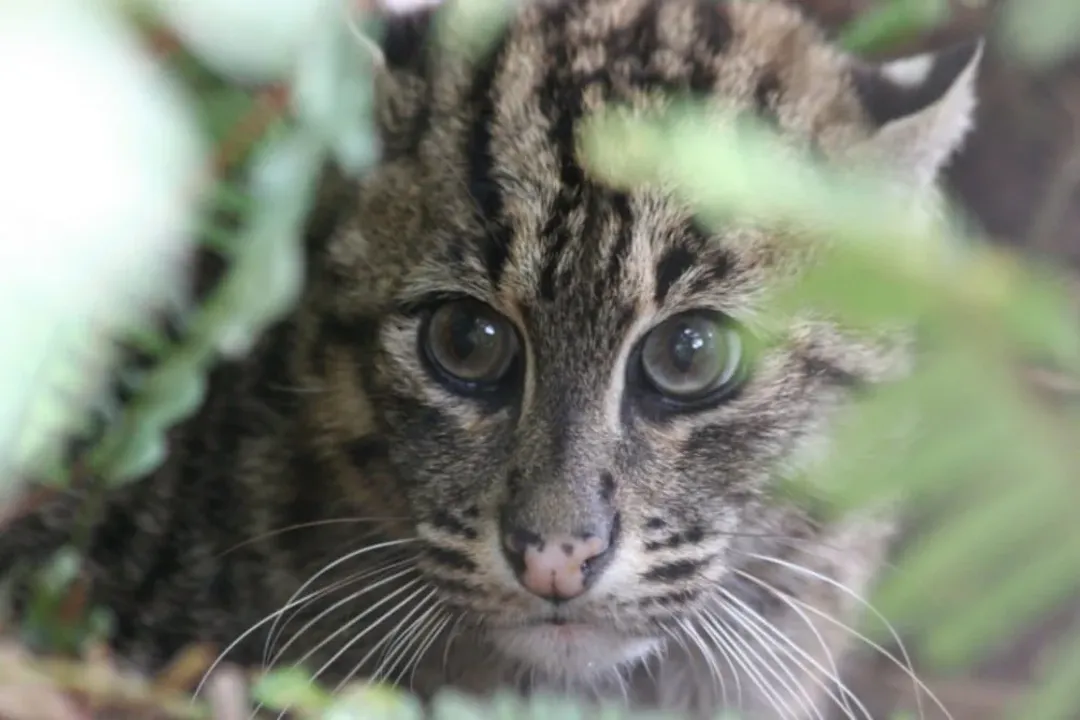
The fishing cat is a fascinating small wild cat, quite distinct from its more familiar cousins, immediately recognizable by its powerful build and strong affinity for water. While they are generally about twice the size of a typical house cat, their appearance is far more rugged, suggesting a life spent navigating dense, wet environments rather than dry savanna or forest floors. These animals are uniquely adapted predators, built low to the ground for stealth in marshy terrain.
# Body Structure
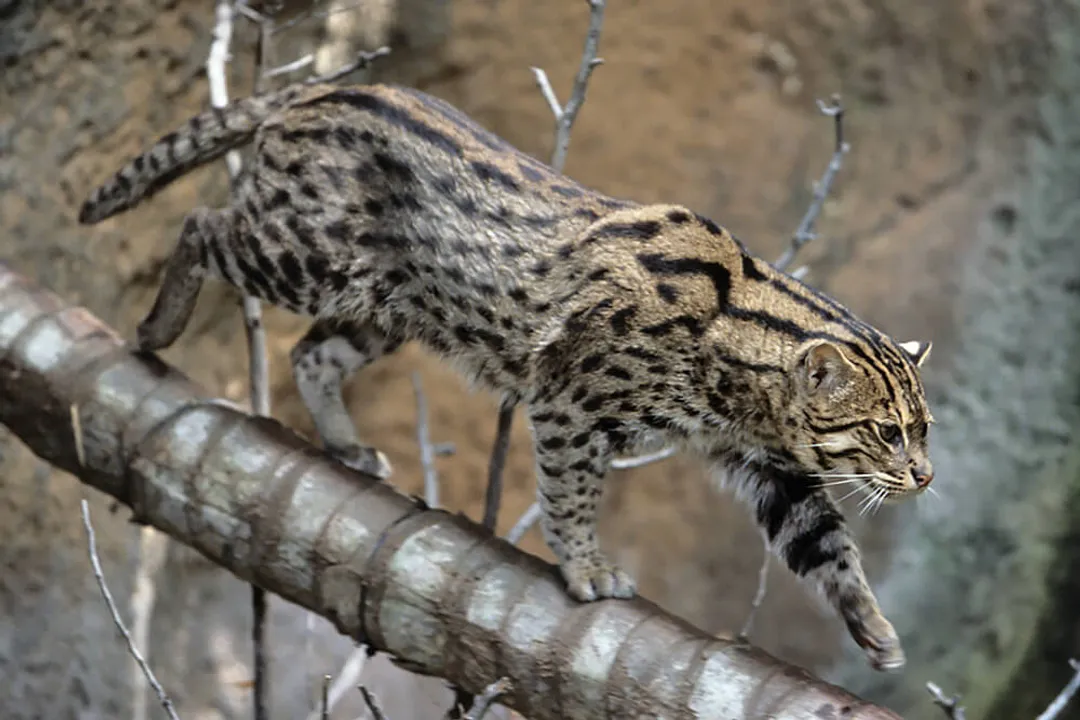
Physically, the fishing cat possesses a stocky, muscular frame. They have relatively short legs, which may aid in wading through shallow water or traversing marsh reeds, and a broad head that sits low on a thick neck. When observed from nose to tail tip, they can measure up to about 1 meter in length. Their tail is relatively short compared to other cats, usually clocking in at only about half the length of their body. Weights can vary, but generally fall between 10 and 16 kilograms (roughly 22 to 35 pounds).
| Characteristic | Typical Measurement/Description | Source Basis |
|---|---|---|
| Size Relative to Domestic Cat | Approximately twice as large | |
| Tail Length | About half of body length | |
| Weight Range | 10–16 kg (22–35 lbs) | |
| Build | Stocky and muscular |
# Coat Details
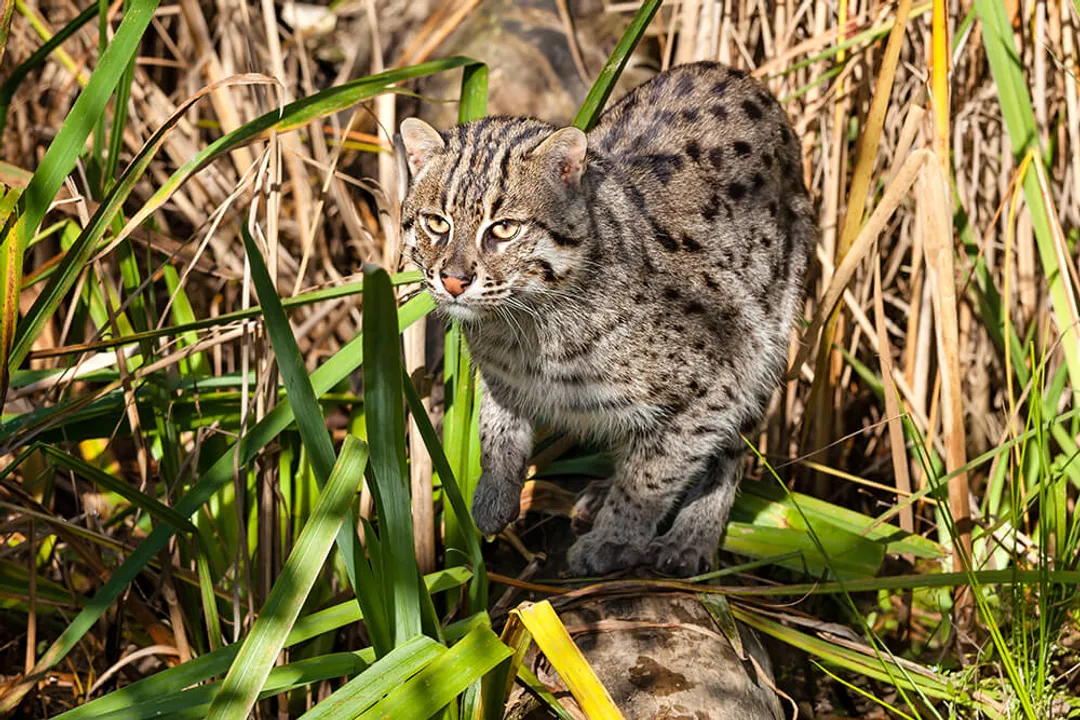
The fur of the fishing cat provides camouflage in its specific environment. The base color tends to be a grayish-brown or olive-brown shade. Look closely, and you might notice darker streaks running along the sides and back, though these markings can sometimes be quite indistinct or mottled rather than sharply defined spots. A key visual marker is the striping pattern on the head; they typically sport stripes that run from the forehead toward the ears. Contrasting with the darker back and sides, the underside is generally lighter, often appearing white.

# Aquatic Traits
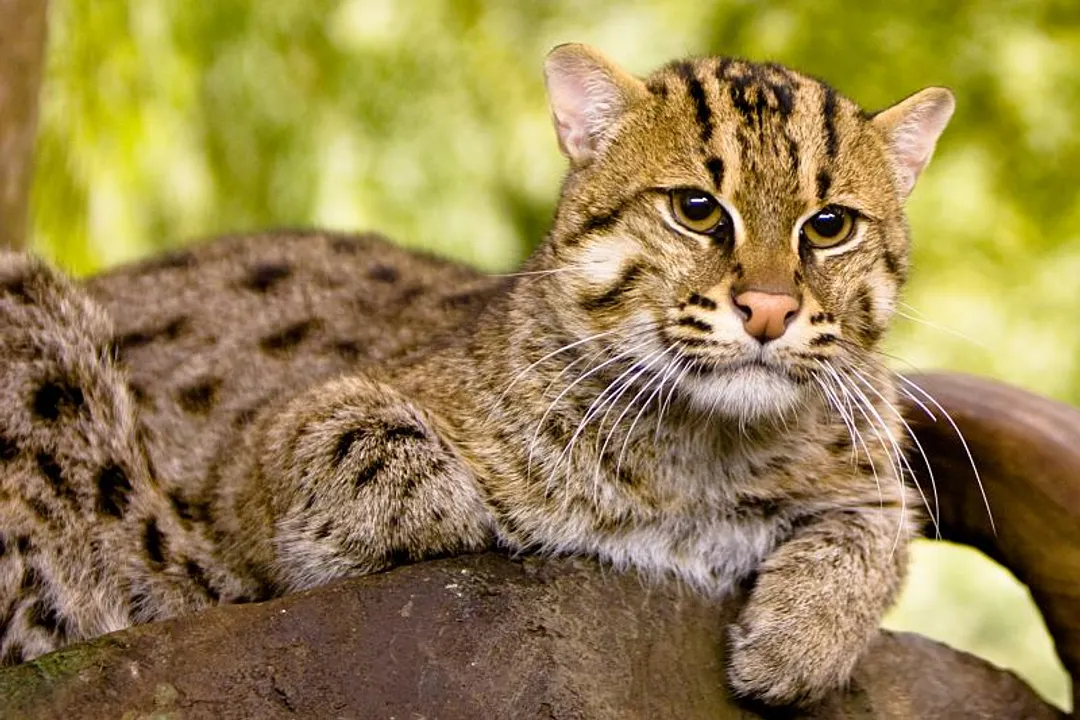
The most telling characteristic of the fishing cat is its profound connection to water, which is reflected in several specific physical adaptations. They are known to be excellent swimmers. Unlike many other feline species, the fishing cat has distinct webbing between its toes, albeit partial, which enhances its efficiency when moving through water or soft mud. Another crucial difference lies in its claws. While most small cats can fully retract their claws for silent stalking on dry land, the fishing cat’s claws are only partially retractable. This feature likely provides a trade-off: while perhaps sacrificing absolute silence on dry ground, those semi-exposed claws offer superior grip on slippery, wet rocks or when grappling with slippery prey near or under the water surface.
# Hunting Style
As their name suggests, their diet is heavily centered around aquatic life. They are classified as piscivorous, meaning fish form a staple of their meals. Their hunting technique is specialized: they often wade into shallow water or sit at the edge and use their paws to skillfully scoop or strike at fish near the surface. However, they are opportunistic feeders and will certainly supplement their diet when the opportunity arises. Other prey items commonly taken include frogs, reptiles, birds, and various small mammals. This broad but water-focused diet means their survival is intrinsically linked to the health and availability of local water bodies.
# Habitat Niche
The need to hunt fish dictates where fishing cats establish their territories. They are found across a broad swath of Asia, encompassing areas like India, Sri Lanka, and Southeast Asia. They strongly prefer environments rich in water features, such as wetlands, marshes, swamps, and mangrove forests. They are rarely found far from a significant water source, making them distinct from many other forest-dwelling wild cats. Considering the rapid conversion of these wetland habitats for agriculture or urban development, understanding their specific environmental requirements is key to protecting them.
# Lifestyle
Fishing cats generally lead a solitary existence, preferring to be alone outside of mating periods. In terms of activity timing, they tend to be most active during the hours of nocturnal darkness or during the twilight periods of dawn and dusk (crepuscular). While they are not known for the loud roars of larger cats, they possess a range of vocalizations, which can include hisses, growls, purrs, and even distinct meowing sounds.
# Conservation Status
Despite their specialized adaptations, the fishing cat faces significant peril across much of its historical range. They are currently listed as Vulnerable. The primary driver of their decline is not direct poaching as much as it is the degradation and outright loss of their necessary environment. When wetlands are drained to make way for human infrastructure or agriculture, the fishing cat loses both its cover and its primary food source simultaneously. This dual impact—loss of hunting grounds and loss of prey base—places immense pressure on localized populations, making the preservation of intact marsh and swamp ecosystems critically important for their long-term survival.
Related Questions
#Citations
Fishing cat
Fishing cat
Fishing Cat Facts | Big Cat Rescue | Wild cats in the wild
Fishing Cat | San Diego Zoo Animals & Plants
Fishing Cat
Fishing cat
Physical characteristics and abilities of fishing cats
Fishing Cat