Why do they call them fishing spiders?

The distinctive moniker "fishing spider" comes straight from the remarkable, near-aquatic habits of the spiders in the genus Dolomedes. [2][3] Unlike many of their web-spinning relatives who wait for airborne meals, these large arachnids have mastered freshwater environments, enabling them to actively hunt prey both on and under the water's surface. [2] This behavior, which often involves capturing small aquatic creatures, earns them their common name, although they are also known by other descriptive titles like dock spiders or wharf spiders due to their association with water edges. [2][3][5]
# Water Adaptations
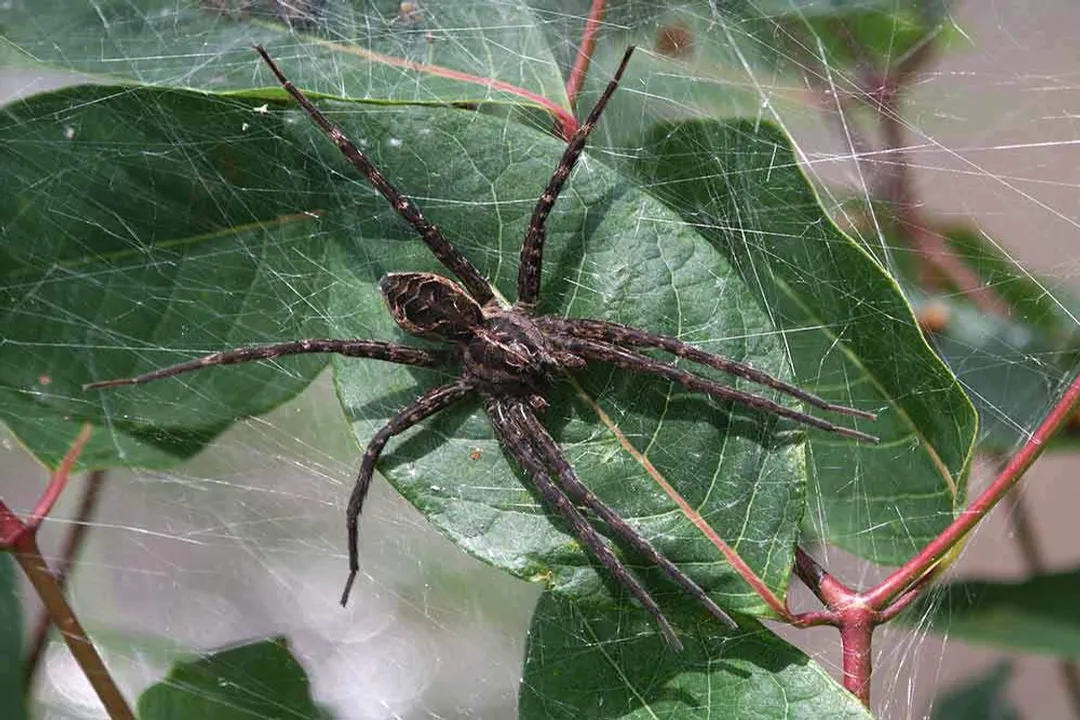
The ability of Dolomedes spiders to interact so intimately with water is what truly sets them apart and explains their naming. [3] These spiders are classified as semi-aquatic, meaning they spend significant time both on land and in aquatic settings. [3] Their first line of defense or movement on the water is their remarkable physical structure. They are covered in short, velvety hairs that are naturally hydrophobic. [3] This water-repelling quality allows them to utilize surface tension, letting them stand or run across the water’s surface much like a water strider. [2][3]
Their aquatic mastery doesn't end at the surface. When necessary, they can actively dive beneath the water. [2] Like other spiders, they breathe using book lungs located beneath the abdomen. [3] When submerged, their hydrophobic hairs trap a thin layer of air around their bodies, creating a silvery film that allows them to breathe while underwater. [3][5] This trapped air also provides natural buoyancy, so if they don't anchor themselves to submerged rocks or stems, they will float back up to the surface, emerging completely dry. [3] Some sources note an impressive ability to stay submerged for up to 30 minutes or longer. This suite of adaptations—walking, running, and breathing underwater—is a characteristic largely absent in completely terrestrial hunters like wolf spiders, which are sometimes confused with fishing spiders. [2]
# Hunting Behavior

The hunting technique employed by fishing spiders is aggressive and vibration-dependent, serving as a parallel to web building for other species. [3] They typically hunt nocturnally, avoiding daytime predators such as birds. [3][6] When positioned near a pool or stream, they often rest with their back legs firmly planted on the shore while stretching their front legs out onto the water's surface. [3][5]
The sensory input is derived almost entirely from touch. The specialized, sensitive hairs (trichobothria) on their legs detect even the slightest ripples or vibrations traveling across the water film. [3][5] This detection system is highly sophisticated; they can distinguish the erratic signals of struggling prey from background noise like wind or flowing water, and even discern the prey's distance and direction. [3] While they possess eight eyes, touch is considered the primary sense for nocturnal hunting. [3]
Once prey is located within striking distance—perhaps a floundering insect—the spider executes a rapid lunge, sprinting across the water at speed to secure the meal. [3][5] Some species may even use silk draglines anchored behind them to prevent them from overshooting the target during their rapid approach. [3] After capturing the prey, they retreat to land to feed. [3] This ambush strategy relies on lightning-fast reflexes, with some documented instances of spiders jumping nearly a foot to catch what they detect. [2]
It is fascinating to consider the energetic commitment required for this specialized method. For a spider that relies on surface tension to move and actively pursues its quarry rather than passively waiting for it to blunder into silk, every successful capture requires complex sensory processing and rapid motor action. [3] This contrasts sharply with the steady, energy-conserving patience of an orb-weaver, making the Dolomedes an active aquatic predator. [3]

# Prey and Size
The name "fishing spider" is earned because their diet occasionally includes small vertebrates, though insects form the bulk of their meals. [2][3][6] The specific prey depends heavily on the species and its habitat. [3] Generally, their diet consists of unfortunate insects that fall onto the water. [2] However, larger individuals are opportunistic feeders and are capable of tackling bigger targets. [3]
Dietary specifics across the genus Dolomedes include:
- Insects and Invertebrates: Mayflies, dragonflies, and other aquatic arthropods. [2][3][5] Some species have been known to snatch crawfish. [6]
- Vertebrates: Small fish (like minnows), tadpoles, small frogs, and even young lizards have been recorded as prey. [2][3][6] Reports exist in Australia of Dolomedes species consuming goldfish, and in the United States, one was observed taking an immature smallmouth bass. [3]
When comparing species, the six-spotted fishing spider (Dolomedes triton) is often cited as the most specialized "fisherman" of the group, focusing its daytime hunts on tiny minnows and tadpoles, and unlike others, it is easier to observe hunting during the day. [6] In contrast, the dark fishing spider (Dolomedes tenebrosus), despite its name, is often found far from water in wooded areas, preying on large terrestrial insects, though it retains the lineage’s ability to hunt near water when available. [6]
Fishing spiders are among the largest non-webbing spiders found in regions like North Carolina. Females are typically larger than males; for instance, in D. tenebrosus, a large female can reach an inch in body length with a leg span exceeding three inches. [6] Males are often about half the size of the females, and in some North American species, the size difference is extreme, with males being described as dwarfs compared to the females. [3][6]
# Other Names
While "fishing spider" is widely used, particularly where water is nearby, these spiders accumulate several other common names that reflect different aspects of their appearance or habitat. [2][3]
- Raft Spiders: This name suggests they construct floating platforms, which is often a mistaken belief; they simply use the water's surface tension, not constructed rafts, to travel. [2][3]
- Dock Spiders/Wharf Spiders: These names are direct references to the man-made structures near which they are commonly sighted while hunting. [2]
- Tree Spiders: For species like D. tenebrosus that inhabit wooded regions far from open water, "tree spider" is a more accurate descriptor of their typical location. [2][6] In New Zealand, D. schauinslandi is known as the Rangatira spider and is often seen on dead trees. [3]
# Differentiation and Safety
When encountering one of these large, brown, and hairy spiders, people often mistake them for wolf spiders (Lycosa genus). [2] Both are large, non-web-building hunters. However, scientific identification relies on subtle differences in eye arrangement. [3] Fishing spiders have eight eyes arranged in two rows, with the two outer posterior eyes being smaller than the inner ones. [2][3] Wolf spiders, on the other hand, have four eyes arranged in a distinct straight line facing forward in the bottom row. [2] Furthermore, the aquatic capabilities of the Dolomedes genus are the easiest practical distinction from the completely terrestrial wolf spiders. [2]
When it comes to human interaction, it is important to note that fishing spiders are not considered pests in the sense of actively seeking out homes or causing structural damage. [5][6] They may wander indoors, often ending up in garages or basements, causing alarm purely due to their imposing size. [6] They possess venom, as all spiders do, but for most people, a bite is comparable to the discomfort of a bee or wasp sting. [2][5][6] Bites are rare, typically occurring only if the spider feels harassed or threatened, as they generally prefer to flee at the slightest disturbance. [5][6]
One surprising behavioral note involves their breeding habits. In some North American species, like D. tenebrosus, the males face an obligate fate: they are cannibalized by the females after mating, sometimes even before mating is complete. This tendency appears to be more frequent in fishing spiders than in black widows, although males of both groups sometimes survive. [6][3] The females, however, are dedicated guardians of the next generation, often tying leaves together to form a "nursery web" to guard their egg sac until the spiderlings hatch, remaining nearby to protect them for about a week. [2]
If one of these large, impressive spiders does wander into a home or garage, the recommended, non-lethal approach is to safely corral it into a jar or container and release it outdoors near water or vegetation. [2] Given their natural preference for riparian zones and wooded edges, finding them outside is far more common than finding a persistent indoor population. [5] Observing their unique hunting technique, especially the moment they commit to crossing the water film, is a great opportunity for any nature enthusiast. If you attempt to observe this up close, remember that stillness is key; any sudden movement or heavy vibration on the bank might cause them to dive or retreat before you can witness their primary hunting method in action. [3]
#Videos
Fishing Spider facts: also raft spider rafts | Animal Fact Files - YouTube
Related Questions
#Citations
Fishing Spider - Nature Smart
Dolomedes - Wikipedia
Fishing Spiders Pest Guide | Size, Bites, Threats, and Prevention
Dark Fishing Spider, Vol. 8, No. 25 | Mississippi State University ...
Fishing Spiders and Wolf Spiders | NC State Extension Publications
Fishing Spider facts: also raft spider rafts | Animal Fact Files - YouTube