Are dragon fish in North America?
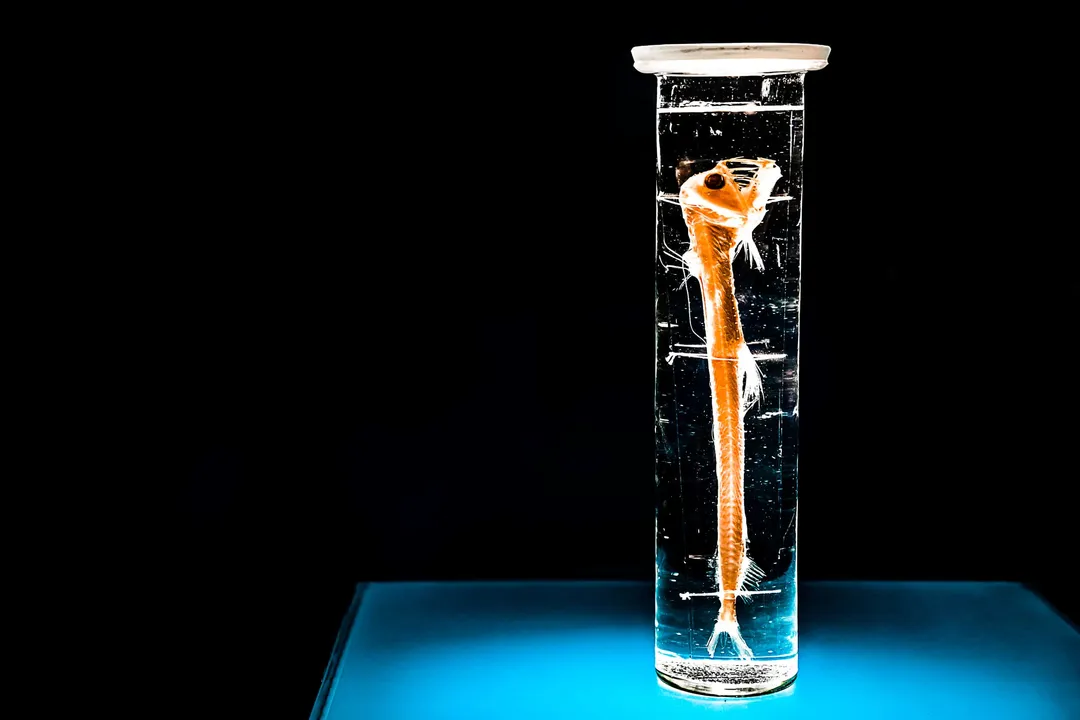
The deep, dark waters surrounding North America certainly harbor creatures that look straight out of mythology, and when people hear the term "dragonfish," they are usually referring to one of several deep-sea predators known for their formidable appearance and bizarre adaptations. These animals are unequivocally present in the waters adjacent to the continent, though their habitat is far removed from coastal beaches or fishing trawlers. The primary focus of scientific interest, particularly when discussing rare sightings off places like the Californian coast, centers around the genus Idiacanthus.
# Deep Ocean Habitat
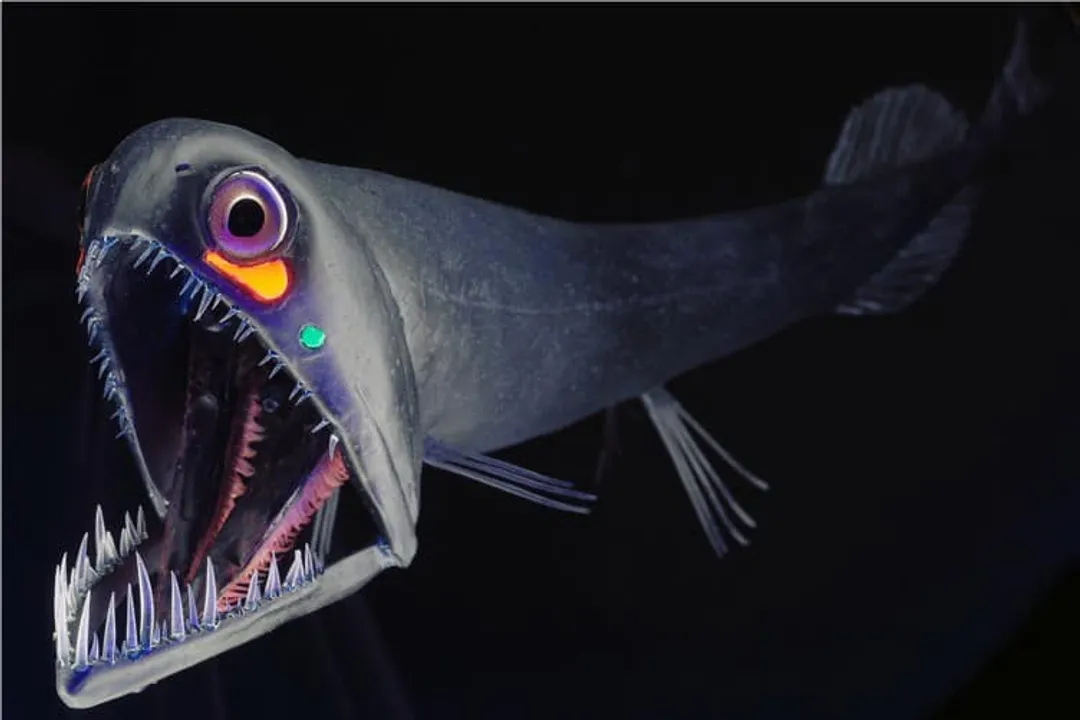
True dragonfish, belonging to the order Stomiiformes, are inhabitants of the deep pelagic zone, often spending their lives in the twilight zone—the mesopelagic region where very little sunlight penetrates. This environment is characterized by dim light conditions, leading to unique evolutionary pressures, such as the development of bioluminescence. Researchers using submersibles and Remotely Operated Vehicles (ROVs), such as those operated by the Monterey Bay Aquarium Research Institute (MBARI), routinely document these fish in the deep waters off the West Coast.
Specific sightings confirm their presence. For instance, one rarely seen, torpedo-shaped dragonfish, identified as Idiacanthus atlanticus, was observed off the coast of California. Other observations place this species, or related ones, around the depth of 1,000 feet, which firmly establishes them within the twilight zone ecosystem bordering North America. The range for related species, like Idiacanthus fasciola, is also described as inhabiting deep pelagic waters globally.
# Creature Features

The name "dragonfish" is well-earned when describing the females of many deep-sea species, which are characterized by elongated bodies, sharp teeth, and a generally menacing visage. A striking feature of the deep-sea dragonfish, particularly Idiacanthus atlanticus, is the extreme sexual dimorphism. The female is the recognizable, larger predator, capable of growing significantly—sometimes up to 15 inches in length. In stark contrast, the male is vastly different; it is extremely small, lacks teeth, and possesses a short lifespan, relying on the female for survival, sometimes even parasitically attaching to her.
Bioluminescence is key to life in the deep, and dragonfish have evolved specialized ways to use light. While many deep-sea organisms emit blue light, some dragonfish, including those documented in North American waters, have the unique capability to produce red light from photophores located near their eyes. This is an extraordinary adaptation because most deep-sea creatures cannot see red wavelengths; thus, the dragonfish can effectively use its red light as a covert searchlight to illuminate prey without alerting them to its presence.
To put their size and appearance into perspective, the females possess a slender, black body, often described as looking like a thin eel or ribbon, equipped with a disproportionately large jaw housing needle-like teeth. In contrast, the male is minute, sometimes only an inch long, and dissolves after mating.
# Terminology Confusion
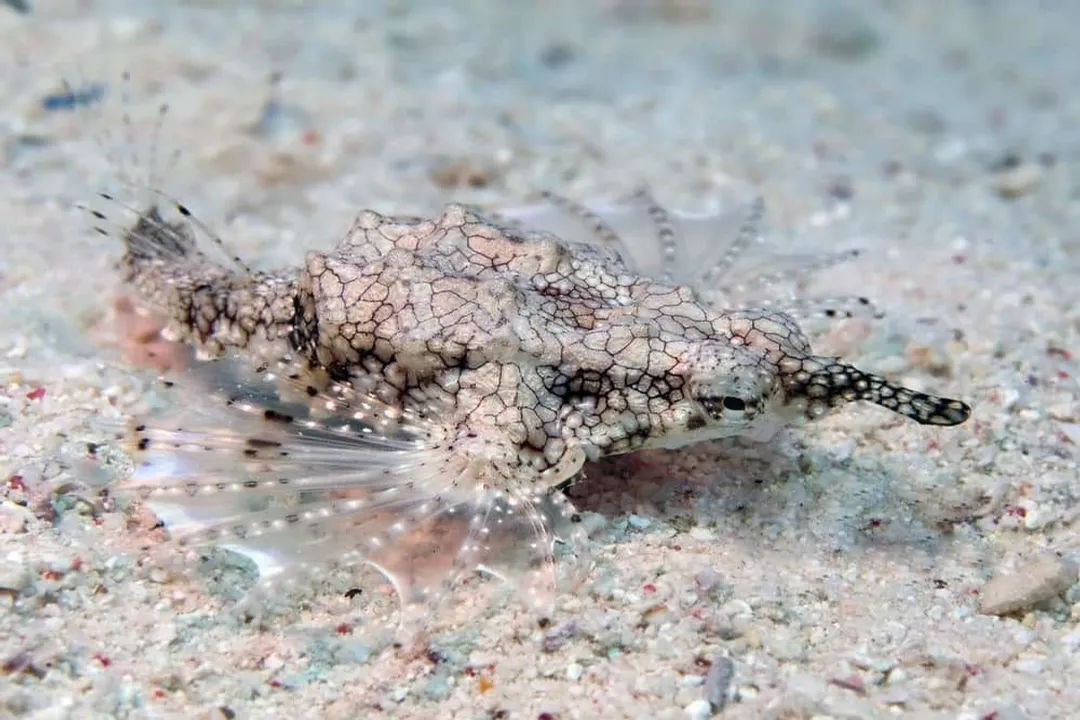
A significant point of confusion for the general public, especially those interested in aquariums or local coastal fishing, is the application of the term "dragonfish" to other, entirely unrelated animals. It is common for ornamental fish sold in the pet trade to carry names that sound exotic, leading to misidentification.
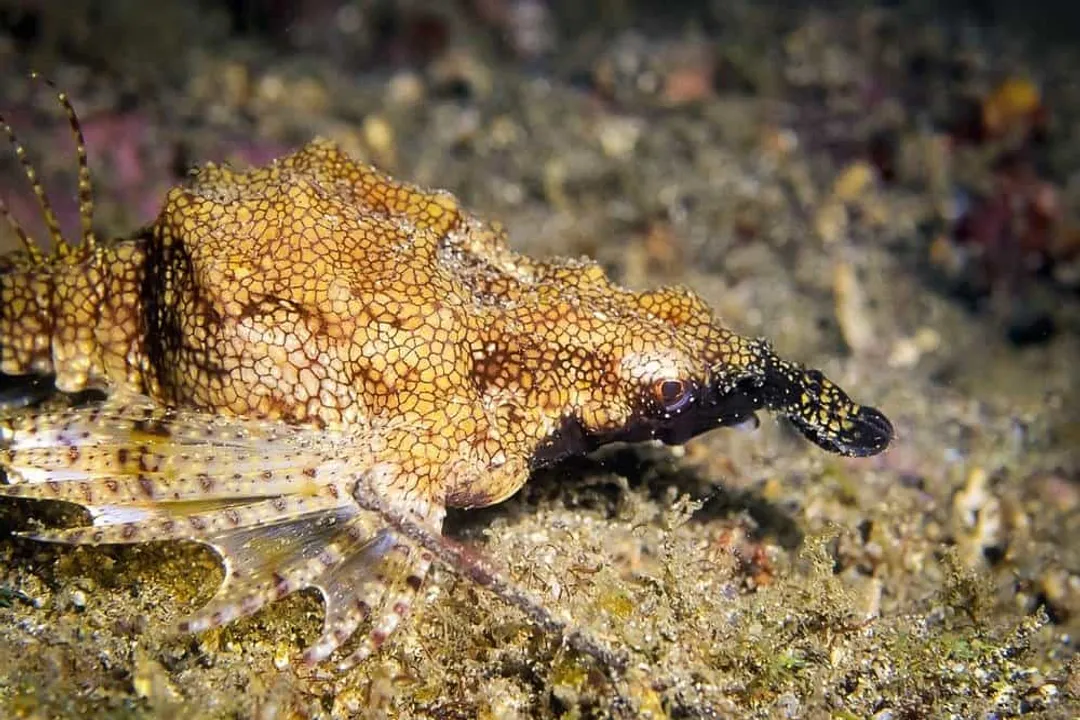
For example, the Dragon Goby is frequently sold in local fish stores and is sometimes mistakenly called a dragonfish. This fish belongs to a completely different group (Gobiidae) and lives in shallow, often brackish or marine waters, vastly different from the abyssal environment of the Stomiiform dragonfish. When an enthusiast talks about a "dragon fish" they bought locally, they are almost certainly referring to a shallow-water goby or perhaps a small, crested marine dragonet, not the elusive, bioluminescent predator documented by deep-sea ROVs off the Pacific coast. Understanding this difference is vital; the animals seen by MBARI are true deep-sea specialists; the animals sold in tanks are benthic or nearshore dwellers.
# Research Context
The primary method by which the public—and often scientists—learn about these creatures is through high-technology observation systems. Organizations like MBARI are crucial authorities in this field, regularly deploying remotely operated vehicles (ROVs) equipped with high-definition cameras to survey the deep ocean environment where these fish reside. These missions reveal distribution patterns and behaviors that would otherwise remain unknown.
The depths where these animals thrive are staggering, well into the zone where ambient light is nonexistent. Finding a specimen at 1,000 feet is an event, yet many live much deeper or migrate vertically through the dark zone. This constant, silent world of cold and pressure means that our understanding of the species richness and population dynamics of North American deep-sea dragonfish is still heavily reliant on infrequent, high-cost expeditions.
It is interesting to consider that for most of the year, the interaction between the average resident of the United States or Canada and a true dragonfish is entirely indirect. Unlike coastal species that might be caught accidentally by commercial fishing gear, these bathypelagic organisms exist in an environment so remote that observation is a technological feat. This remoteness underscores how vast and unexplored the ocean adjacent to the continent remains, hosting bizarre, highly specialized life forms that function entirely outside the purview of surface ecosystems.

# Deep Ecology Insights
When looking at the distribution and biology of these deep-sea Stomiids, an interesting comparison arises regarding their ecological role compared to nearshore predatory fish. While a large coastal predator might have a wide, well-documented migratory range covering thousands of miles of continental shelf, the deep-sea dragonfish's 'territory' is defined more by specific temperature and pressure layers than by geography. A female Idiacanthus living near the Juan de Fuca Trench off the Pacific Northwest is likely sharing an ecosystem defined by vertical depth bands with its relatives off the coast of California, even if the horizontal distance is great.
Another point worth noting is the energetic cost associated with the extreme sexual dimorphism. The survival strategy of the female is focused entirely on predation and reproduction, while the male's brief existence is solely about finding and fusing with a mate. This extreme division of labor suggests an evolutionary pressure in the deep sea where finding a mate is exceptionally difficult, making the male's simple, non-feeding existence a necessary adaptation to conserve the energy required for the female's long-term survival in a food-scarce environment.
Ultimately, the answer to whether dragonfish are in North America is a firm yes, provided one accepts the definition of "dragonfish" as the bizarre, bioluminescent predators of the deep ocean that inhabit the Pacific waters off the western edge of the continent. They are not found in local ponds or readily accessible nearshore environments, making their presence a testament to the alien life existing in the planet's deepest realms.
#Videos
The Dragon fish! - YouTube
Related Questions
#Citations
Idiacanthus atlanticus - Wikipedia
Rarely Seen Torpedo-Shaped Dragonfish Spotted Off California's ...
Idiacanthus fasciola (Black Dragonfish) - Animal Diversity Web
Dragonfish - MBARI
Researchers spot a rare type of dragonfish at 1,000 feet deep - WAMU
Creature Feature: Dragonfish - The Ocean Twilight Zone
The Dragon fish! - YouTube
Help! My local fish store sold me my dragon goby as a freshwater ...
Dragonfish Fish Facts - A-Z Animals