Why is a snailfish called a snailfish?
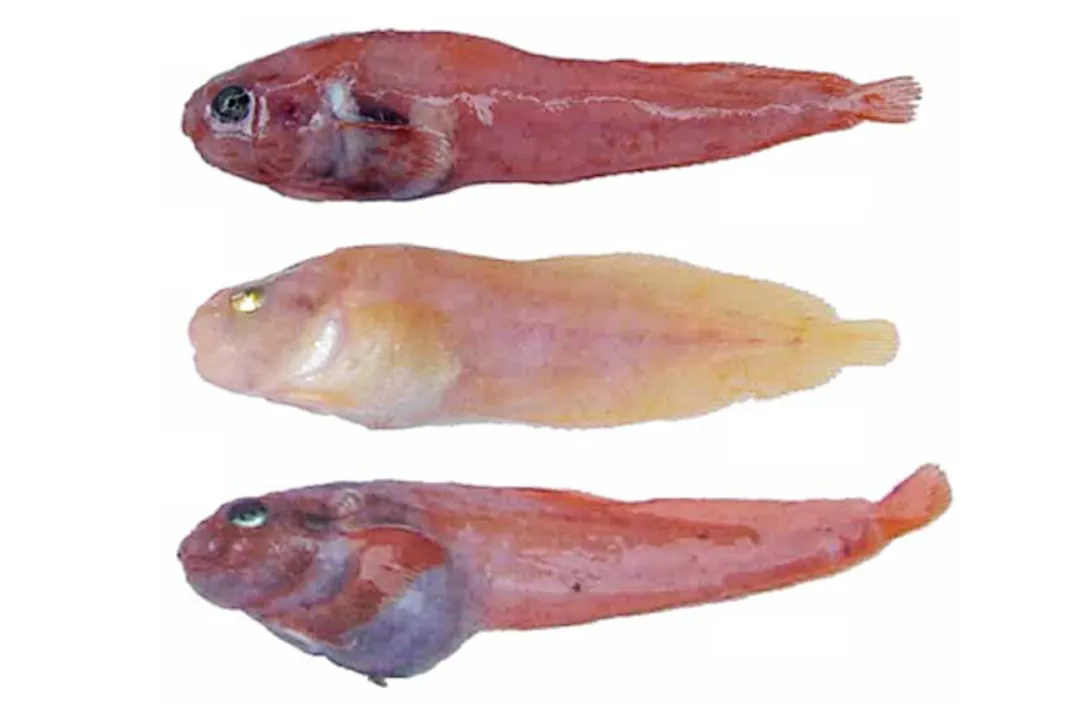
The reason a member of the fish family Liparidae earns the common name snailfish is rooted entirely in its unusual physical appearance, which deviates sharply from what most people picture when they hear the word "fish." While they are indeed ray-finned fish, classified in the order Scorpaeniformes, their morphology is frequently compared to two entirely different creatures: a tadpole or a snail. It is the latter comparison that stuck, leading to the name “snailfish,” and occasionally, the alternative common designation, sea snail.
The key feature connecting them to the invertebrate snail is their lack of scales and the presence of a gelatinous body. Unlike many fish whose skin is covered in protective, overlapping scales, the snailfish possesses a thin, loose, and often translucent outer layer. This texture, combined with their elongated, somewhat slug-like form—especially the deep-sea varieties—evokes the image of a snail that has misplaced its protective shell. While they do possess fins, which sets them apart from true mollusks, this superficial similarity has defined their common nomenclature.
# Resemblance Basis

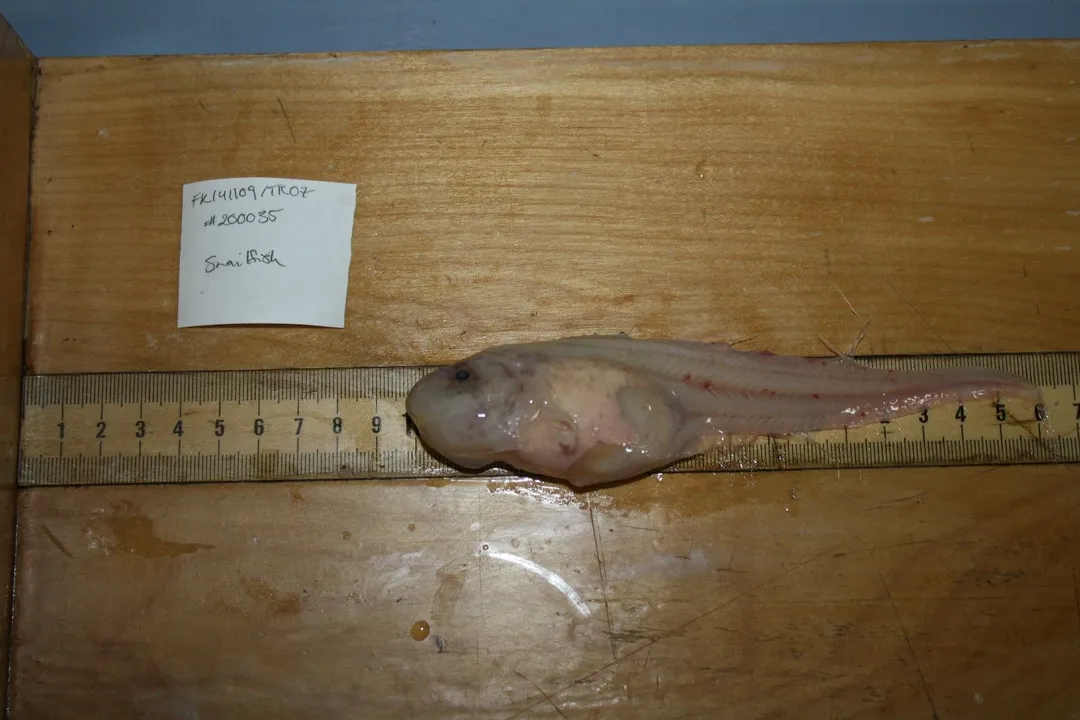
The descriptive comparison to a snail is not the only physical attribute that sets them apart. Snailfish exhibit an elongated form that tapers drastically to a very small tail, giving them a distinct tadpole-like shape. This body plan is often accentuated by a head that is quite large in proportion to the rest of their frame. Within the broader family, there is significant variation; for instance, the newly described bumpy snailfish (Careproctus colliculi) features a distinctive bumpy texture on its pale pink body, while others may have prickly spines.
The resemblance to a snail is strongly established by the absence of scales and the gelatinous consistency of their tissue. This tissue is characterized by a high water content and low levels of protein, lipids, and carbohydrates, which is an evolutionary adaptation that permits growth at a low metabolic cost. For shallow-water relatives, this structure might aid in avoiding smaller predators, but for the deep-sea dwellers, it plays a critical role in managing pressure.
# Body Structure

Snailfish locomotion and stability are achieved through specialized fin structures. Many species rely on large, yet inherently fragile, pectoral fins for movement. Furthermore, a significant number of snailfish species have evolved their pelvic fins to form an adhesive disc—a nearly circular structure that functions like a powerful suction cup. This disc allows them to firmly attach themselves to stationary objects like rocks or the muddy seabed, enabling them to resist strong currents common on the ocean floor. In an environment defined by few solid perches, this ability to "anchor" themselves is a major survival advantage.
The depth at which a species lives appears to influence the presence of this suction disc; research suggests that the maximum depth tolerated by a species can predict whether this ancestral feature has been lost in that lineage, as it has seemingly been lost three separate times across the family tree.
To better illustrate the unusual nature of these fish, a comparison against a more typical, shallow-water bony fish highlights their unique evolutionary trajectory:
| Feature | Snailfish (Liparidae) | Typical Shallow-Water Fish | Citation |
|---|---|---|---|
| Body Covering | Scaleless; loose, thin, gelatinous skin | Scales, often rigid or overlapping | |
| Buoyancy Control | Gelatinous tissue and muscle enzymes | Swim bladder | |
| Skeletal Density | Softer, low-calcium bones | Denser, calcified bone structure | |
| Locomotion Anchor | Pelvic fins modified into a suction disc (in many) | Pelvic fins used primarily for steering/stability | |
| Vision (Deep Species) | Tiny eyes; lost photoreceptor/pigmentation genes | Well-developed eyes for light detection |
Observing the table, it becomes apparent that the physical attributes that earn the snailfish its name—its lack of scales and its soft, "flabby" texture—are deeply integrated with its life in extreme pressure environments.

# Hadal King
The family Liparidae boasts an incredible depth range, spanning from shallow coastal waters to the deepest reaches of the ocean trenches. This wide distribution, ranging from the Arctic to the Antarctic, represents a greater depth span than almost any other family of fish. While some species inhabit shores, the most famous members are the hadal snailfish, thriving in the hadal zone—areas below 6,000 meters.
The record for the deepest-living fish ever recorded belongs to an unnamed species of snailfish, observed at depths around 8,336 meters (27,349 feet) in the Izu–Ogasawara Trench. Before this, other individuals, like Pseudoliparis swirei in the Mariana Trench, set records at similar, crushing depths. In these trenches, snailfish are not just present; they are dominant. They represent the most common and dominant fish family in the hadal zone, effectively acting as the "king" of this environment from about 7 km downward, where other fish groups like cusk eels become less prevalent.
This dominance at extreme depths suggests a finely tuned ecological success story. Researchers hypothesize that their success might stem from an abundant amphipod buffet in the trenches, or perhaps the deep setting offers a refuge from predators that cannot descend that low. Considering that the physical limits for any vertebrate life may be set around 8,000 to 8,500 meters due to biochemical restrictions, the snailfish lineage is pushing the absolute boundaries of vertebrate life on Earth.
# Pressure Science
The ability of the snailfish to survive pressures equivalent to having a walrus stand on one's fingertip is not due to hardiness in the traditional sense, but rather a specific set of molecular compromises. The defining physiological adaptation involves the swim bladder, an air-filled organ used by most fish for buoyancy control, which would collapse catastrophically under hadal pressures. The snailfish circumvents this necessity by utilizing its gelatinous tissue—the very substance that makes it look like a snail—along with specialized muscle enzymes to maintain neutral buoyancy.
On a molecular level, their survival is secured by chemical stabilizers. Specifically, deep-sea species possess an abundance of the fmo3 gene, which produces trimethylamine N-oxide (TMAO). TMAO acts as a protein stabilizer, countering the destabilizing effects of extreme pressure on vital cellular structures.
Furthermore, their skeletal system has undergone significant modification. Genomic analysis reveals a mutation that prevents cartilage calcification, resulting in much softer, more flexible bones that can better withstand the immense squeezing force. This contrasts sharply with shallow-water fish, which rely on rigid, calcified skeletons. When comparing the genetic makeup of deep-sea snailfish to their shallow-water ancestors, these adaptations appear to have accumulated over about 20 million years of evolutionary divergence. This deep-sea specialization also extends to sensory input; some deep-dwelling species show a loss of genes related to sight and an increase in genes encoding transport proteins to maintain cell membrane fluidity under pressure.

# Egg Nurturing
Snailfish exhibit some of the most intriguing reproductive behaviors observed in the deep sea, presenting a stark trade-off between resource investment and environmental safety. Generally, all snailfish species lay eggs that are relatively large compared to those of other fish, which suggests a greater initial energy investment in each offspring. This strategy often correlates with environments where mortality rates are high or larval survival is precarious.
However, the methods of protecting these large investments vary wildly:
- Guardianship: Many species deposit egg masses on stable surfaces like rocks or cold-water corals, and the male snailfish often stays behind to guard the clutch.
- Mouth Brooding: In at least one species, Careproctus ovigerus, the male exhibits mouth brooding, physically carrying the developing eggs in his mouth to protect and aerate them.
- Parasitic Nursery: Perhaps the most startling strategy involves laying eggs inside the gill cavities of king crabs. The egg masses conform to the shape of the crab's gill chambers, allowing the circulating water to provide essential aeration. Sheltered by the crab’s armored shell—and the crab itself being relatively safe from most predators like sea otters—the eggs receive superior protection. The downside is that this arrangement harms the crab by irritating or damaging its gills, offering the crab no known benefit.
The existence of large eggs, paired with the parasitic strategy, suggests that adult snailfish prioritize maximizing early offspring survival through external protection rather than providing internal, energy-rich yolks for long periods. This makes intuitive sense in the hadal zone, which is inherently high-disturbance, characterized by seismic activity and turbidity flows; a short, protected incubation inside a moving host like a crab might be far more successful than relying on a stationary nest on the soft bottom.
# Retrieval Challenges
The very adaptations that allow snailfish to thrive under pressure render them incapable of surviving even brief trips to the surface. When hadal snailfish are brought up by trawls or nets, the drastic decrease in hydrostatic pressure and the increase in temperature cause their bodies to effectively disintegrate or "melt". Their gelatinous, low-protein structure simply cannot maintain integrity without the external pressure to which it is calibrated. While the body structure dissolves, their bones—being denser and low in calcium—often remain intact, allowing scientists to study their morphology post-mortem through their ear bones (otoliths) for longevity clues.
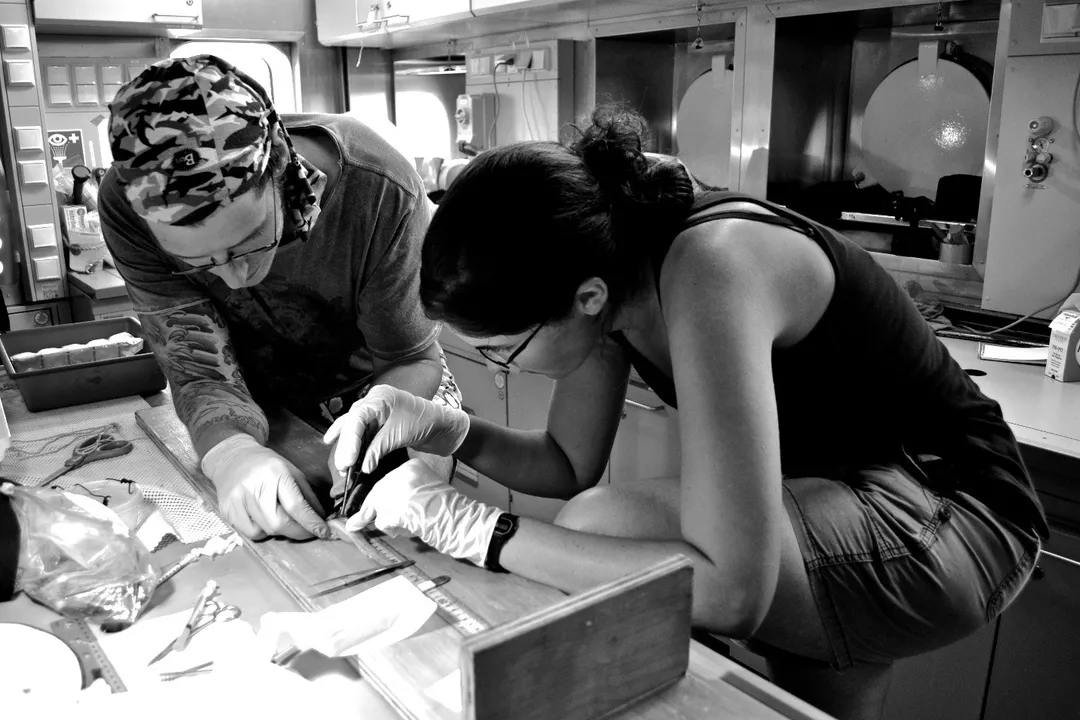
Because of this vulnerability, scientists must rely on specialized technology to study them alive. Expeditions employ Remotely Operated Vehicles (ROVs), equipped with high-definition cameras, to film the fish in their natural state. In recent years, researchers have developed methods to gently capture specimens using specially modified nets, sometimes theorized to create a vortex that sweeps the delicate fish up without damage, allowing for in situ study and even genome sequencing. Analyzing the full DNA pattern of species like the Mariana hadal snailfish provides the clearest picture yet of the genetic toolkit required to conquer the planet’s most unforgiving natural laboratory. The discovery of new species, such as the bumpy snailfish off the coast of California, is almost entirely dependent on these robotic explorations.
The continued cataloging of these species, including new genera discovered in the Southern Hemisphere, illustrates how much of the deep ocean remains a biological frontier, even for a family of fish as successful as the Liparidae. Despite their common name suggesting a simple, slow-moving bottom dweller, the reality of the snailfish is one of extreme biological engineering and profound evolutionary adaptation.
Related Questions
#Citations
Snailfish - Wikipedia
The Snailfish. This family of fish contains over 400 described ...
The Little Pink Fish in the Deep - Schmidt Ocean Institute
15 Fun Facts About the Bumpy Snailfish - HelloSubs
Snailfish Fish Facts - A-Z Animals
The Slimy, Scaleless Snailfish - Ocean Conservancy
Mischievous Snailfish and Other Mysteries of the Deep