Why is it called keelback snake?
The term "keelback snake" immediately conjures an image of rugged texture, and that description is precisely where its common name originates. It is not a reference to the snake's behavior or habitat, but rather to the very architecture of its skin: the scales along the dorsal side—the back—are strongly keeled, meaning they possess a prominent, raised ridge running down the center, much like the keel of a boat. This defining physical trait is shared across many species in several different genera, binding them together under this collective moniker.
The name is more of a descriptive grouping than a strict taxonomic one, grouping snakes from different genera that happen to share this rough-scaled appearance. For instance, the Greek word tropidos, meaning "ship's keel," is reflected in the name of one major genus, Tropidonophis. Meanwhile, another significant group belongs to the genus Rhabdophis, which also contains species universally referred to as keelbacks. In total, the name "keelback" is applied to snakes residing in at least fourteen different snake genera.
# Water Snakes
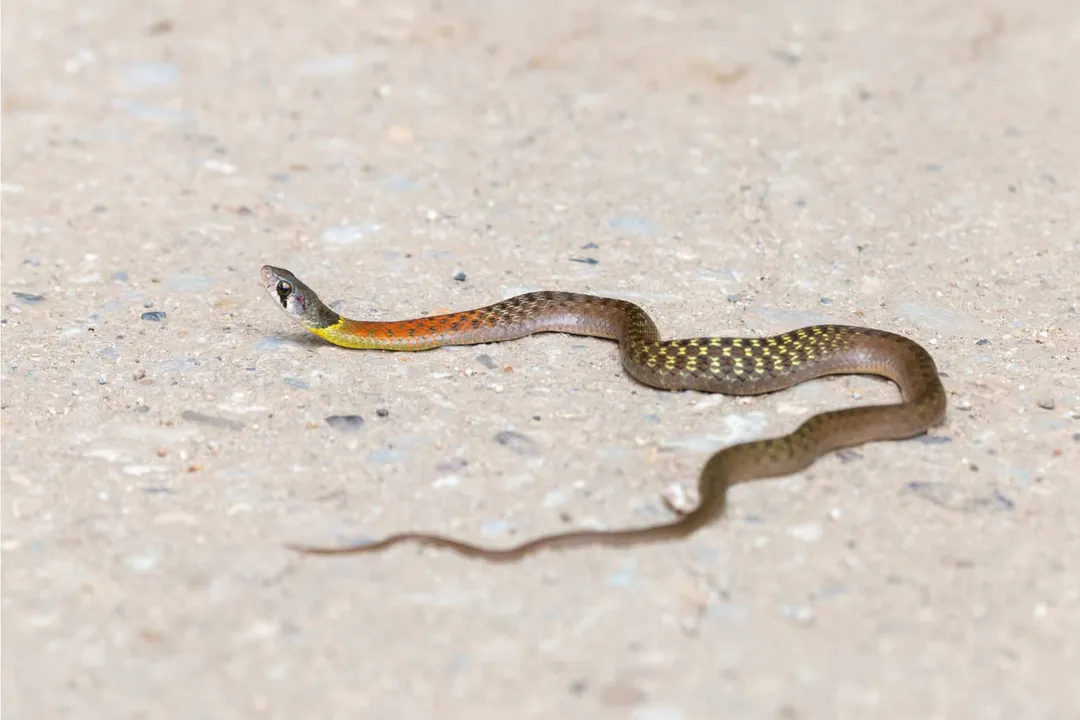
While the prominent scales give them their common name, many keelbacks share another strong characteristic: an affinity for water. The classification itself hints at this connection; many keelbacks belong to the subfamily Natricinae, a name derived from the Latin word natrix, which translates directly to "water snake". Consequently, many of these reptiles exhibit semi-aquatic habits, thriving in environments like marshes, ponds, streams, and along riverbanks.
The Australian species, Tropidonophis mairii, the only Australian native keelback, is known to live in association with rivers and floodplains across northern Australia. Similarly, species like Boulenger's keelback (Fowlea asperrimus) in Sri Lanka favor freshwater habitats like flooded rice paddies. This ecological preference is a common thread, even if the specific species found in disparate regions, like Asia versus Australia, have evolved along very different paths regarding their defense mechanisms.
# Dual Defense Mechanisms
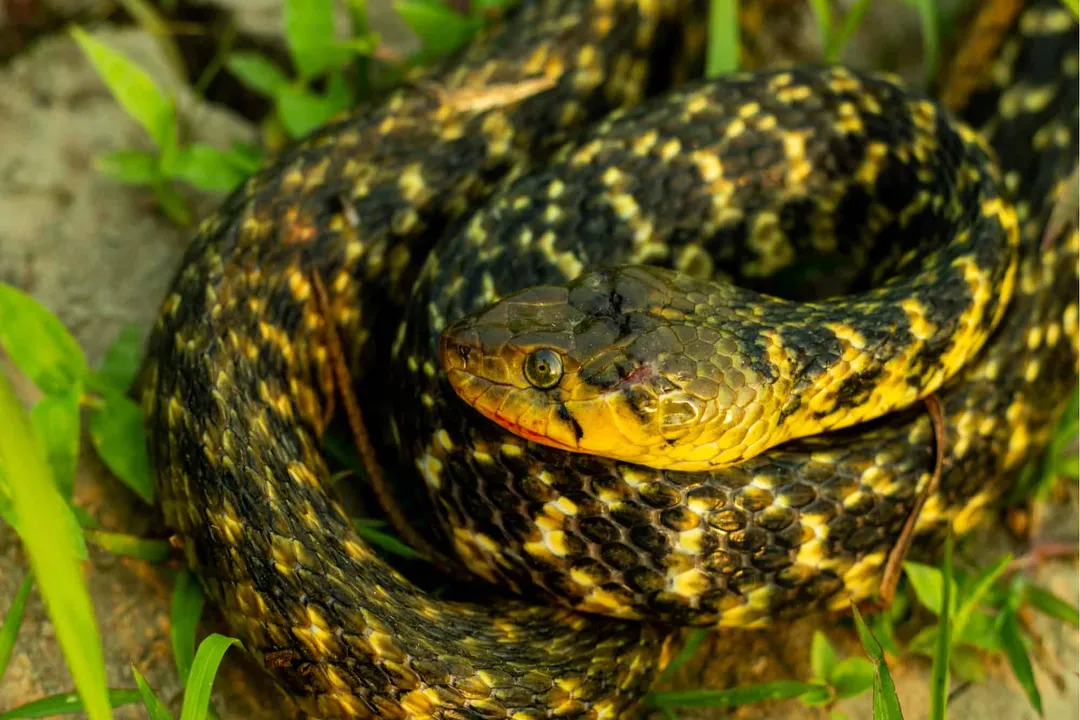
The concept of a "keelback" becomes significantly more complicated when one delves into the Asian genera, particularly Rhabdophis. While many snakes are categorized as either venomous (injecting toxins) or poisonous (secreting toxins that harm when ingested or absorbed), several Rhabdophis species blur this line, being both.
The mechanism for this dual threat is fascinating and relies on kleptotoxisism—the sequestration of defensive chemicals from their diet. Species in this genus, such as the Tiger Keelback (Rhabdophis tigrinus) and the Red-necked Keelback (Rhabdophis subminiatus), frequently consume toads. They are resistant to the toxins found in these amphibians, which are cardiotonic steroids called bufadienolides. Instead of excreting these poisons, the snakes store them in specialized nuchal glands located on the back of their necks. When threatened, these poisons can be released defensively.
This dietary toxin accumulation is distinct from their venom. The Rhabdophis genus also possesses oral glands that produce true venom, which is highly hemorrhagic. Adding another layer of complexity, these snakes are rear-fanged. This means that for the venom to be effectively delivered during a bite—as opposed to the passive poison from the neck glands—the snake often needs to secure a firm grip or actively chew on the victim to work the venom deep into the wound. This inherent delivery challenge means that while the venom is potent, successful envenomation is less frequent than with front-fanged species. Furthermore, the female R. tigrinus can even pass these sequestered chemicals to her offspring through the egg yolk and membranes.
The research into this genus continues to reveal new nuances. For instance, the recently described Rhabdophis bindi from Northeast India is similar to the Himalayan red-necked keelback but importantly lacks the nuchal groove and glands. This finding underscores that the presence of diet-derived poison glands is not universal across all keelbacks, even within the same genus Rhabdophis.
# Contrasting Ecology and Survival
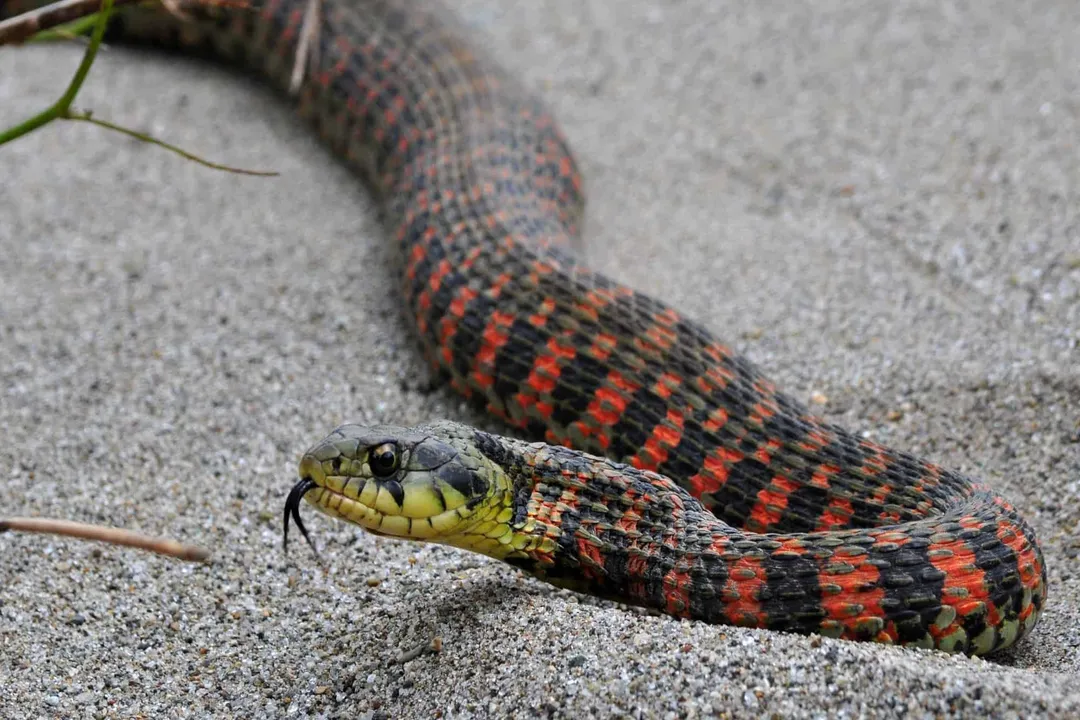
To better appreciate the diversity under the keelback umbrella, a comparison between the Asian Rhabdophis and the Australian Tropidonophis is illustrative. The ecological pressures seem to have driven drastically different defense evolution:
| Feature | Asian Rhabdophis (e.g., Tiger Keelback) | Australian Tropidonophis mairii |
|---|---|---|
| Venom Status | Venomous (oral glands) and Poisonous (sequestered toxins) | Non-venomous |
| Toxin Source | Sequestered bufadienolides from toads | N/A (eats toads but does not sequester toxin/venom) |
| Defense | Active: Hemorrhagic venom delivery (rear-fanged); Passive: Poison secretion | Primarily camouflage and flight/evasion |
| Dietary Note | Eats toads, becomes toxic | Eats toads, considered a hero for consuming invasive cane toads |
The Australian species, T. mairii, is non-venomous. Its survival strategy seems to rely heavily on camouflage and its semi-aquatic lifestyle. Interestingly, this harmless appearance can be a double-edged sword; in Australia, the keelback resembles the highly venomous Rough-scaled Snake, a case of mimicry that likely helps deter predators who associate the shape with danger. This mimicry provides a passive benefit entirely separate from chemical defense, showing how different environments shape survival tactics among snakes sharing a common physical descriptor.
The fact that T. mairii can safely consume the famously poisonous cane toad, an invasive species in Australia, highlights its unique ecological role, even without developing the chemical defenses seen in its Asian relatives. This capacity to safely process the toxin is a significant ecological adaptation, acting as a natural control agent against the invasive amphibian, an event that required 14 years of study to firmly establish the new species' identity.
# The Significance of Scale Structure
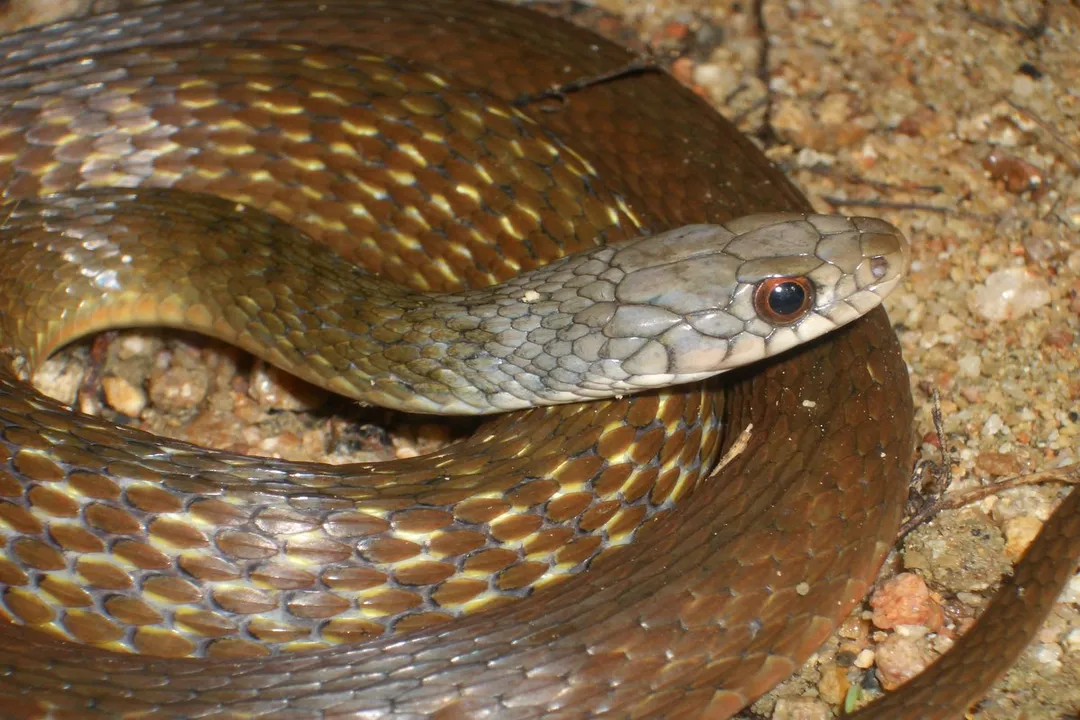
The persistent use of the name "keelback," despite the vast differences in venom and poison strategies across genera, emphasizes how fundamental the dorsal scale structure is to identification and classification at the common name level. While a casual observer might see a snake near a pond and call it a keelback based on appearance, a herpetologist recognizes that the underlying anatomy and defensive chemistry can range from completely benign to potentially lethal.
A key analytical point here is that the retention of the keel structure across Rhabdophis and Tropidonophis suggests that the utility of keeled scales goes beyond mere aesthetics or taxonomy. In aquatic or semi-aquatic life, pronounced keels can provide a functional advantage by increasing surface area, which assists in traction on slippery substrates like wet mud or vegetation, and potentially aiding in more efficient movement through water compared to smooth scales. While the Asian species invested heavily in chemical defense (both acquired poison and produced venom), the Australian lineage emphasized water-based movement and visual mimicry, yet both lines retained the textured, keeled dorsal scales. This suggests the scale topography serves a primary physical function in their shared ecological niche that predates, or is independent of, the evolution of sophisticated chemical warfare.
When observing any snake remotely fitting this description—rough-looking, often near water—it is critical to remember that the name itself is a warning sign about texture, but only a strong indicator, not a guarantee, of toxicity. The distinction between harmless T. mairii and the medically significant Rhabdophis species serves as a potent reminder that in the animal kingdom, shared appearance rarely equates to shared danger levels. For anyone interacting with these reptiles, relying on location and expert identification, rather than just the "keelback" label, is the only safe approach.
Related Questions
#Citations
Rhabdophis - Wikipedia
TIL about the Tiger Keelback snake, one of the very few poisonous ...
Keelback - A-Z Animals
A journey through time and place in search of a snake
New Species Of Keelback Snake Discovered In India