Which anatomical features of the vicuña work together to provide an early warning system against predators?
Answer
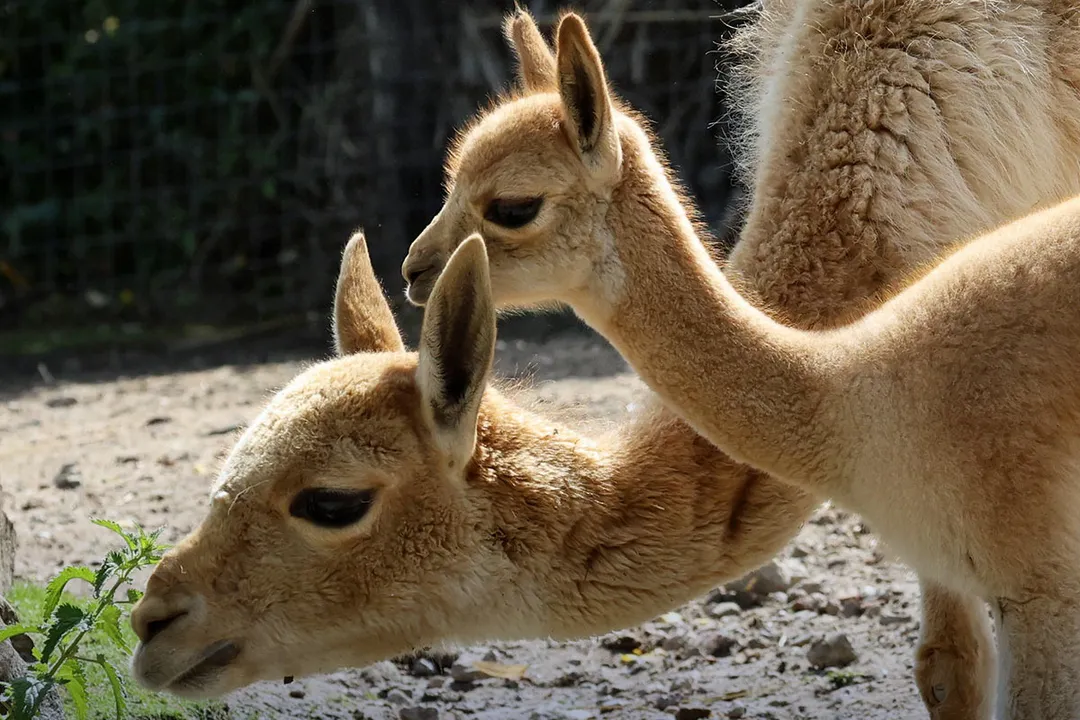
Large expressive eyes and large, erect, pointed ears
The vicuña possesses large, dark eyes positioned on the sides of its head, providing a wide field of vision to scan the expansive plains. This is complemented by large, erect, and pointed ears that constantly swivel to detect faint sounds, together creating an efficient sensory apparatus for identifying potential threats.
Related Questions
What is the typical high-altitude environment where the vicuña resides?How fine is the fiber produced by the vicuña compared to other natural animal fibers?What unique feature characterizes the lower incisors of the vicuña?At what height do adult vicuñas typically stand at the shoulder?Why are the feet of the vicuña structurally distinct from those of horses or deer?Which feature serves as a key identifying mark of the vicuña compared to other South American camelids?What is the maximum speed the vicuña can reach to escape predators like pumas?How does the vicuña differ from its domesticated relative, the alpaca?Which anatomical features of the vicuña work together to provide an early warning system against predators?How does the vicuña's coat function as a thermal regulator in its harsh environment?