Vicuña Physical Characteristics
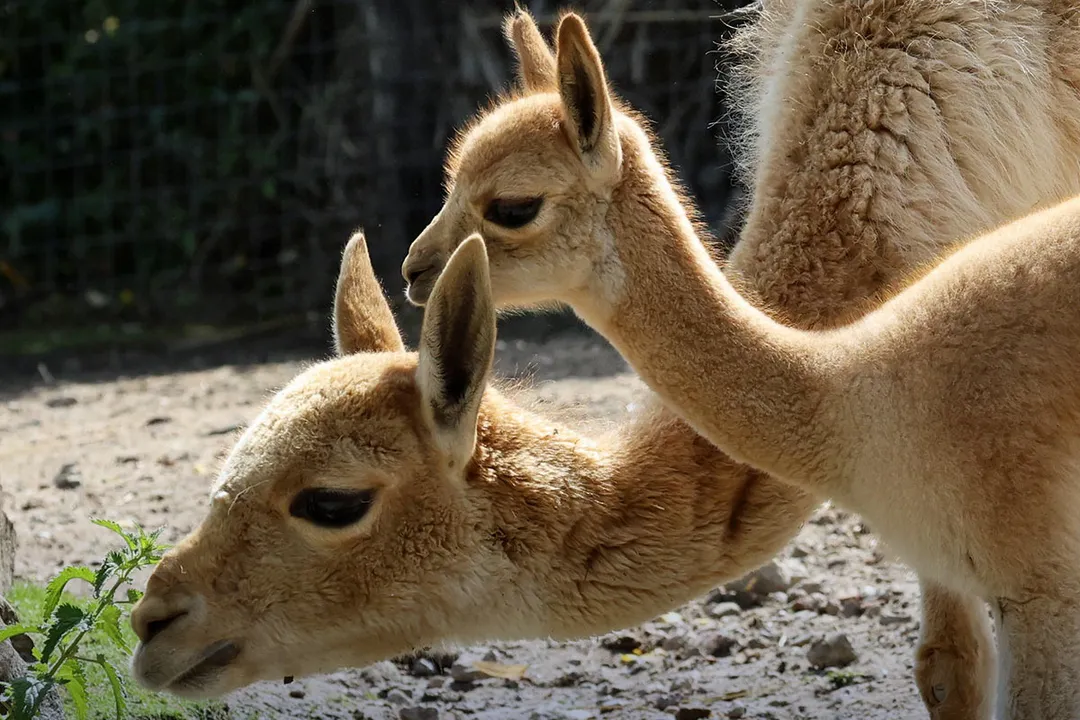
The vicuña, Vicugna vicugna, presents an image of delicate grace perfectly adapted to the harsh realities of the high Andean plains. These elegant camelids are the smallest members of the camel family, possessing a build that speaks of agility and resilience in an environment where every calorie counts and predators are a constant threat. [1][2] Observing one in its natural habitat, one is immediately struck by its slender legs and long neck, giving it a proportionally taller appearance than its actual size suggests. [4] Their existence in the harsh, high-altitude puna grasslands—often above 3,200 meters (10,500 feet)—has shaped every aspect of their physical makeup, from the density of their coat to the structure of their feet. [7][1]
# Size and Stature
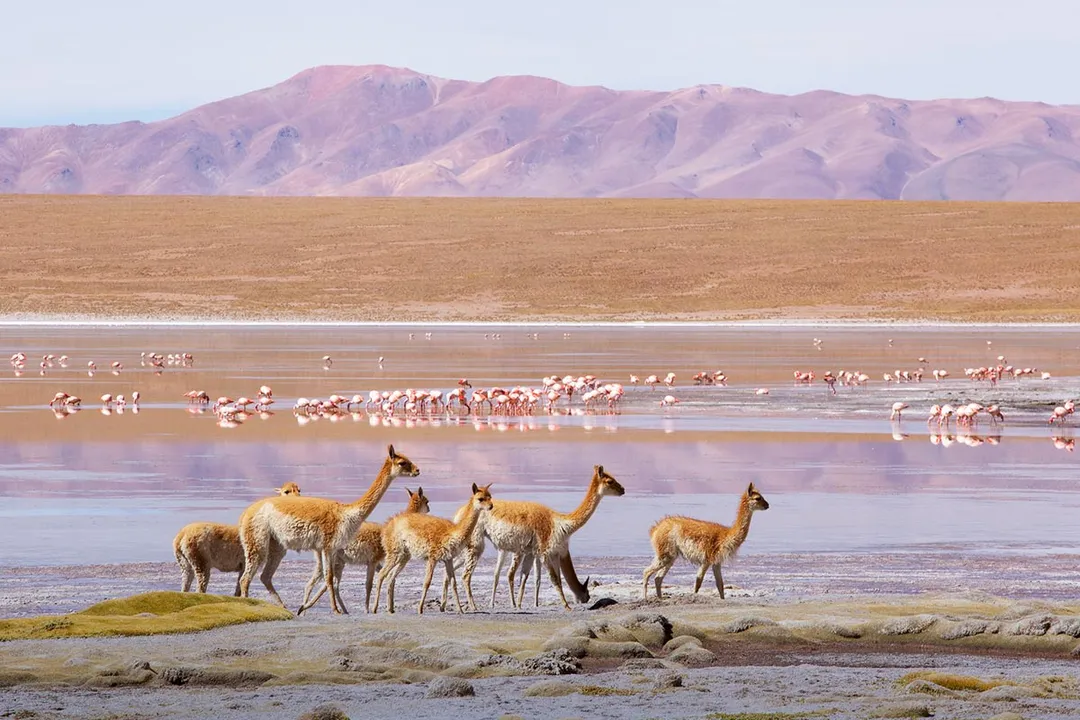
Physically, the vicuña is distinctly smaller than its domesticated relative, the alpaca, and significantly smaller than the wild guanaco. [1][3] Adult vicuñas typically stand between 75 to 85 centimeters (about 2.5 to 2.8 feet) tall at the shoulder. [2][4] Weight is another indicator of their lighter build, generally ranging from 35 to 65 kilograms (77 to 143 pounds). [1][4] Males are often slightly heavier than females, though the overall size difference is not extreme enough to be an obvious form of sexual dimorphism in terms of sheer bulk. [3] Their body is compact, but their long, thin legs give them a distinct, almost fragile look, which belies their phenomenal speed and stamina when fleeing danger in the open terrain. [4]
# The Prized Fleece
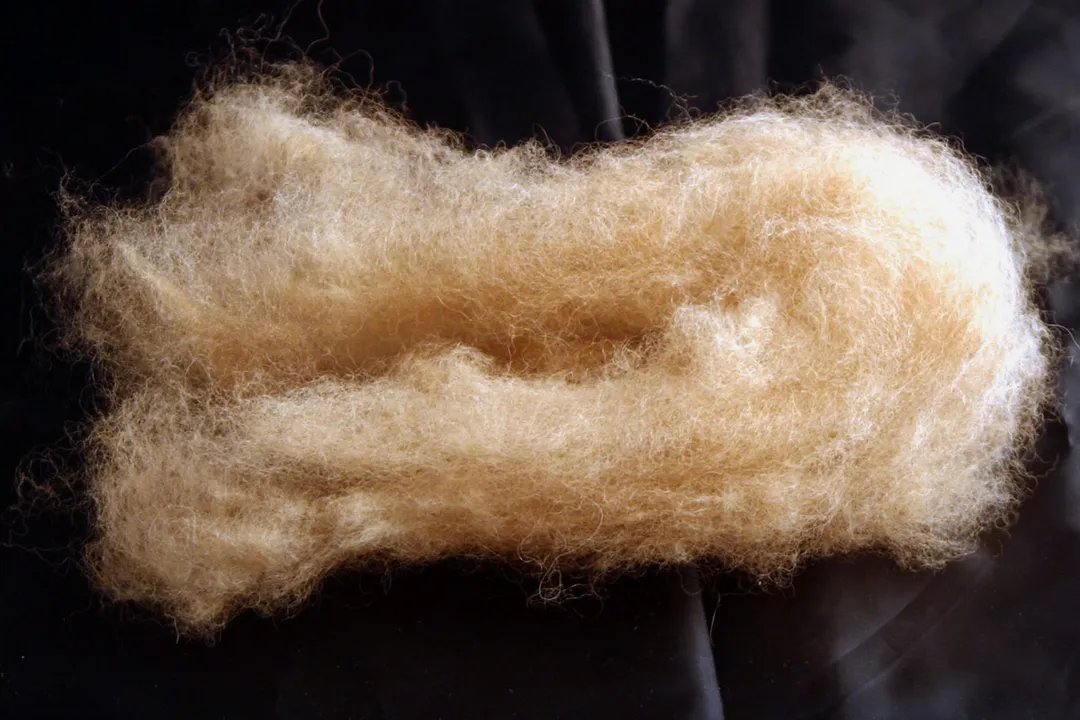
The most remarkable physical characteristic, and the reason for both their historical hunting and subsequent conservation success, is their coat. [6] The vicuña produces the finest animal fiber in the world. [6][1] The fibers are incredibly fine, measuring between 6 to 12 micrometers in diameter, a fineness that surpasses even high-grade cashmere. [6] This extreme fineness contributes to the fiber's exceptional softness and warmth. [1]
The fleece covers nearly the entire body, though it is notably shorter on the legs and the head. [4] The coloration is distinctive and helps them blend into their arid, grassy environment. The upper parts—the back and flanks—are generally a light cinnamon or tawny brown, sometimes described as fawn or reddish-brown. [1][2][8] This lighter coloration contrasts sharply with the underparts, which feature a prominent bib of long, white, shaggy hair extending from the lower chest down the belly. [1][4] This long chest tuft is a key identifying feature, setting it apart from other South American camelids. [4] The fiber covering the back is dense and thick, providing excellent insulation against the extreme cold of the altiplano nights. [1][3] In contrast, the wool on the sides is often described as being softer and finer than the wool on the back. [4]
One interesting observation about the fiber is the way it functions against the elements. In an ecosystem that swings wildly between intense daytime sun and freezing nighttime temperatures, this highly specialized coat acts as a sophisticated thermal regulator. [7] The density of the outer coat likely aids in shedding light rain, while the crimp and fineness of the undercoat trap body heat efficiently. [6] If we were to map out the required insulation: an animal living consistently above 4,000 meters might require a coat where the density provides insulation equivalent to a specialized, tightly woven fabric, which in the case of the vicuña is achieved naturally, resulting in a fiber that fetches prices many times higher than sheep's wool. [6]
# Head and Sensory Features
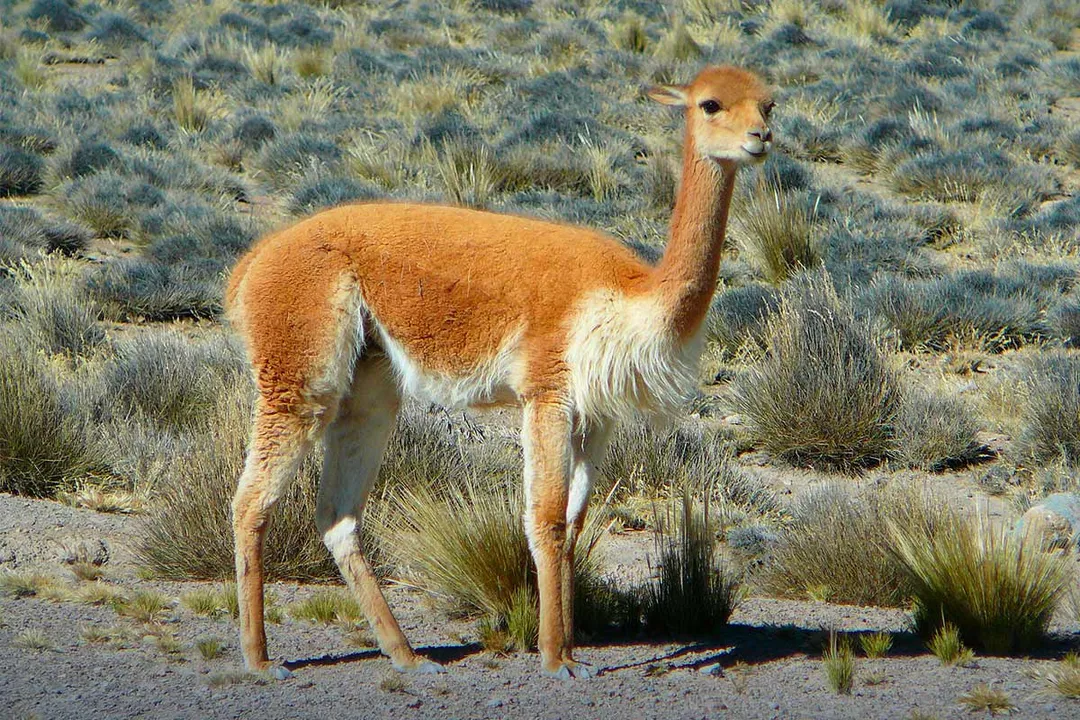
The head of the vicuña is relatively small in proportion to its body, but its facial features are highly tuned for survival in open spaces. [4] They possess large, dark, expressive eyes that are set somewhat to the sides, granting them a wide field of vision necessary for spotting predators across the vast plains. [1][8] Their ears are relatively large, erect, and pointed, constantly swiveling to pick up the faintest sounds. [4] This keen sense of hearing complements their excellent eyesight, providing a comprehensive early warning system. [3]
Perhaps the most specialized feature of the vicuña’s dentition, differentiating it from llamas and alpacas, lies in its incisor teeth. [4] Unlike other camelids, which have lower incisors that continue to grow throughout life, the vicuña’s lower incisors are continuously growing, resembling those of rodents. [1][4] This adaptation is crucial because their grazing behavior involves close cropping of tough, short grasses near the ground, leading to significant wear on the teeth. [4] The constant replenishment ensures they can maintain the necessary dental surface for grazing throughout their lives, a clear example of evolutionary fine-tuning to their specific diet. [4]
# Limbs and Gait
The vicuña's legs are long and slender, attributes that contribute to their status as one of the fastest ungulates in South America, capable of reaching speeds up to 50 kilometers per hour (31 mph). [1][7] Their musculature is built for sustained speed over varied terrain, crucial for escaping pumas or Andean foxes. [3]
Their feet are perfectly suited for the rocky, uneven ground of the high Andes. Like other camelids, they are two-toed, but they lack the hard hooves seen in true ungulates like horses or deer. [4] Instead, they have padded feet with tough, leathery bottoms and short, blunt toenails, often described as modified nails or claws. [4][9] The sole of the foot has a spongy pad that allows for excellent traction and cushioning on loose scree and rough soil. [4] This soft pad design means they tread lightly on the fragile high-altitude ecosystem, a subtle but important ecological distinction when comparing them to hard-hooved grazers. [1] This padded structure allows them to grip the terrain without causing the severe erosion associated with harder hoof prints, which is a vital element in maintaining the delicate balance of the puna environment. [7]

# Sexual Differences and Variation
While males and females share the general physical blueprint, subtle variations exist. [3] Males tend to be slightly larger and more robust than females, although as mentioned, this is not a drastic difference. [3] During the breeding season, males often exhibit a slightly more prominent and longer mane or chest bib, though this can overlap with individual variation within the sexes. [4]
Coloration, while consistently tawny brown on top and white underneath, can show minor differences in the intensity of the cinnamon shade depending on the specific sub-region or altitude where the animal resides. [1] For instance, vicuñas found at the highest elevations might appear to have a slightly denser, perhaps paler coat due to adaptation to colder, more intense solar radiation, though this variation is more pronounced in fiber texture than overall body color. [1][3] Furthermore, individuals exhibit varying lengths of the characteristic white bib, which can sometimes be used in field identification, though it is an inconsistent marker. [4]
# Summary of Key Physical Traits
To summarize the distinct physical profile of Vicugna vicugna, one can focus on these defining characteristics:
| Feature | Description | Comparison Note |
|---|---|---|
| Height (Shoulder) | 75–85 cm | Smallest South American camelid. [4] |
| Weight | 35–65 kg | Light build for agility. [1] |
| Fiber Diameter | 6–12 micrometers | World's finest natural animal fiber. [6] |
| Coloration | Tawny/Cinnamon back; white underbelly/chest bib. [2] | Distinctive long white chest tuft. [4] |
| Teeth | Continuously growing lower incisors | Unique among camelids; rodent-like. [1][4] |
| Feet | Padded soles, two toes, modified nails | Excellent traction on rocky terrain; soft tread. [4] |
It is worth noting the distinction between the vicuña and the alpaca, which is often confused. While the alpaca was selectively bred from the vicuña (or perhaps a hybrid involving vicuñas and guanacos, depending on the theory) primarily for its fiber, the vicuña retains a wilder, more gracile form. [1] The alpaca's coat is generally denser and covers more of its body, often obscuring the slender limbs seen so clearly on the vicuña. [6] The vicuña is essentially the 'wild template' of fine fiber production, while the alpaca represents the domesticated exaggeration of that trait. [6]
The physical adaptations for high altitude are not just about the coat; they involve physiology too, though perhaps less visible. Their ability to thrive in oxygen-thin air is intrinsically linked to their physical efficiency—their light frame and efficient cardiovascular system work in concert with their dense fleece to maintain core temperature and conserve energy where biomass is scarce. [7] Their entire structure is a masterclass in high-elevation survival, favoring leanness and superior insulation over bulk. [3]
Related Questions
#Citations
Vicuña
Vicuna | Habitat, Diet, Lifespan, & Facts
Vicugna
Vicuña
Vicuna Facts For Kids | AstroSafe Search
Vicuna - The World's Finest Natural Fiber
Vicuna: A Sacred Animal of the Peruvian Andes
Vicuna
Vicuna - Facts, Diet, Habitat & Pictures on Animalia.bio
Vicuña facts, distribution & population