Which anatomical feature of the Green Vine Snake allows it to be an effective hunter despite the often dim lighting conditions of its habitat?
Answer
The presence of very large eyes relative to its head size
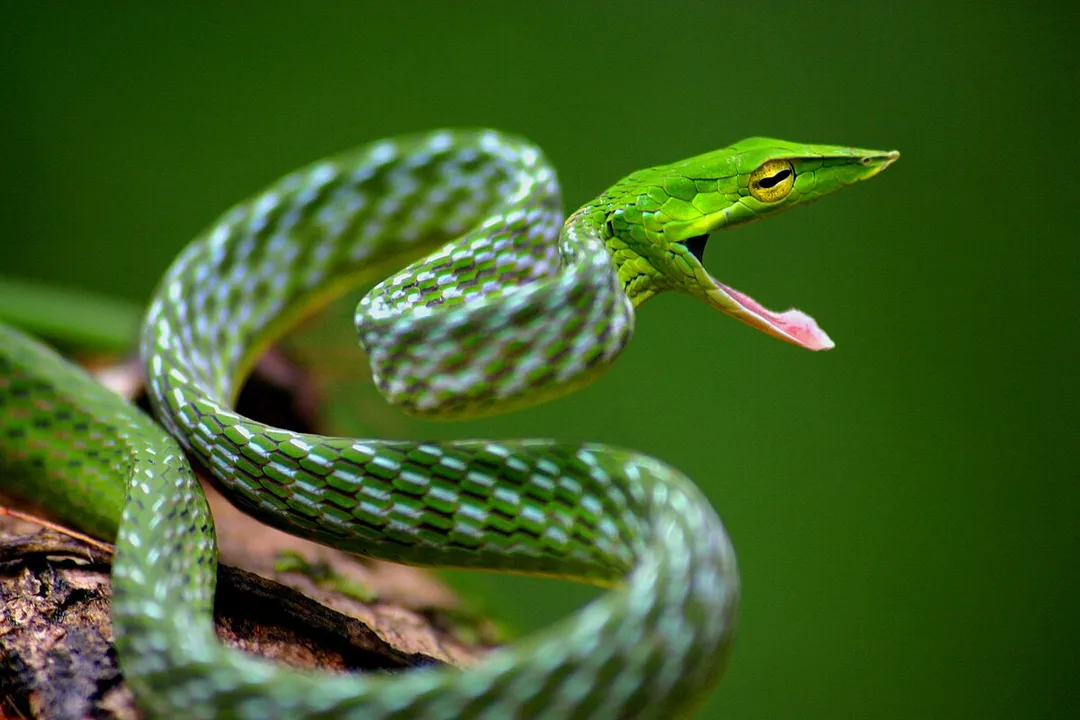
The vine snake's ability to hunt effectively in the dappled and often dim light of the forest canopy is heavily dependent on its ocular anatomy. The snake possesses eyes that are disproportionately large compared to its head size, which facilitates the gathering of significant amounts of light. This visual enhancement is essential for locating and targeting prey in the complex light conditions of a forest, allowing the snake to operate with high visual accuracy even when light is limited.
Related Questions
What specific anatomical feature does the Latin term nasuta in the name Ahaetulla nasuta refer to?What environmental or physiological conditions trigger the Green Vine Snake to shift from its vibrant green color to brown or reddish-brown tones?How does the physical size of female Ahaetulla nasuta typically differ from that of the males of the same species?Why do Green Vine Snakes possess horizontal pupils rather than the vertical pupils common to many other ambush predators?How does the rear-fanged venom delivery system of the Green Vine Snake differ from that of front-fanged snakes like vipers?What is the primary function of the keeled scales found on the skin of the Green Vine Snake?How do vine snakes typically maneuver through complex three-dimensional canopy layers using their slender body structure?What technique do vine snakes use to hold their prey, such as small birds or tree frogs, during the initial capture phase?Which anatomical feature of the Green Vine Snake allows it to be an effective hunter despite the often dim lighting conditions of its habitat?What is the primary purpose of the rigid, pointed snout extension in the Green Vine Snake?