What advantage do the slightly longer legs of the Wood Bison provide in their northern ranges?
Answer
Aids movement across wetland and muskeg terrain
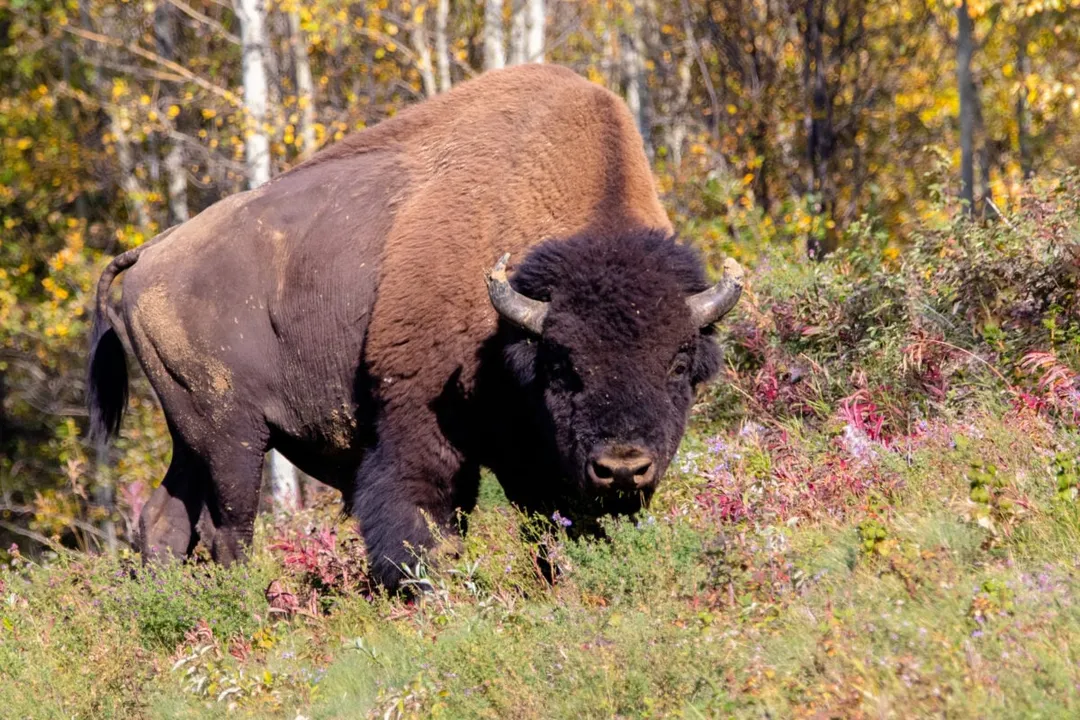
The subtle differences in limb proportion between the Wood Bison and the Plains Bison reflect evolutionary adaptation to specific environmental pressures. The Wood Bison possesses generally longer legs compared to its southern relative. This morphological trait is a direct adaptation enabling more effective navigation through the challenging, soft ground conditions characteristic of their boreal forest and parkland ranges, specifically the wetland and muskeg areas. The longer limbs help distribute their massive weight and provide superior footing where shorter-legged ungulates might struggle to maintain purchase.
Related Questions
What is the maximum documented weight for a mature Wood Bison bull?What structures support the massive muscular hump of the Wood Bison?Where are the distinctly lighter, straw-colored patches, sometimes called "britches," found on the Wood Bison coat?What is the approximate maximum height a mature Wood Bison bull can reach at the shoulder?How is the horn curvature of the Wood Bison described regarding its tips?What advantage do the slightly longer legs of the Wood Bison provide in their northern ranges?How does the head shape of the Wood Bison compare to the Plains Bison?What is the functional implication of the heavy musculature anchored by the shoulder hump structure?What color is the coat of young Wood Bison calves upon birth?What maximum speed can Wood Bison reach over short distances when charging?