What visual indicator suggests a Northern Alligator Lizard has recently dropped its tail?
Answer
A noticeably brighter tail color
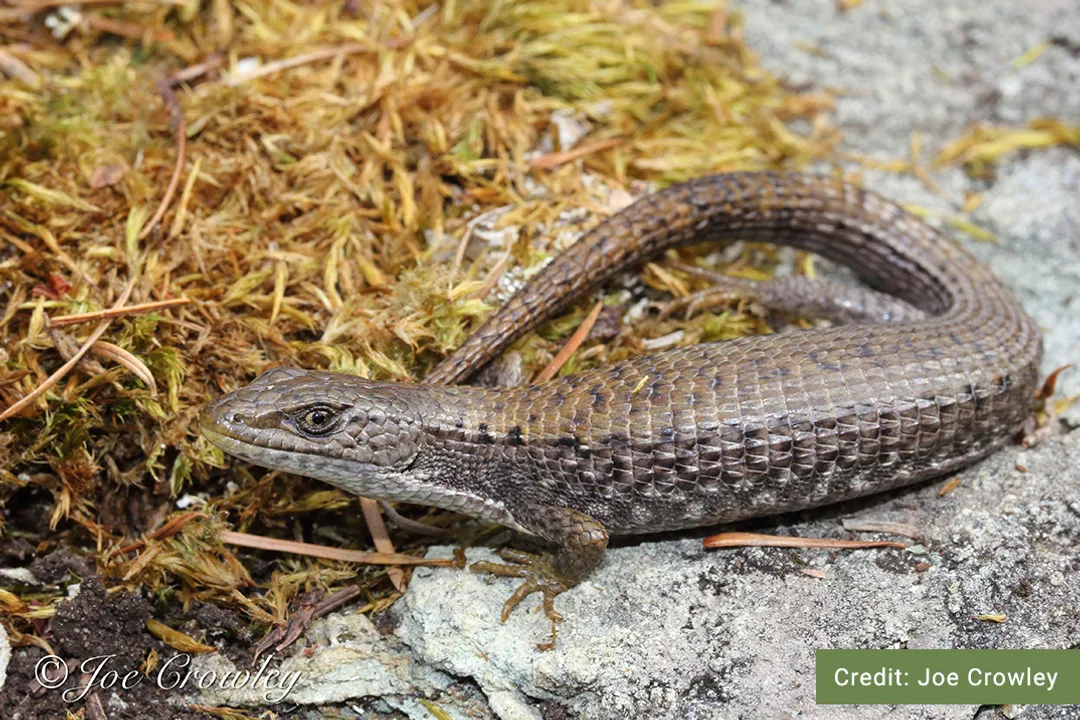
If an observer notices that a Northern Alligator Lizard possesses a tail that appears noticeably brighter, perhaps paler or shinier in comparison to the main body coloration, this serves as clear evidence that the original tail was previously lost through autotomy. When the tail is shed, a replacement begins to grow back, and this new growth often presents with a distinct, lighter hue initially. This difference in color acts as a visual cue signaling the lizard's recent successful evasion of a threat, indicating that while the lizard survived the encounter, it expended vital stored energy to regenerate that crucial appendage used for balance.
Related Questions
What scientific name identifies the lizard preferring damp forest understory?What reproductive strategy defines *E. coerulea*'s live birth?What is the process called when the lizard sheds its tail for escape?What key feature distinguishes the Northern Alligator Lizard from skinks?What visual indicator suggests a Northern Alligator Lizard has recently dropped its tail?What invertebrates form the primary diet of these ground-dwelling insectivores?What key requirement do moist woodlands and damp meadows provide for *E. coerulea*?How is the diurnal activity of *E. coerulea* regulated on very hot days?If an observer flips a rock to find a lizard, what is the vital immediate action required?Which specific Canadian province is mentioned as the northernmost extent of *E. coerulea*'s range?