What is the classification of the American alligator?
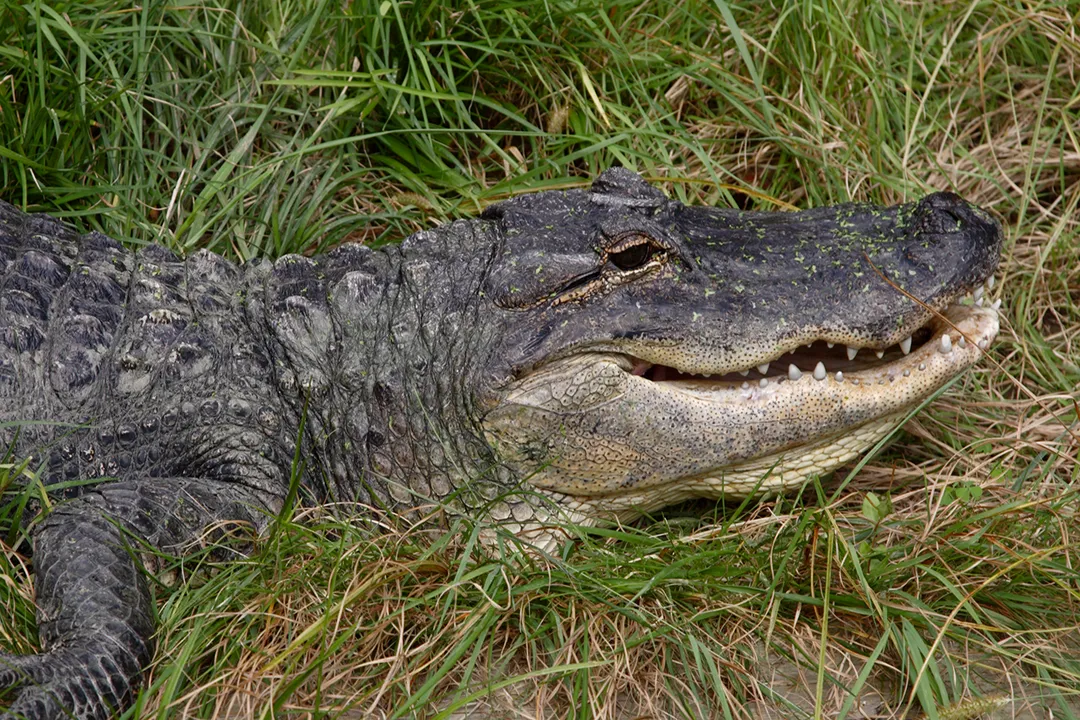
The American alligator (Alligator mississippiensis) occupies a specific and well-defined spot within the grand scheme of life on Earth, a placement determined by a long history of evolution that groups it with other sprawling reptiles. [5] Understanding its classification is key to understanding its biology, behavior, and conservation status across the southeastern United States. [1] This classification is not arbitrary; it is a structured, hierarchical system that moves from the broadest category—Kingdom—down to the most specific—species. [4]
# Species Name
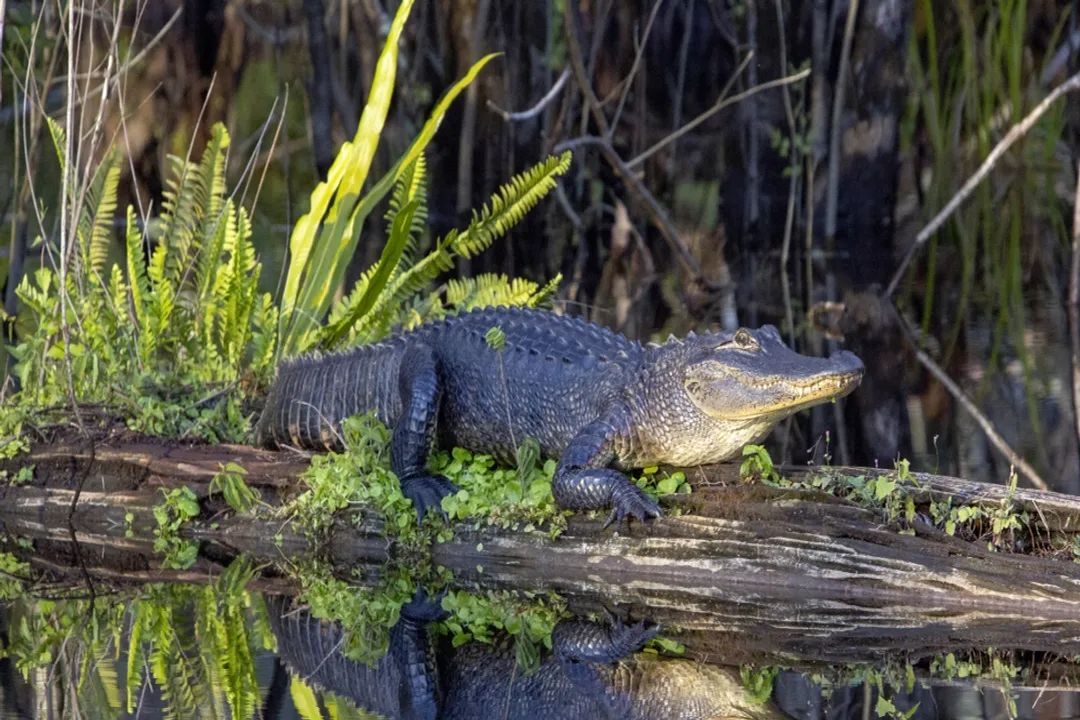
The full scientific designation for this reptile is Alligator mississippiensis. [4] This binomial nomenclature, provided by scientists, ensures universal recognition regardless of local common names, which can sometimes be confusing or misleading. [4] The genus, Alligator, groups it with the Chinese alligator, while the species name, mississippiensis, refers to the great river basin along which it was first scientifically documented. [4] Although commonly referred to simply as an alligator, recognizing the full species name places it accurately within the tree of life. [1]
# Taxonomic Ranks
The classification begins at the highest levels, placing the alligator firmly within the animal kingdom. It belongs to Kingdom Animalia, meaning it is multicellular and heterotrophic, obtaining energy by consuming other organisms. [4] Moving down the chain, it falls under Phylum Chordata, indicating it possesses a notochord at some stage of development, which generally includes vertebrates. [4]
The next level, Class, is where things become more specific to its physical form: Class Reptilia. [5] Reptiles are characterized by several key traits that distinguish them from amphibians or mammals, such as breathing air using lungs, having scales or scutes covering their skin, and generally being ectothermic, meaning they rely on external sources to regulate body temperature. [2][5] The American alligator is a large reptile, with adult males sometimes exceeding 11 feet in length. [2]
# Crocodilian Order
Within the Class Reptilia, the alligator is placed into Order Crocodilia. [4][5] This order groups together the alligators, crocodiles, caimans, and gharials—the apex aquatic predators of freshwater and brackish environments globally. [5] Members of Crocodilia share distinct characteristics that set them apart from other reptiles like lizards or snakes, including a powerful, muscular tail used for propulsion in water, an elongated snout, and a secondary palate that allows them to breathe even when their mouth is full of water or submerged. [2] Their ancient lineage means that Crocodilians, including the American alligator, have changed relatively little in form over millions of years compared to many other vertebrate groups. [5]
This level of classification is where things get interesting when comparing alligators to their closest relatives, the crocodiles. While they look similar to the casual observer, their placement into different families highlights significant anatomical differences, primarily relating to the shape of the skull and the arrangement of their teeth. [4] For instance, when the alligator’s mouth is closed, the teeth of the upper jaw overlap the lower, often hiding the lower teeth entirely, a key distinction from most crocodiles where both upper and lower teeth are often visible along the jawline. [2] This subtle morphological difference is what drives the separation below the Order level, illustrating how classification systems rely on detailed anatomical comparisons built over time.
# Family Placement
The Order Crocodilia further divides into three primary families: Alligatoridae (alligators and caimans), Crocodylidae (crocodiles), and Gavialidae (gharials). [4] The American alligator belongs to Family Alligatoridae. [4] This separation is critical; while both alligators and crocodiles are apex predators within their respective habitats, their evolutionary split occurred long enough ago to establish clear differences in physiology and preferred habitat, although both species are highly adapted to semi-aquatic life. [2][4]
What strikes the observer is how closely related the American alligator is to the Chinese alligator, which shares the genus Alligator, versus its relationship to a true crocodile like the American crocodile (Crocodylus acutus), which resides in a different family within the same order. [4] The specific placement within Alligatoridae confirms its shared heritage with the caimans found in Central and South America, differentiating it from the global distribution of true crocodiles. [4]
# Subfamily Distinction
The classification continues down to Subfamily Alligatorinae, which exclusively contains the members of the genus Alligator—the American alligator and the Chinese alligator. [4] This refinement shows that A. mississippiensis shares a more recent common ancestor with the Chinese alligator than it does with any of the caimans, which belong to the Subfamily Caimaninae. [4]
It is useful to consider this hierarchy in light of long-term species management. The fact that the American alligator is classified as Alligator mississippiensis dictates the specific federal and state protections it falls under. When states like Florida or Louisiana manage alligator populations, they must adhere to regulations tailored for the Alligatoridae family, which are often distinct from the protocols used for managing true crocodiles or even freshwater turtles, due to varying dietary habits and nesting behaviors tied to their taxonomy. [1][7] This means the simple classification dictates management strategy.
# Legal Status
While not strictly a biological classification, the conservation status applied to the American alligator is intrinsically linked to its scientific identity and historical decline. In 1973, the species was listed as threatened under the Endangered Species Act (ESA) due to severe population declines. [1] However, successful conservation efforts allowed the U.S. Fish and Wildlife Service to officially remove the species from the list in 1987, marking it as a conservation success story. [1]
Despite being removed from the general list, the alligator remains protected under the ESA. This is because of a specific provision: the listing protects the American alligator throughout its entire range, which includes areas where a closely related, similarly protected species, the American crocodile, also resides, or where state management plans require federal oversight. [1] Therefore, while biologically robust in many areas now, its classification and location still trigger specific legal responsibilities across its southeastern range. [1][7]
Related Questions
#Citations
American Alligator (Alligator mississippiensis) | U.S. Fish & Wildlife ...
American Alligator Facts and Information | United Parks & Resorts
American Alligator - Alligator Mississippiensis | Wildlife Journal Junior
American Alligator (Alligator mississippiensis) - iNaturalist
American alligator | Smithsonian's National Zoo and Conservation ...
American alligator (Alligator mississippiensis) - Species Profile
[PDF] General Description Taxonomy - NC Wildlife
American Alligator - Saginaw Children's Zoo