Is a Northern Harrier a hawk or falcon?
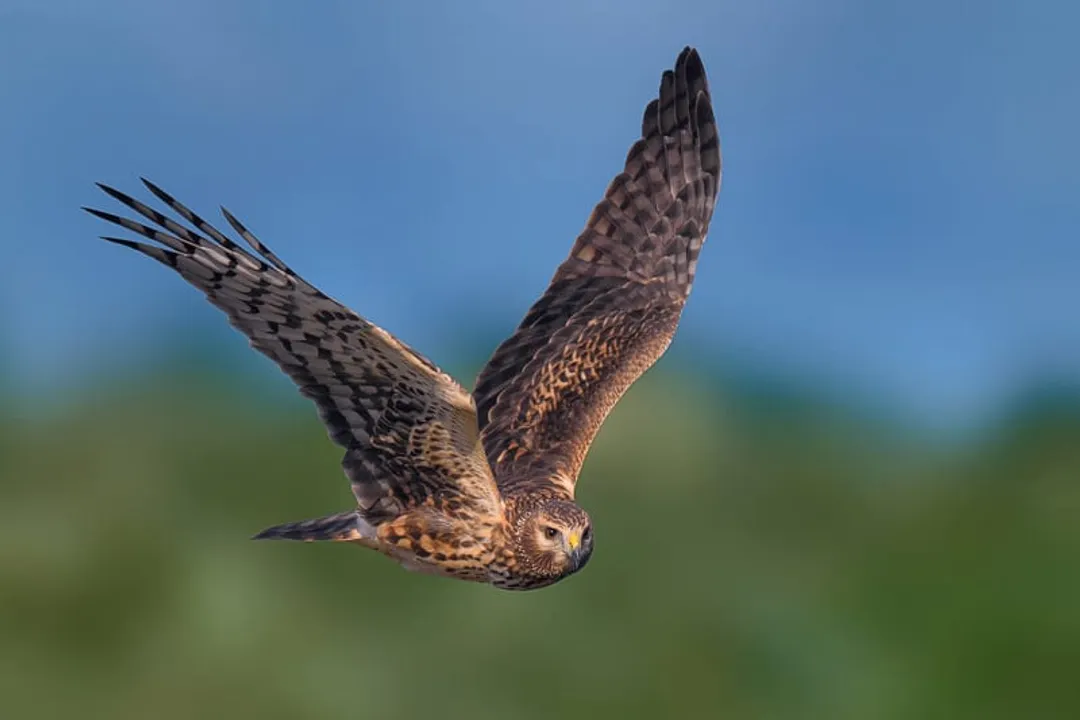
The distinctive, low-sweeping flight of the Northern Harrier often leaves observers scratching their heads, trying to slot the bird into the familiar categories of raptors they know. Is this slender, long-winged bird a hawk, or perhaps one of the faster-moving falcons? This confusion is understandable, as the harrier possesses physical and behavioral traits that seem to borrow from both groups while belonging fully to neither, in the common vernacular sense. Despite its common name linking it to hawks, its proper placement in the bird world reveals a unique evolutionary path that separates it from the broad-winged soaring hawks and the sharp-stooping falcons. [1][4]
# Family Placement
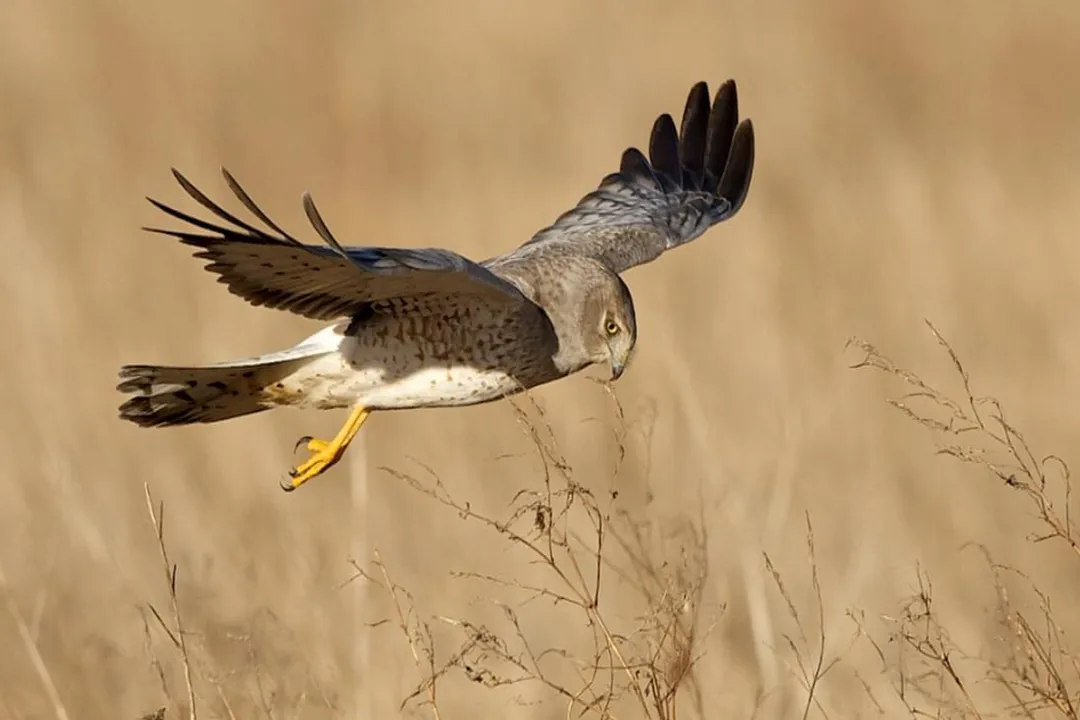
To settle the initial query, the Northern Harrier belongs to the family Accipitridae. [4][9] This is the same large family that encompasses the familiar buteos, accipiters, and true eagles. [1] Crucially, this places the harrier firmly within the lineage commonly referred to as "hawks" in North America, distinct from the Falconidae family, which includes the falcons. [4] The scientific name for the North American species is Circus hudsonius. [1] Even though it is taxonomically a hawk, its morphology and hunting style set it apart enough that grouping it strictly with a Red-tailed Hawk, for example, misses significant evolutionary and ecological details. [4] It is, as its scientific name Circus suggests, a specialist within the hawk family. [1]
# Flight Style
Perhaps the most immediate clue to the harrier's identity, and the source of much public confusion, is its flight pattern. Falcons are known for their streamlined bodies built for speed, employing rapid, stiff-winged flapping or dramatic dives called stoops. [2] Hawks, particularly the Buteos, tend to utilize broad wings for soaring on thermals, often circling high above open country. [2] The Northern Harrier avoids both these typical modes of aerial travel.
Harriers are famous for their low, deliberate flight, often described as coursing. [6] They cruise just feet above the ground or marsh vegetation, rocking side-to-side like a sailboat in a breeze as they search for prey concealed below. [2][7] The wing beat is shallow and slow, which some observers note makes the bird appear almost buoyant or moth-like in its movement. [4][7] This distinctive, undulating flight is a hallmark trait that veteran birders use immediately to identify a harrier, regardless of plumage. [6] When you see a raptor skimming the grasslands or marshes with that telltale floppy, low gait, you are almost certainly looking at a harrier, not a falcon in active pursuit or a soaring hawk. [8]
# Physical Markers
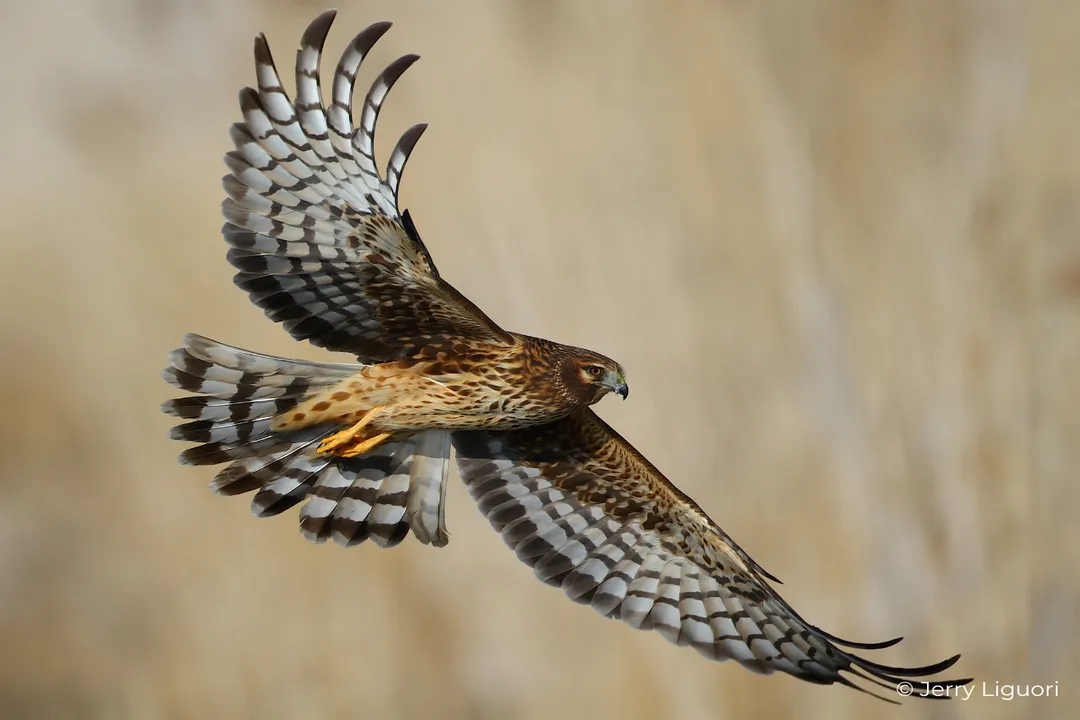
When perched or viewed at a distance, a harrier presents several physical characteristics that aid in distinguishing it from other raptors. [4] The body is slender, giving it a somewhat lanky appearance compared to the bulkier Buteos or the compact shape of a falcon. [1] Males are a striking pale gray, often called "gray ghosts," while females and juveniles are brownish, sometimes displaying white rumps which are visible in flight. [1][7]
A key feature that often goes unnoticed but is structurally important is the facial disc. Similar to owls, harriers possess a ruff of feathers around their face that helps direct sound to their ears. [4] This adaptation is unique among most North American hawks and points toward their specialization in hunting by sound and sight close to the ground, much like an owl might hunt at night. [4] Falcons lack this pronounced facial structure. Furthermore, harriers have relatively long tails and wings compared to other accipiters or falcons, contributing to their buoyant, low-level flight profile. [1]
To visualize the differences that might cause initial misidentification, consider this comparison of flight and build characteristics:
| Feature | Northern Harrier (Circus) | Buteo Hawk (e.g., Red-tail) | Falcon (Falco) |
|---|---|---|---|
| Taxonomic Family | Accipitridae (Hawk Family) | Accipitridae | Falconidae |
| Typical Flight | Low, slow, buoyant, rocking/undulating | High soaring, circling on thermals | Fast flapping, high-speed stoops |
| Wing Shape | Long, narrow wings, often held in a slight dihedral (shallow 'V') | Broad, rounded wings | Pointed, narrow wings |
| Distinguishing Mark | Facial disc, white rump patch (in flight) | Broad chest, dark patagial marks (often) | Dark "mustache" mark (malar stripe) |
This table illustrates that while the harrier shares a family tree with hawks, its specific lifestyle—dictated by its physical structure—leans toward aerial behaviors that contrast sharply with the high-altitude cruising of a typical Buteo. [1][4]
# Hunting Strategy
The method by which a Northern Harrier secures a meal is intimately tied to its unique flight pattern. They hunt primarily by quartering open fields, grasslands, and marshes. [2][7] Their ability to fly slowly and close to the vegetation allows them to surprise small mammals like voles, mice, or shrews, as well as small birds, snakes, or frogs hiding in the grass. [1][8] The primary intent of that low, slow flight is to visually or auditorily detect prey that has been flushed from cover by the bird’s presence or movement. [4]
Falcons, conversely, are creatures of speed. They often hunt from a high perch or while flying fast, relying on extreme velocity to overtake prey in the open air. [2] A Peregrine Falcon is specialized for catching birds mid-flight, while a Kestrel might hover before dropping quickly. [2] Hawks, such as the Red-shouldered Hawk, might use an ambush technique from a low perch, waiting for an unsuspecting creature to pass beneath, or soar high to spot prey before gliding down in a more direct attack than the harrier's meticulous search. [2] The harrier’s approach is methodical, almost systematic, covering ground inch by inch, a trait less necessary for birds that hunt from altitude or rely on sheer speed.
If you are new to birdwatching in marshy, agricultural, or prairie areas during the winter months, you might find yourself constantly searching the sky for large raptors. A helpful way to refine your search, especially when trying to confirm a sighting, is to focus your binoculars down rather than up when you spot that distinctively low flier. [6] If the bird is spending more time looking toward the ground than scanning the horizon, you are watching the unique hunting technique of the Circus genus at work, regardless of whether its wings are broad like a hawk's or relatively narrow like a falcon's. [2][4] This ground-hugging reconnaissance is what defines the Northern Harrier's daily existence in the field.
# Plumage Variation
The visual identification of harriers is complicated slightly by sexual dimorphism—the difference in appearance between males and females. Adult males are often called "gray ghosts" because of their pale, silvery-gray plumage across most of the body, which contrasts sharply with their dark wingtips. [1] This coloration is quite unusual among North American raptors and makes the adult male relatively easy to identify if seen clearly.
Females and immature birds present a different challenge, as they are predominantly warm brown above, with streaking on the breast and belly. [1] Although they share the same slender shape and low flight style, the brownish hue can cause an inexperienced observer to mistake a female harrier for a brown hawk, such as a juvenile Accipiter or a light-morph Buteo. [7] However, even with the brown plumage, the flight style remains the most reliable initial ID marker, followed by the visible white rump patch seen on all plumages when viewed from behind in flight. [7]
# Niche Differentiation
The Northern Harrier fills a specific ecological niche that neither the typical soaring hawk nor the speedy falcon occupies to the same degree. Its reliance on open habitats like grasslands, meadows, and marshes is nearly absolute, as these environments provide the low cover necessary for its hunting strategy. [8] This habitat preference often concentrates them in specific, predictable areas, unlike many Buteos which might be seen near woodland edges or falcons often preferring cliffs or human structures for nesting but hunting widely in the air. [8]
The existence of the harrier within the Accipitridae family showcases the incredible adaptability of birds of prey. While the family is largely defined by members that soar to spot prey or use rapid strikes from perches, the harrier evolved specialized features—the facial disc for enhanced sound detection and the low, buoyant flight for surprising terrestrial prey—to succeed in environments where high-altitude searching is ineffective. [4] It serves as a reminder that while Linnaean classification groups them with hawks, the common names often fail to capture the full spectrum of predatory strategies birds develop. [9] The harrier is a living example of convergent evolution with owls, using auditory cues and low-level surprise to survive where speed or high vantage points are less advantageous.
Related Questions
#Citations
Northern Harrier Identification - All About Birds
Northern Harrier | Hawk Mountain Sanctuary: Learn Visit Join
Is it a Northern Harrier hawk? - Facebook
Northern Harrier Fact Sheet - HawkWatch International
Is this a Harrier? How should I tell vs. a hawk? : r/birding - Reddit
Bird Guide | Environmental Data Center
Northern Harrier - Tucson Bird Alliance
Northern Harrier - Commonwealth of Pennsylvania
Northern Harrier | The Peregrine Fund