How is the diurnal activity of *E. coerulea* regulated on very hot days?
Answer
Retreating deep into cool, moist hiding spots
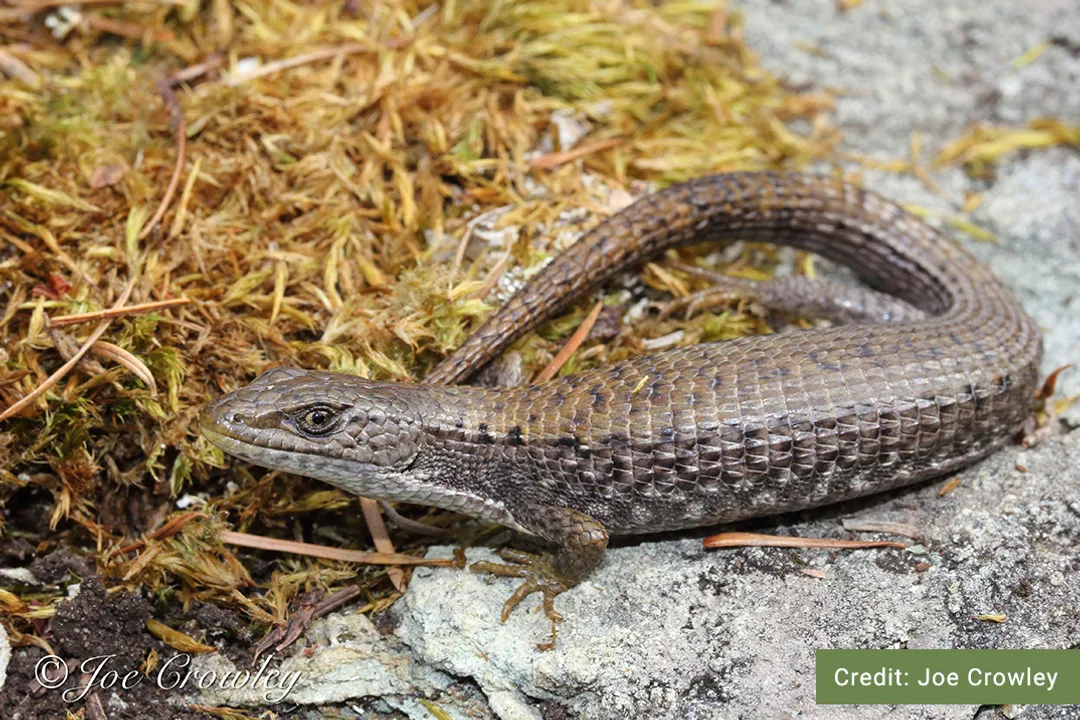
Although the Northern Alligator Lizard is generally considered diurnal, meaning it is active during daylight hours, its specific activity schedule is closely tied to ambient temperature and light intensity. On days characterized by extreme heat and bright sunshine, the lizard actively manages its thermal load by retreating from the surface. It will seek refuge deep inside its cool, moist hiding locations, such as under logs or deep leaf litter, to avoid overheating and dangerous levels of water loss through desiccation. Activity levels typically peak during the milder periods of the day, specifically early morning or late afternoon, when environmental conditions are most favorable for foraging.
Related Questions
What scientific name identifies the lizard preferring damp forest understory?What reproductive strategy defines *E. coerulea*'s live birth?What is the process called when the lizard sheds its tail for escape?What key feature distinguishes the Northern Alligator Lizard from skinks?What visual indicator suggests a Northern Alligator Lizard has recently dropped its tail?What invertebrates form the primary diet of these ground-dwelling insectivores?What key requirement do moist woodlands and damp meadows provide for *E. coerulea*?How is the diurnal activity of *E. coerulea* regulated on very hot days?If an observer flips a rock to find a lizard, what is the vital immediate action required?Which specific Canadian province is mentioned as the northernmost extent of *E. coerulea*'s range?