If an observer flips a rock to find a lizard, what is the vital immediate action required?
Answer
Immediately return the cover exactly as found
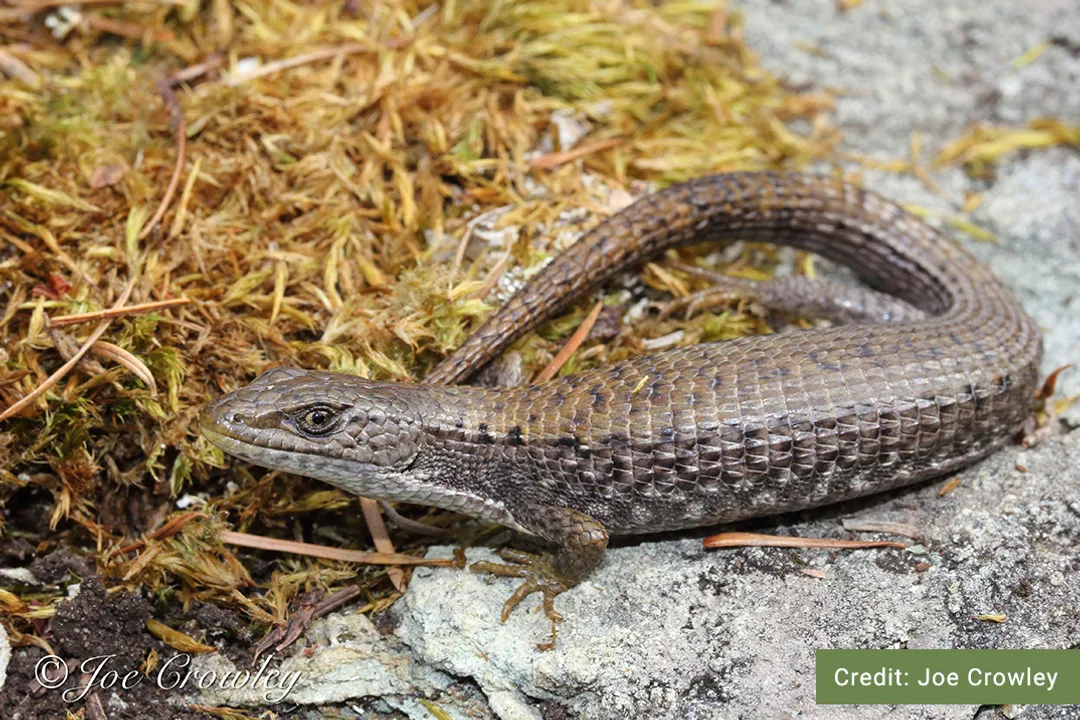
Ethical observation practices dictate that if an individual moves natural cover objects, such as a rock or piece of wood, to look underneath for wildlife, the cover must be immediately returned to its original position exactly as it was found. This seemingly minor action is critically important because these overturned objects create specific microclimates essential for the survival of the lizard and the numerous small insects and organisms that rely on that damp, dark environment. Failure to replace the cover exposes the inhabitants to immediate threats, including rapid drying out due to exposure to the sun and increased vulnerability to predators.
Related Questions
What scientific name identifies the lizard preferring damp forest understory?What reproductive strategy defines *E. coerulea*'s live birth?What is the process called when the lizard sheds its tail for escape?What key feature distinguishes the Northern Alligator Lizard from skinks?What visual indicator suggests a Northern Alligator Lizard has recently dropped its tail?What invertebrates form the primary diet of these ground-dwelling insectivores?What key requirement do moist woodlands and damp meadows provide for *E. coerulea*?How is the diurnal activity of *E. coerulea* regulated on very hot days?If an observer flips a rock to find a lizard, what is the vital immediate action required?Which specific Canadian province is mentioned as the northernmost extent of *E. coerulea*'s range?