What term describes the strong attraction of active adult Christmas beetles to artificial lights after dusk?
Answer
Phototaxis
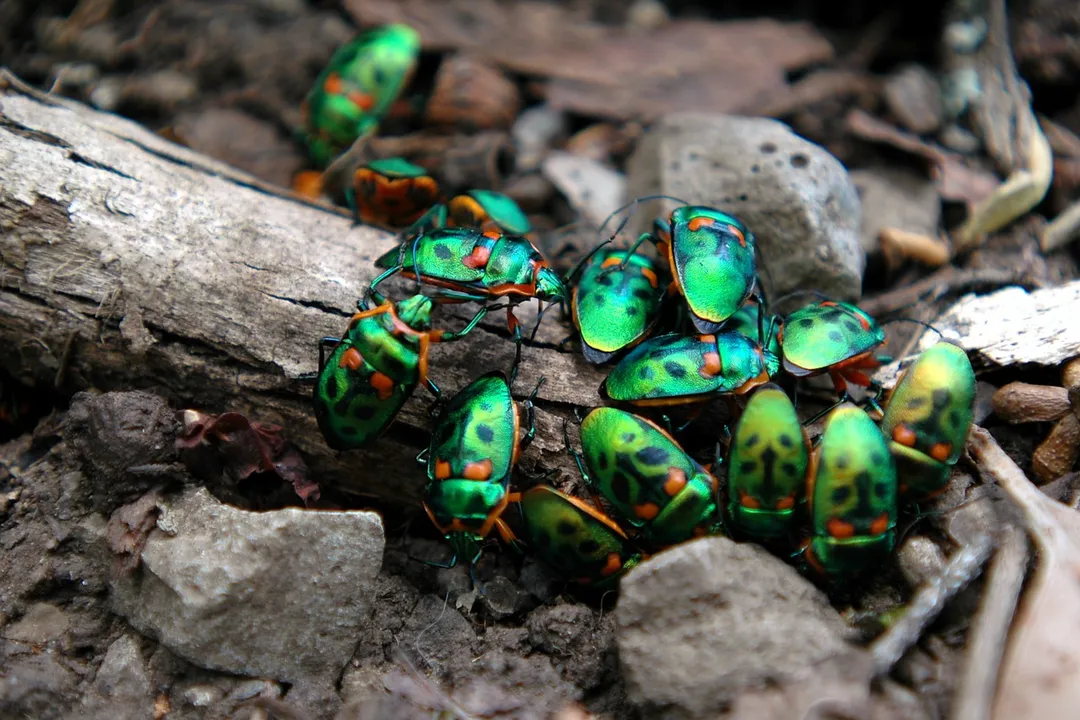
The tendency for many nocturnal beetles, including the Christmas beetle, to orient themselves toward or move toward sources of light is scientifically labeled as phototaxis. This behavior becomes particularly noticeable when these insects become active as twilight fades. While this attraction to artificial lights is not directly linked to essential functions like feeding or reproduction, it is the mechanism that frequently brings them into immediate contact with human habitation, such as verandas or windows, significantly increasing the visibility of their presence during the summer evenings.
Related Questions
What is the primary dietary staple attracting adult Christmas beetles?What do the white curl grubs, the larval stage of Christmas beetles, primarily feed upon?To what general group of insects do the Christmas beetles, genus *Anoplognathus*, belong?What term describes the strong attraction of active adult Christmas beetles to artificial lights after dusk?Where does the female Christmas beetle typically deposit her eggs for the next generation?Besides bronze or green coloration, how are the less vibrant *Christmas Brown Beetle* varieties often characterized?What practical management consideration addresses the nocturnal attraction of adult *Anoplognathus* beetles to human structures?What combination makes a residential yard doubly attractive to Christmas beetles across their different life cycle needs?What specific term is used to classify adult Christmas beetles due to their primary feeding habit on leaves?What key element attracts the egg-laying female beetle, separate from the adult's need for foliage?