Are Christmas beetles harmless?
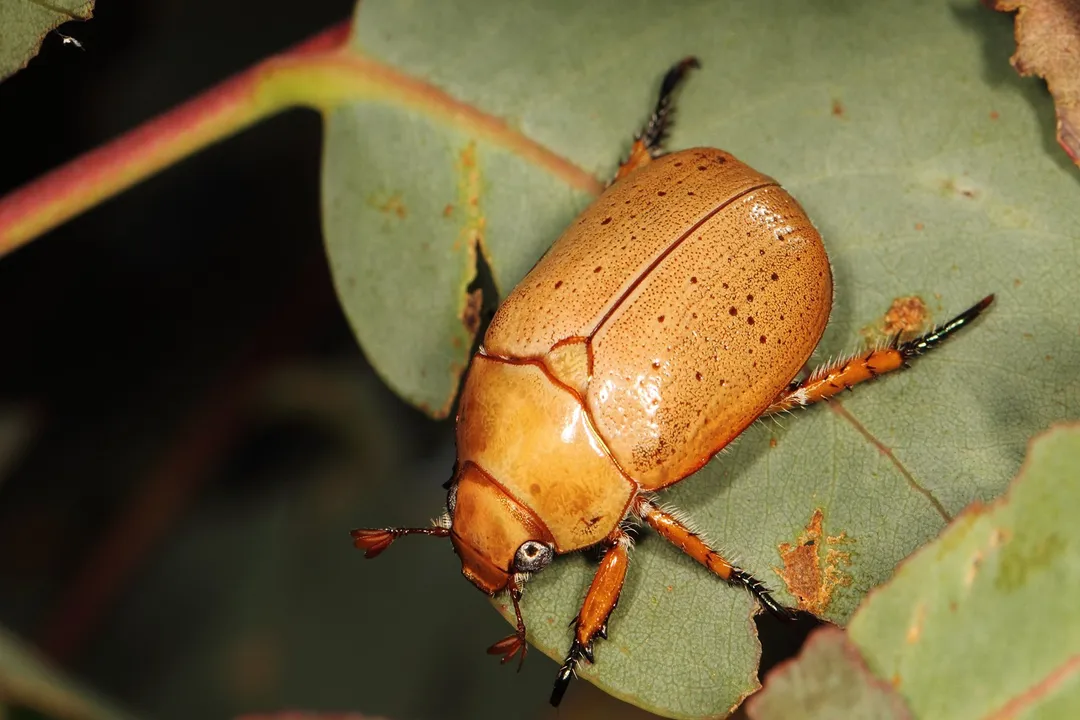
The annual appearance of iridescent beetles around the holiday season immediately sparks curiosity, often leading people to wonder about their true nature. These insects, widely recognized in Australia as Christmas beetles, are generally not a direct threat to human safety, but their "harmless" status becomes far more complicated when viewed from the perspective of a gardener or homeowner. They are fascinating creatures whose impact varies drastically between their immature and adult phases. [3][9]
# Appearance Timing
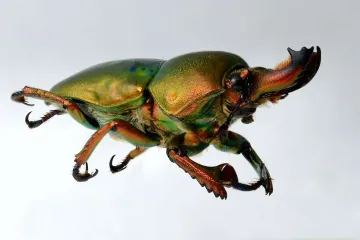
These beetles belong to the Anoplognathus genus, and their emergence often coincides with the hotter summer months, typically peaking around December, hence the popular moniker. [6] Visitors might find them congregating around outdoor lights or flying into houses, drawn by illumination, which often causes momentary panic or annoyance rather than genuine fear. [1][4][5] They are known for their striking, often metallic colours, which can range from brilliant greens and golds to coppers and bronzes, depending on the specific species. [6]
While many people associate the name with a single insect, there are actually several species of Christmas beetles found across different regions. [6] For instance, species like Anoplognathus chloropyrus and Anoplognathus ovicolor are frequently noted in discussions regarding pest activity, but confirming the exact species on sight can be difficult for the average observer. [6] Their size is also notable, generally measuring between 20 and 30 millimetres in length. [9]
# Human Safety
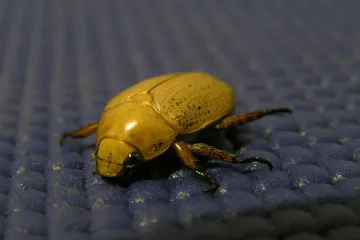
When considering whether these insects pose a risk to people or pets, the answer is overwhelmingly no. Christmas beetles are not venomous, nor are they known to bite or sting humans or animals in defence or otherwise. [1][9] Their primary mechanism of interaction with humans is accidental—bumping into a person while flying, landing on clothing, or finding their way indoors when drawn to porch lights at night. [4][5][7] One individual even shared a photo of a solitary beetle found inside on the floor, highlighting that while they are outside, they occasionally wander in, remaining completely passive. [5] They are more of a temporary nuisance than a danger.
# Garden Concerns
The real question of harm shifts entirely when you look at their dietary preferences across their life cycle. The impact is divided neatly between the grub stage underground and the adult stage feeding above ground. [3][9]
# Larval Damage
The immature stage, known as the grub, spends most of its life beneath the soil surface, often for months or even years, feeding primarily on the roots of grasses. [9][3] This subterranean activity is where the most significant damage to turf occurs. When populations are high, these grubs can decimate lawns, leading to large, irregular patches of dead or dying grass that can be lifted easily, much like a piece of carpet, because the roots have been severed. [9] This root consumption is often the primary reason residents seek chemical control methods, as a prized lawn can be ruined relatively quickly. [9]
# Adult Feeding
Once the adults emerge, they focus their appetites on foliage, particularly the leaves of native trees like eucalypts, but they will also sample other garden plants. [3][9][1] Their feeding style is often described as skeletonization, where they consume the soft tissue between the leaf veins, leaving behind a lacy, translucent skeleton of the leaf. [3] While an occasional beetle doing this is negligible, large swarms, especially during peak emergence years, can cause severe defoliation to trees. [8] Reports from residents encountering massive numbers sometimes describe pulling dozens of beetles off a single branch. [7] It is this visible, dramatic stripping of foliage that often causes alarm among tree owners.
This difference in feeding habits—roots versus leaves—means that the "harmlessness" depends entirely on what you value more: a perfect lawn or perfectly intact tree leaves. For established, healthy native trees, minor seasonal defoliation is often tolerated by the plant, though younger, less established ornamental trees are far more vulnerable to being completely defoliated and potentially killed. [1]
# Ecological Balance
While the sight of a swarm or a skeletonized tree might suggest an ecological disaster, it is important to place these insects within the broader environment. Christmas beetles are a critical food source for many native Australian predators. [3] Birds, lizards, and other insectivores actively seek out these plentiful, slow-moving adults when they emerge. [3] In this sense, the beetles are a vital, if temporary, boost to the local food web. A year of high beetle numbers means a feast for predators, which helps keep their own populations healthy.
This cyclical nature suggests that outbreaks are somewhat natural, though they can be exacerbated by certain environmental conditions or land management practices. For example, excess watering or fertilizing lawns can sometimes encourage the higher survival rates of the root-feeding grubs. [9] If you notice sustained, severe damage year after year, it might indicate an imbalance, perhaps favouring the grub stage. Conversely, if you have very few beetles appearing, it might suggest that local predators are keeping their numbers in check.
If a homeowner is dealing with a severe grub infestation, choosing a treatment requires careful consideration of the surrounding ecosystem. Before defaulting to broad-spectrum chemical controls that kill all soil invertebrates, it might be worth investigating which local lawn grasses are most susceptible to the grub species present. Not all turf varieties suffer equally, and understanding this can save effort and unintended harm to beneficial soil fauna. [9]
# Outbreak Context
It is also useful to view these events not as isolated incidents but as part of a natural cycle that varies by location and year. The presence of a few beetles is normal; the issue arises when population booms occur, sometimes leading to widespread media attention during heavy outbreaks. [8] The sheer volume of beetles during these years is what turns them from a curiosity into a significant garden pest, as the sheer number of insects overwhelms the local ecosystem's ability to consume them quickly. [7]
When considering the long-term health of a garden, it is interesting to note how quickly mature native species bounce back. While seeing a favourite gum stripped bare is jarring, mature, healthy eucalypts are remarkably well-adapted to survive these events, often pushing out new, beetle-resistant growth shortly after the swarms move on. [1] This resilience is a testament to the co-evolution between the tree and the insect. Observing which trees survive the worst defoliation and which struggle provides an immediate, real-world lesson in local plant hardiness that textbooks cannot replicate.
In summary, Christmas beetles are physically harmless to people, presenting no sting or bite risk. However, they are decidedly not harmless to gardens, where their larval stage attacks turf roots and their adult stage consumes foliage, requiring management depending on the severity of the local population cycle and the homeowner's tolerance for garden damage.
Related Questions
#Citations
Be aware of the Christmas/Brown Beetle - Life is a Garden
Are Christmas beetles harmless? - Canberra - Facebook
Christmas Beetles - Backyard Buddies
Found this little Christmas beetle on my floor and I can tell it is dying ...
Where have all the Christmas Beetles gone? - The Australian Museum
Christmas beetles: Scientists ask Australians for help finding missing ...
Christmas Beetles - Minibeast Wildlife