What structure replaces the original vertebrae in a regenerated lizard tail following autotomy?
Answer
A cartilaginous rod
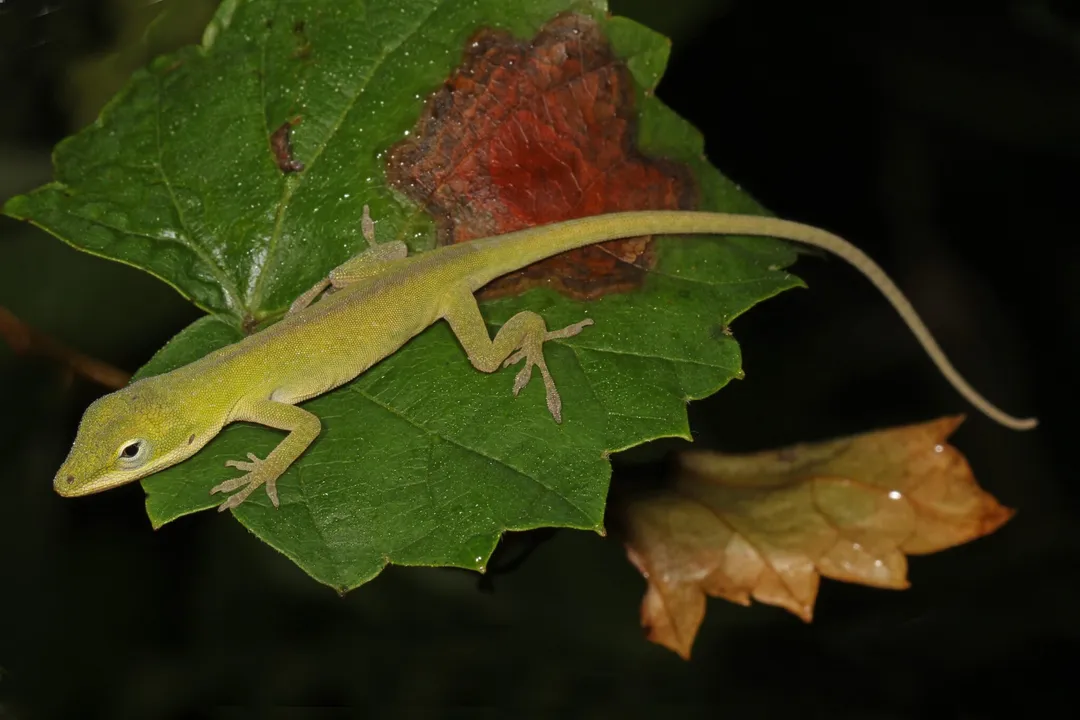
Autotomy, the deliberate shedding of the tail as a defense mechanism, results in a trade-off between immediate escape and long-term balance. When the tail is regrown, the structure is fundamentally different from the original appendage. The initial tail contains true bone vertebrae, providing a specific shape and rigidity necessary for optimal counterbalancing during complex movements like running or climbing. The replacement tail, however, grows back containing only a cartilaginous rod. This structural difference often means the regenerated tail varies slightly in texture, color, and thickness compared to the original, potentially altering the lizard's center of gravity and agility over time.
Related Questions
What specific structure fuses with scales to armor the Gila monster?What features separate legless lizards from snakes, despite superficial resemblance?What structure replaces the original vertebrae in a regenerated lizard tail following autotomy?What physical trait aids many lizards in faster solar radiation absorption?How are the teeth of most lizards generally described regarding shape similarity?Which species represents the massive end of the lizard size spectrum described?What is the believed purpose of the parietal eye located on top of a lizard's head?What results from the typical positioning of lizard limbs to the side of the body?What process involves the periodic replacement of the reptilian integument to allow for growth?What specialized physical characteristic is shared between lizards and snakes within the order Squamata?What happens to the tail's structure when a lizard regenerates it after autotomy?