What structural element acts as a counterbalance for wallabies when they are hopping at speed?
Answer
The tail
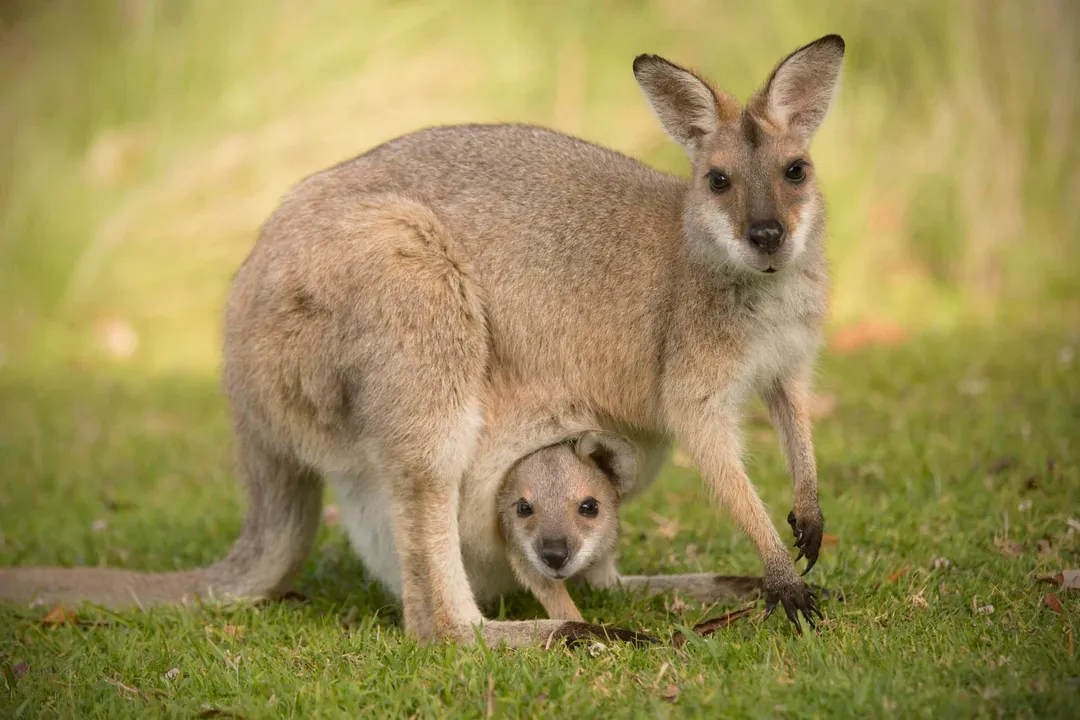
The tail of a wallaby is described as a massive, muscular structure critical to its physical stability and movement dynamics. When the animal is engaged in high-speed hopping, the tail serves a vital role as a counterbalance. This function is analogous to how a tightrope walker uses a pole to maintain stability, allowing the wallaby to control its direction and prevent unwanted rotation or tipping while airborne during its powerful leaps. This stabilizing role is distinct from its function when the wallaby is stationary or moving slowly, where it contributes to a tripod stance.
Related Questions
What is the technical term for the wallaby's primary mode of locomotion involving hopping at speed?What structural element acts as a counterbalance for wallabies when they are hopping at speed?What specialized function do the forelimbs (pes) of a wallaby primarily serve, despite their small size?What configuration does the tail form when a wallaby is moving slowly or grazing to maintain an upright posture?What is the characteristic weight range for the larger Red-necked Wallaby species?What distinct physical trait characterizes the Yellow-footed Rock Wallaby's lower legs and feet?How does the dental specialization of the Swamp Wallaby (*Wallabia bicolor*) differ from many *Macropus* species?What defining feature of wallabies gives their family, *Macropodidae*, its literal translation?What locomotion pattern do wallabies utilize when moving slowly, such as during grazing activities?What distinguishing coloration marks the neck and shoulders of the Red-necked Wallaby?