What configuration does the tail form when a wallaby is moving slowly or grazing to maintain an upright posture?
Answer
A tripod base alongside the hind feet
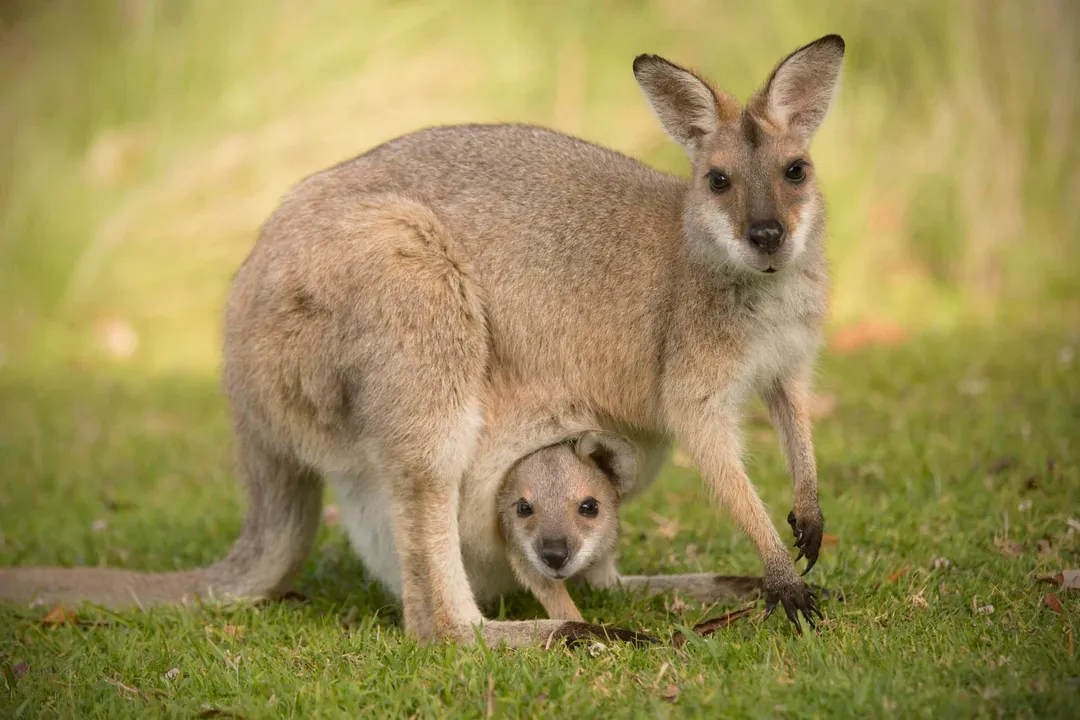
When a wallaby reduces its speed for activities like grazing or standing still, its primary mode of support changes significantly from high-speed hopping. In this state, the tail acts as a critical structural element, forming a stable tripod base. This base is established by the tail resting on the ground in conjunction with the two hind feet, creating a wide, stable foundation. This tripod stance is functionally necessary because it frees up the small forepaws to be used for manipulating food or grooming while the animal maintains an upright posture.
Related Questions
What is the technical term for the wallaby's primary mode of locomotion involving hopping at speed?What structural element acts as a counterbalance for wallabies when they are hopping at speed?What specialized function do the forelimbs (pes) of a wallaby primarily serve, despite their small size?What configuration does the tail form when a wallaby is moving slowly or grazing to maintain an upright posture?What is the characteristic weight range for the larger Red-necked Wallaby species?What distinct physical trait characterizes the Yellow-footed Rock Wallaby's lower legs and feet?How does the dental specialization of the Swamp Wallaby (*Wallabia bicolor*) differ from many *Macropus* species?What defining feature of wallabies gives their family, *Macropodidae*, its literal translation?What locomotion pattern do wallabies utilize when moving slowly, such as during grazing activities?What distinguishing coloration marks the neck and shoulders of the Red-necked Wallaby?