What structural components must gorillas rely on to fill caloric gaps when fruit production decreases seasonally?
Answer
Bark and more rigid stems
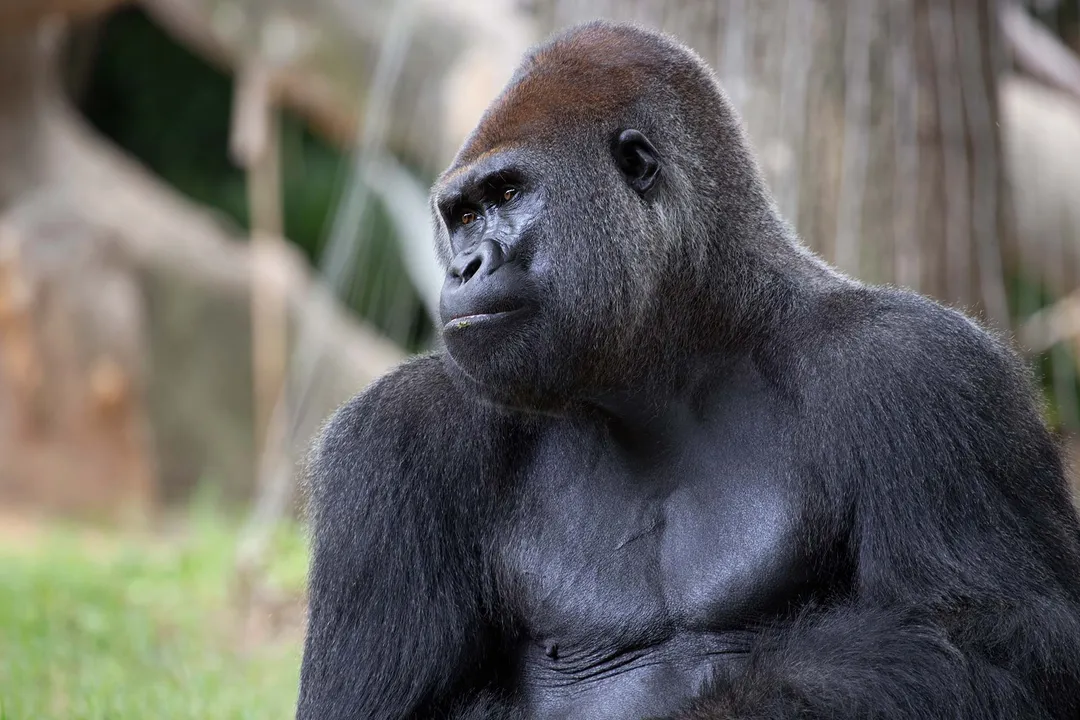
The survival strategy of the Western Gorilla involves significant dietary flexibility. When the availability of high-sugar, low-fiber fruit declines, their sustenance pivots entirely to the more fibrous, structural elements of the plants. This means that less palatable but calorically necessary materials like tough bark and rigid stems must be consumed to bridge the nutritional gap left by the scarcity of ripe fruit.
Related Questions
What feeder classification describes the Western Gorilla based on its nearly total reliance on plants?Which specific spongy plant tissue is highlighted as a particularly important nutrition source for the Western Gorilla?What volume of vegetation must a mature Western Gorilla consume daily to meet its energy demands?What structural components must gorillas rely on to fill caloric gaps when fruit production decreases seasonally?During seasons when fruit is readily available, what percentage of a Western Gorilla's total intake can fruit constitute?What characteristic describes the typical foraging style gorillas employ while moving through the forest?What ecological designation is given to the Western Gorilla due to its consumption patterns affecting local vegetation structure?What specific challenging materials must a wild gorilla's digestive system be capable of handling during periods of low fruit availability?What primary method do Western Gorillas use to fulfill their hydration needs in the forest?What commercial food item is used in accredited zoos to supplement fresh produce and ensure nutritional completeness year-round?