What specific introduced mammals pose a threat to the Yellow-eyed Penguin populations?
Answer
Stoats and dogs
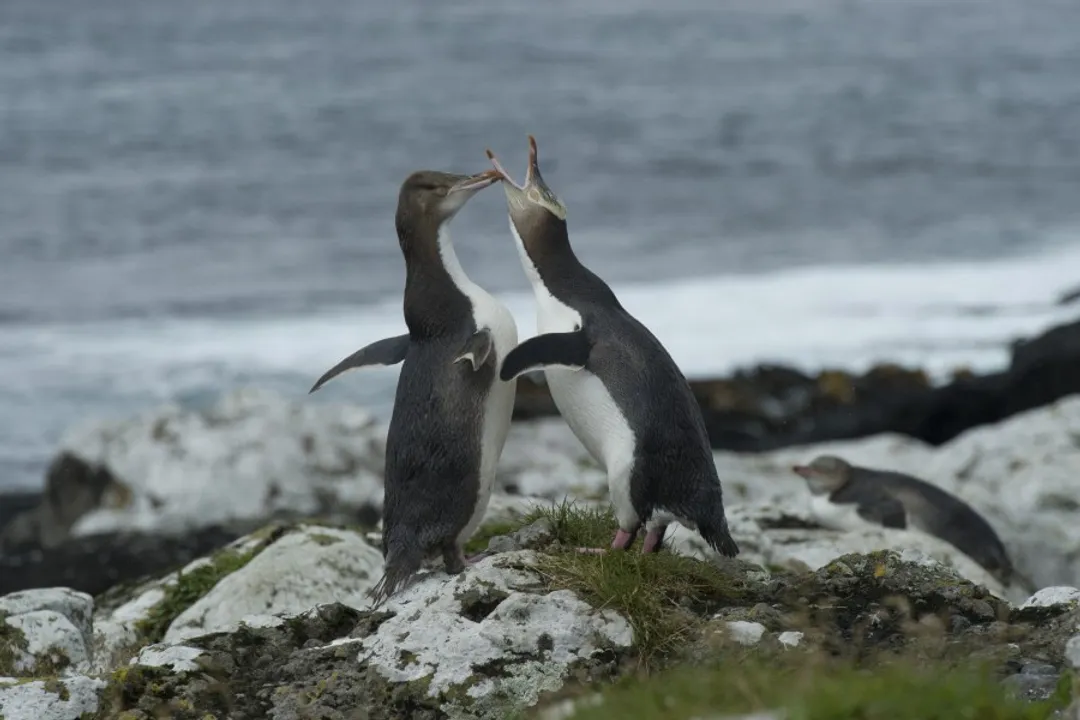
The conservation status of the Yellow-eyed Penguin is heavily influenced by specific predation risks stemming from introduced mammals. The text explicitly identifies stoats and dogs as key threats that impact their survival statistics alongside habitat degradation and marine issues. These mammalian predators pose a significant danger, particularly to nests situated on the mainland or islands where these introduced species have become established, underscoring the importance of the more isolated sub-Antarctic sanctuaries.
Related Questions
What is the Māori name used to refer to the Yellow-eyed Penguin?Which New Zealand sub-Antarctic islands host the most stable Yellow-eyed Penguin populations?How does the nesting behavior of Hoiho contrast with Adelie or Chinstrap penguins?Where on the South Island is Taiaroa Head, a famous managed viewing location for Hoiho?What is the minimum distance the DOC strongly advises keeping between observers and Hoiho on the beach or in the water?Which time of day offers the highest probability of observing Hoiho returning ashore from foraging at sea?What specific introduced mammals pose a threat to the Yellow-eyed Penguin populations?What type of terrestrial setting do Hoiho prefer for their secluded breeding sites, differentiating them from many other penguins?Besides the Catlins coast, which New Zealand region is identified as a primary mainland stronghold for the Hoiho population?Which data aggregation platform documents recent distribution hotspots through citizen science reports for Hoiho sightings?