Yellow-Eyed Penguin Physical Characteristics
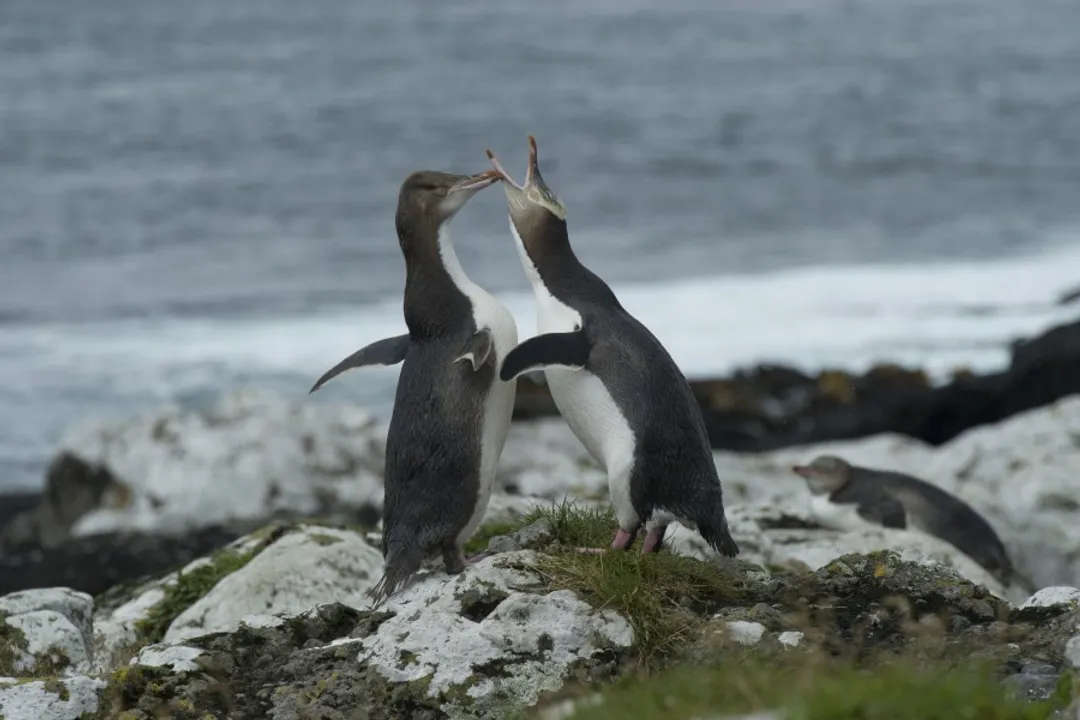
The Yellow-Eyed Penguin, known to Māori as Hoiho, possesses a physical appearance distinct from many of its more famous, heavily crested cousins. Its notable coloration and unique facial markings make it one of the world's rarest and most instantly recognizable penguin species. [1][4][6] Unlike the stark black and white contrast seen in many Antarctic dwellers, the Hoiho presents a more muted, earthy palette perfectly suited to its specific coastal and forest habitats in New Zealand. [3][7] These birds are medium-sized for penguins, generally falling into the middle ground when compared across the entire global family of penguins. [5]
# Stature and Mass
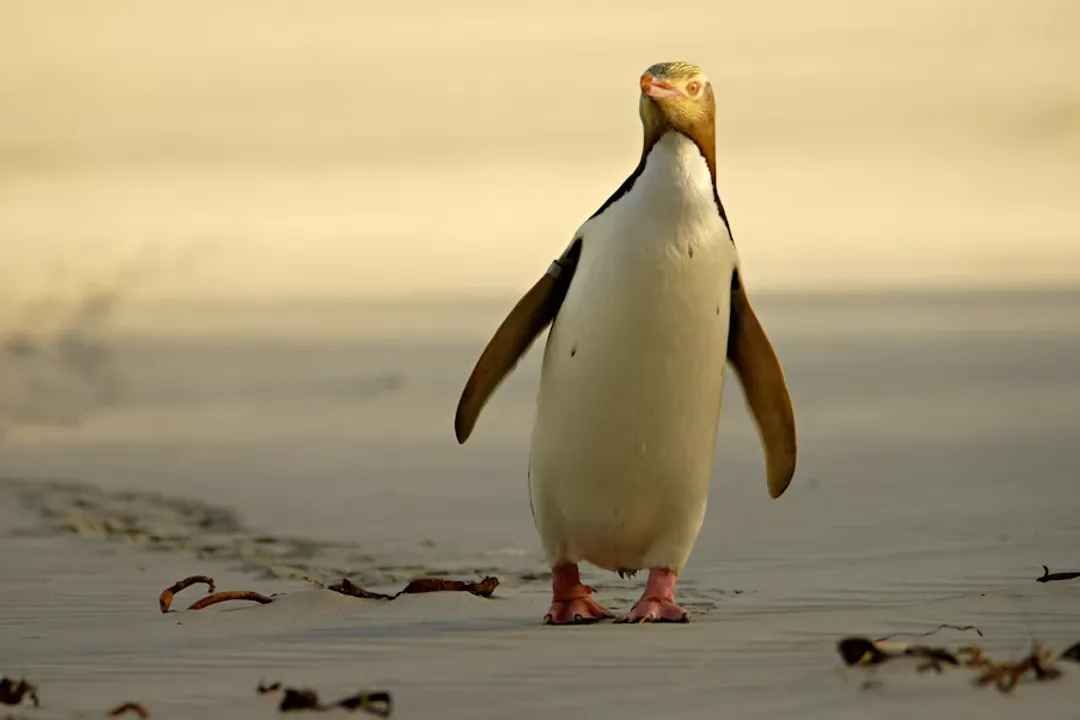
When observing a mature Yellow-Eyed Penguin, one notes a relatively stately build. [1] Adult birds typically stand somewhere between 65 and 79 centimeters in height. [1][5][9] This places them taller than smaller species but significantly shorter than the massive Emperors or Kings. [5]
The weight range is also quite variable, fluctuating seasonally based on feeding success and breeding demands. [1] Generally, adults weigh between 5 and 8 kilograms. [5][6] Females tend to be slightly lighter than males, averaging around 5.4 kg, whereas males can reach about 5.8 kg, though these ranges overlap considerably. [3]
To put their build into perspective, if we consider the range of 65 cm height and 6.5 kg average mass, the Hoiho has a density profile that suggests a bird built for powerful swimming and terrestrial maneuvering through dense undergrowth, contrasting with the compact, fat-storing build of ice-dependent species. Their somewhat elongated silhouette, aided by their upright posture, gives them an elegant appearance when standing on land. [3]
# Eye Markings
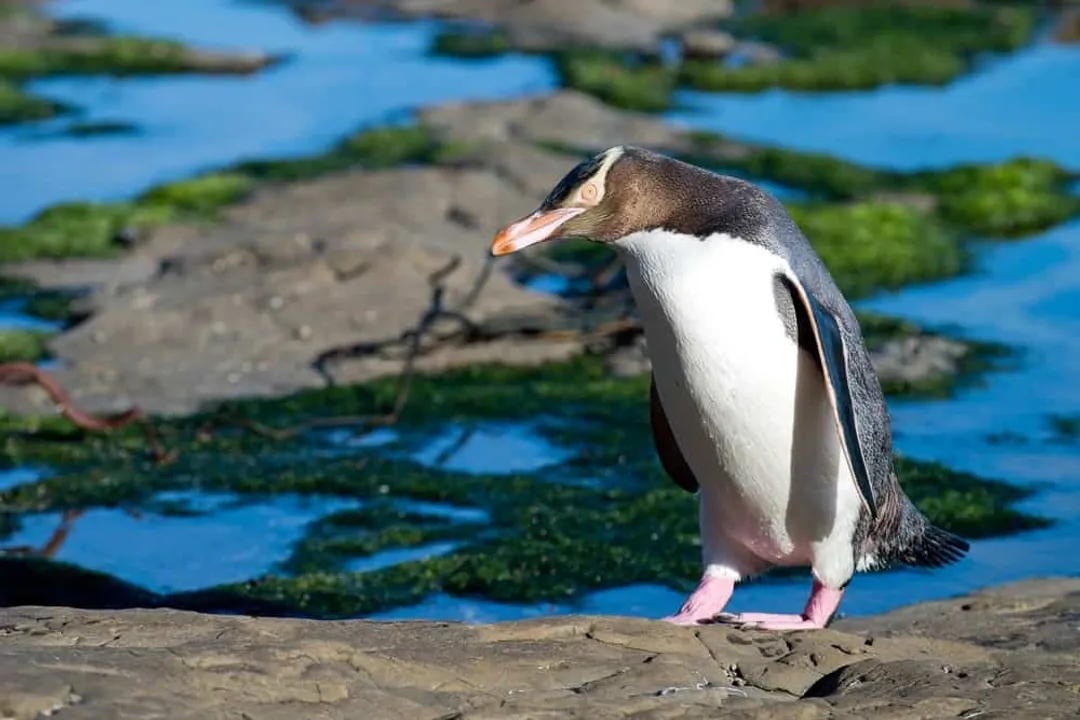
The most defining physical characteristic is, without question, the eyes. [1][6] The iris of the eye is a striking, pale yellow color, often appearing almost glassy or silvery against the darker facial feathers. [2][9]
Encircling this pale eye is a distinct band of yellow feathers that sweeps back across the rear of the head. [2][4] This band originates just above the eye and extends in a graceful arc towards the nape of the neck, sometimes described as a "tiara" or "halo" effect. [1][6] This configuration is unique among penguins. [2] While some species have bright colors on their heads, the specific placement and color of this continuous band around the eye serve as an unmistakable identifier for the Hoiho. [7]
# Body Coloration
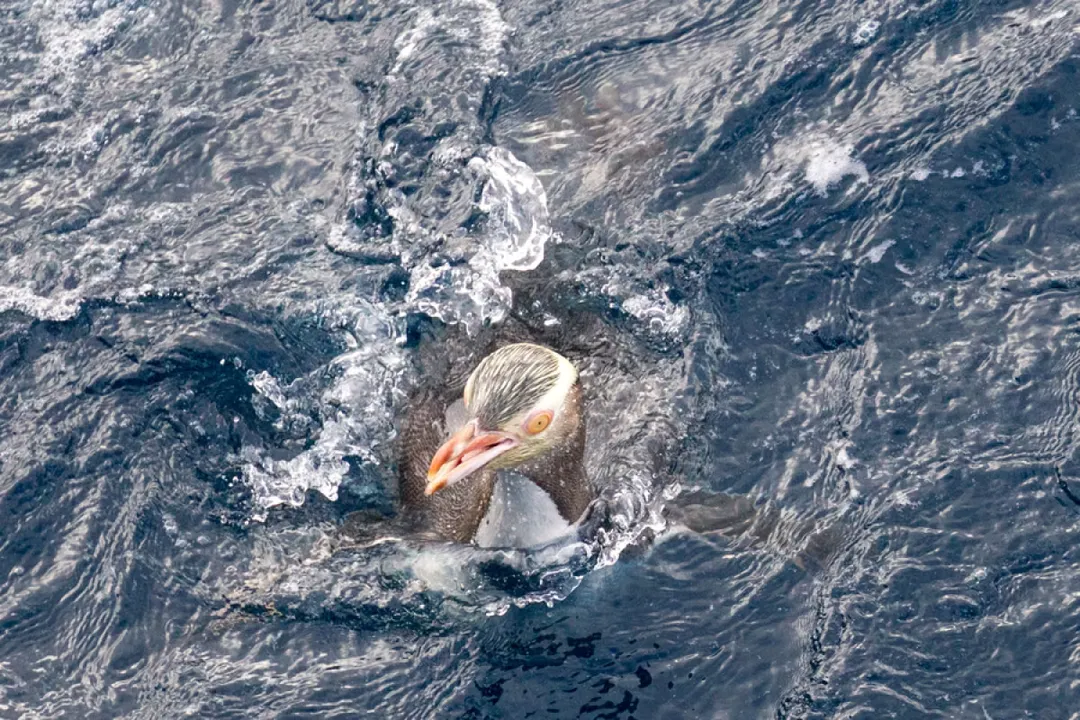
The plumage follows a clear division between the dorsal (back) and ventral (front) sides. [4] The back, wings, and the upper portion of the head are covered in slate-grey or bluish-grey feathers. [1][3] This darker coloring offers effective camouflage when viewed from above against the deeper ocean waters or shaded coastal backgrounds. [7]
Conversely, the chest, belly, and throat are a clean, contrasting white. [1][3] This countershading, common in marine animals, helps conceal them from predators viewing them from below against the bright surface light. [7]
The transition zone between the grey back and white front is clearly demarcated. [4] On the neck and sides of the head, the coloration tends to be a softer, more mottled grey or yellowish-grey before meeting the distinct yellow eye band. [2]
# Head Features
Beyond the eyes, the head structure contributes to their unique appearance. They lack the elaborate crests, plumes, or distinct facial masks seen on penguins in the genus Eudyptes (like Macaroni or Fiordland penguins). [2][7] This relative simplicity in head ornamentation is a key difference, making their visual identification rely solely on the eye-band structure and overall head shape. [3]
The bill, or beak, is relatively long and slender when compared to other penguins of similar size. [2] Its color is typically dark, often black or dark brown, and it appears smooth and streamlined. [4] This shape is adapted for efficiently grasping fish and squid, their primary prey items. [2]
# Limbs and Digits
The feet and legs are adapted for walking on rough terrain, navigating through dense coastal scrub, and for their powerful swimming style. [7] The skin on the legs and the webbing of the feet is generally a pale pinkish-flesh tone, sometimes appearing slightly dusky or greyish depending on circulation and local conditions. [4][9]
Their feet are fully webbed, essential for propulsion in the water, but they are robust enough to grip the often rocky or uneven ground found near their mainland nesting sites. [7] When the bird is resting or standing, the feet are positioned forward under the body, helping to maintain that characteristic upright stance. [3] Observing these penguins waddle on land reveals a deliberate, somewhat stiff gait, necessitated by their long legs and the need to traverse uneven ground rather than purely flat ice or sand. [9]
# Sexual Dimorphism and Age
For the casual observer, telling a male from a female Yellow-Eyed Penguin can be quite difficult, as overt physical differences are minimal. [3] However, experts note subtle clues. Males generally possess a slightly thicker, stouter beak compared to the females. [3] Furthermore, the yellow band around the eye in males often appears brighter, and they may be marginally larger overall. [3]
Juvenile birds are notably less colorful. They have blue-grey backs, but their chests are a duller greyish-white instead of the brilliant white of the adults. [2][5] Crucially, the distinct yellow eye-ring is absent or very poorly developed in chicks and immature birds, solidifying their appearance only once they reach sexual maturity. [2] This lack of adult plumage in younger birds means that visual assessment of age often requires observing size and the clarity of the facial markings. [5]

# Physical Adaptations Overview
The physical characteristics of Megadyptes antipodes are deeply intertwined with its ecological niche. They are considered coastal breeders, utilizing forest patches and dense coastal shrubbery for nesting rather than wide-open icy plains. [7] Their slate-grey upper body provides excellent background matching against shadowed vegetation and darker sea surfaces. [7] Their relatively large, strong legs are an adaptation to terrestrial life in a vegetated environment, unlike the streamlined torpedo-shape optimized purely for speed across ice or open water. [9] The long, sleek bill aids in catching varied prey in the rich, shelf waters surrounding their island homes. [2] In essence, the Hoiho's physical makeup reflects a creature perfectly balanced between the marine feeding ground and a specific, dense terrestrial breeding habitat in temperate zones. [1][7]
Related Questions
#Citations
Yellow-Eyed Penguin - Oceanwide Expeditions
Megadyptes antipodes (yellow-eyed penguin) - Animal Diversity Web
Yellow-eyed penguin - Wikipedia
Yellow-Eyed Penguin Facts and Information | United Parks & Resorts
Yellow-eyed penguin - Center for Biological Diversity
Yellow-Eyed Penguin - Megadyptes antipodes - A-Z Animals
Yellow-eyed Penguin - Megadyptes antipodes
Yellow-Eyed Penguin: Facts, Habitat, Surprising Height & More | Fahlo
Yellow-eyed penguin | Hoiho | New Zealand Birds Online