What specific evolutionary adaptation provides *Sus scrofa* protection against snake venom?
Answer
Unique nicotinic acetylcholine receptor mutations.
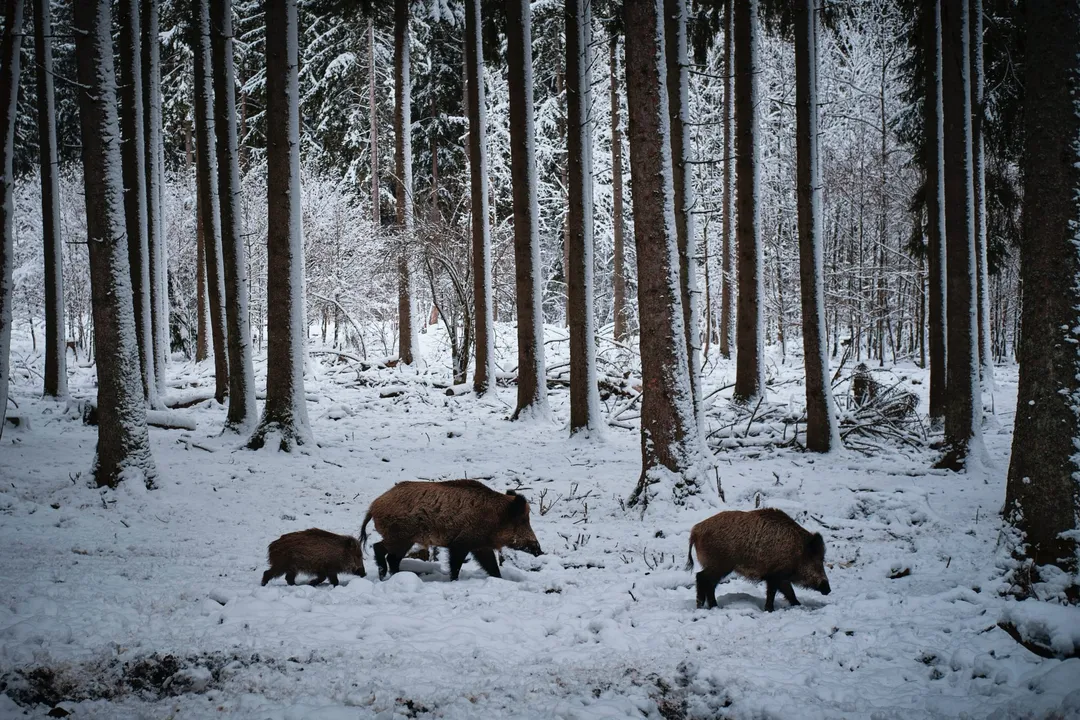
The wild boar exhibits specialized physiological defenses rooted in its long evolutionary history, which equips it to handle significant environmental adversity. A clear example of this is its inherent hardiness regarding certain toxins. Specifically, *Sus scrofa* possesses unique mutations in its nicotinic acetylcholine receptors. These receptor mutations grant the animals a level of protection against snake venom, a characteristic shared with a few other resilient species such as mongooses and honey badgers, demonstrating how evolutionary pressures sculpt specific defense mechanisms.
Related Questions
When did genetic analysis estimate *Sus scrofa* diverged from other *Sus* genus members?What practice characterized the early Near East domestication of *Sus scrofa* around 13,000 BCE?Where is muscle mass concentrated in wild boars compared to their domesticated counterparts?Which distinct family grouping contains peccaries within the broader Suina clade?Which region marked the initial success story and spread point for the wild boar population?Which explorer introduced domestic pigs to the Americas, starting in Caribbean islands in 1493?Which Eurasian populations are highlighted in genomic studies as a genetic conduit for intercontinental gene flow?What specific evolutionary adaptation provides *Sus scrofa* protection against snake venom?What morphological characteristic resulted rapidly from the Chinese domestication method involving penning and refuse feeding?In which region have population re-establishments from escapes been reported since the 1990s?