What makes African wild dogs unique?
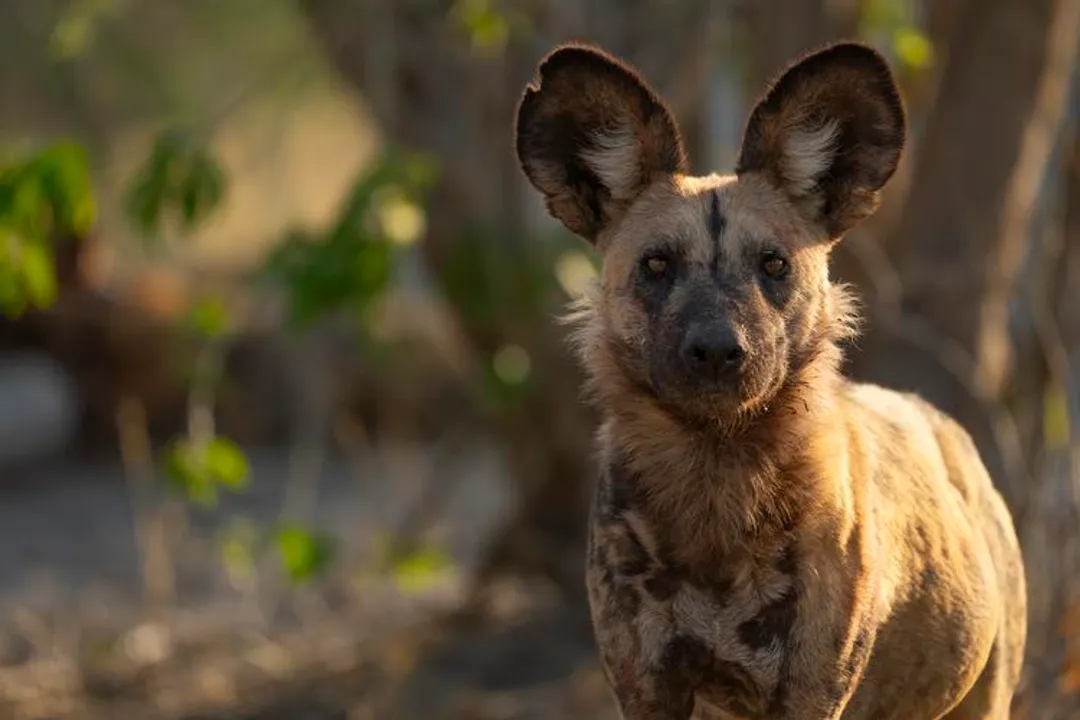
The African wild dog, scientifically known as Lycaon pictus, immediately stands out in the savanna not just for its name—which encompasses aliases like the painted dog or the Cape hunting dog—but for a collection of truly singular biological traits that set it apart from nearly every other carnivore. [1][2][3] They are creatures of remarkable social complexity, unmatched hunting efficiency, and a distinctive physical blueprint that makes every individual recognizable. [6] To understand what makes them unique is to look past the usual predators and focus on a highly specialized survival machine built for teamwork. [5]
# Blotchy Coats
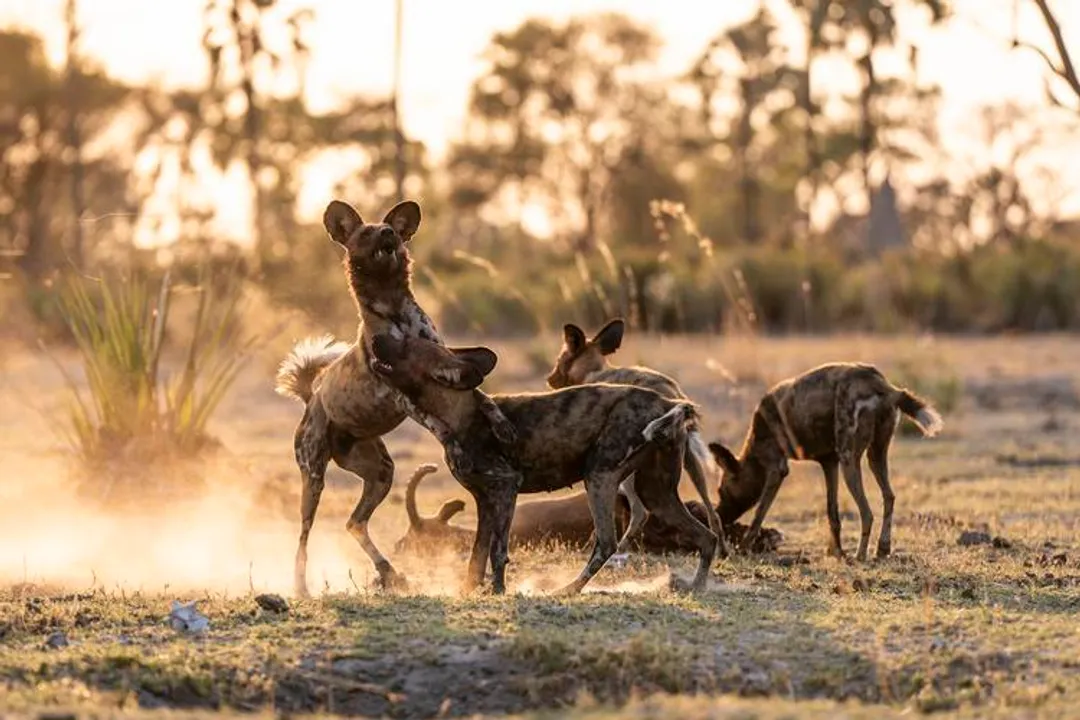
One of the most visually striking features of the African wild dog is its coat, which is perhaps the source of one of its common names, the painted dog. [2][8] The fur is characterized by irregular, asymmetrical patches of black, white, yellow, brown, and sometimes blue or red. [1][6] This patchwork appearance is so distinct that no two dogs possess the exact same pattern, effectively giving each individual a unique, nature-made fingerprint. [1][2][6]
Beyond the blotches, their overall build contributes to their uniqueness. They are lean and slender, built for endurance rather than raw power. [1][6] Their legs are long, aiding in sustained running, and they possess relatively small skulls with weak jaws compared to canids like hyenas or even lions. [1][6] Perhaps the most prominent and easily identifiable feature, aside from the coat, is the set of large, rounded ears that resemble those of a bat or a satellite dish. [1][2][6][9] These large appendages are essential for dissipating heat in the African sun, a necessary adaptation for an animal that spends so much time running down prey. [1]
# Pack Dynamics
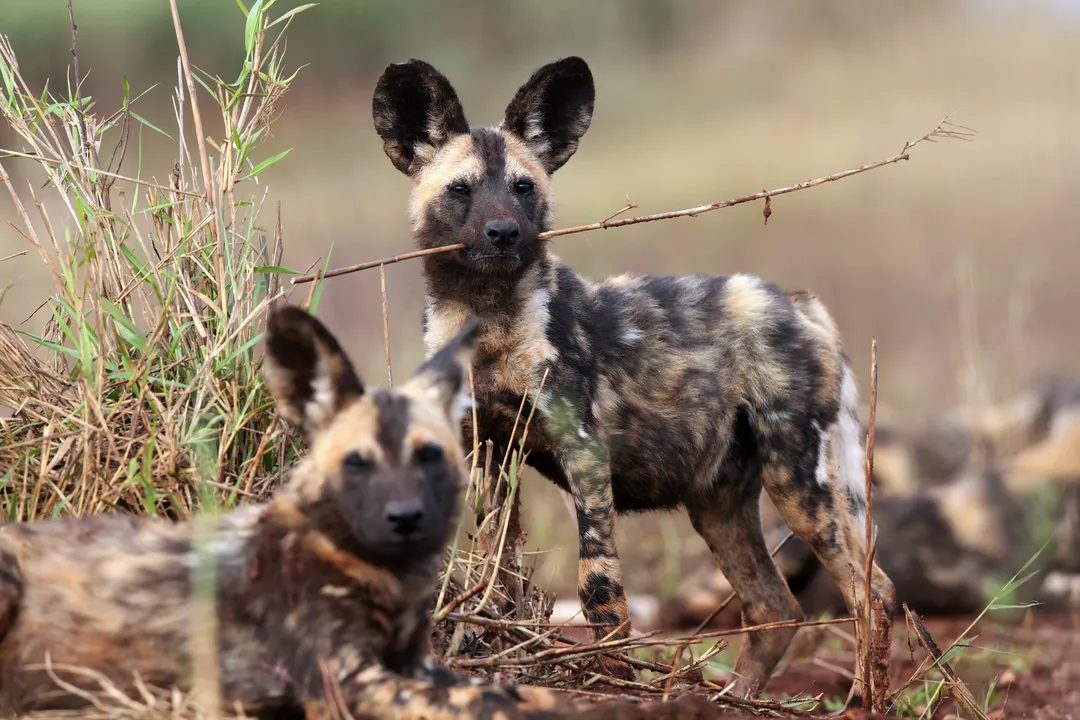
The social life of the African wild dog is arguably where its uniqueness shines brightest. These animals are intensely social, living in cohesive packs that function with a high degree of cooperation, far exceeding the familial bonds seen in many other solitary or loosely social carnivores. [1][3][5][6] Packs can range in size, often consisting of six to twenty individuals, though larger groups of up to 40 have been recorded. [1][3][6]
A defining characteristic of their social structure is the near-monogamy of the breeding pair. [1][5] Typically, only the dominant male and female breed, a strategy that keeps the pack structure tight and focused. [6] However, the entire pack shares responsibility for rearing the young. [1][5] While the parents hunt, non-breeding members, often referred to as "babysitters," remain behind to guard the den and the vulnerable pups. [5] Furthermore, the adults feed the resting guardians and the young by regurgitating food, a behavior that underscores the deep reciprocal altruism within the group. [1][6] This cooperative care ensures that the next generation has the best possible start, which is critical given the challenges they face in the wild. [5]
Considering the highly centralized reproductive strategy—where generally only one female successfully raises pups—the loss of that single breeding female or the disruption of the dominant pair has a profound, immediate impact on the pack’s future. [1][5][6] This dependence on a strict social hierarchy for reproductive success means that the social fabric is incredibly valuable; losing even a few adults to disease or conflict can collapse the entire reproductive potential of that local unit for years, a fragility not often seen in species where multiple females might breed simultaneously. [6]
# Hunting Prowess

When it comes to securing a meal, the African wild dog is an apex specialist, demonstrating a level of teamwork and sustained output rarely matched in the animal kingdom. [5] Their success rate in hunting is famously high, often quoted as being successful around 80 percent of the time. [1][2][6][9] To put that staggering efficiency into perspective, many large cat species, such as lions, typically achieve success rates closer to 25 or 30 percent per attempt. [1][9]
This success stems from their reliance on stamina and coordination over brute force. [1] They are pursuit predators, favoring long chases that exhaust their prey. A wild dog pack will drive their target—usually small to medium-sized ungulates like impala or kudu—until the animal collapses from fatigue, often covering distances of several kilometers. [1][2][6]
Their coordination during the chase is remarkable. Unlike a solitary hunter that relies on stealth and a quick ambush, the pack uses relay tactics, allowing some members to rest while others maintain the pressure on the fleeing animal. [1][5] Once the chase is complete, their feeding habits are equally efficient. They consume their prey rapidly, and remarkably little meat is wasted in the process. [1][6] This efficiency is important because it minimizes the time they spend vulnerable at a kill site, reducing the risk of confrontation with larger, stronger predators like lions or hyenas who might attempt to steal the meal. [5]
# Vocal Language
Communication among these dogs relies less on roaring or deep growls, which they lack the necessary vocal cords for, and more on a nuanced suite of softer, high-pitched sounds. [1][6] This vocal repertoire is complex and essential for coordinating the pack, especially during the excitement of a hunt or when reuniting at the den site. [6]
They use "hoo" calls, which are soft, long-distance signals used to gather the group. [1][6] Other sounds include chattering, squeaking, and even a sound often described as a giggle, especially when greeting each other or during play. [1][6] This array of distinct vocalizations, coupled with body language, helps maintain the tight social bonds that are so necessary for their survival. [6] The ability to communicate precise intent over distance without attracting unwanted attention from rivals makes their vocal strategy highly specialized for group coordination in open habitats. [1]

# Conservation Plight
Despite their incredible adaptations and specialized role in the ecosystem, the future of the African wild dog remains precarious. [7] They are classified as Endangered across their range. [3][7] Their population numbers are low, estimated to be only a few thousand individuals remaining in the wild. [3]
One of the primary challenges is their extreme sensitivity to habitat fragmentation. [3][7] Because they require vast territories to hunt and maintain genetic diversity across dispersed packs, human development, agriculture, and fencing divide their home ranges, leading to isolated populations. [3][5][7] These small, fragmented groups are far more susceptible to localized extinction events. [3]
Another significant threat comes from infectious diseases originating from domestic animals, such as rabies and canine distemper virus. [3][5][7] Since the dogs are so reliant on the health of the entire pack for hunting and pup-rearing, a single outbreak of a highly contagious disease can decimate a group quickly. [5] Conflict with humans, often due to perceived threats to livestock or accidental snaring, also contributes significantly to their decline. [3][7] Protecting the African wild dog, therefore, requires a multi-faceted approach focused not just on keeping them safe from immediate threats, but on ensuring connectivity between their remaining pockets of habitat across the continent. [7]
Related Questions
#Citations
Interesting facts about African wild dogs (Infographic)
10 Facts About African Wild Dogs (Cape Hunting Dogs)
African wild dog - Wikipedia
The African wild dog: Painted wolf of the savannas | One Earth
The Importance of Conserving African Wild Dogs - Wildlife ACT
6 Amazing Facts About African Wild Dogs - Wilderness Destinations
African Wild Dog - African Wildlife Foundation
African Painted Dog | Saint Louis Zoo
African Wild Dog Fact Sheet | Blog | Nature - PBS