Wild Boar Evolution
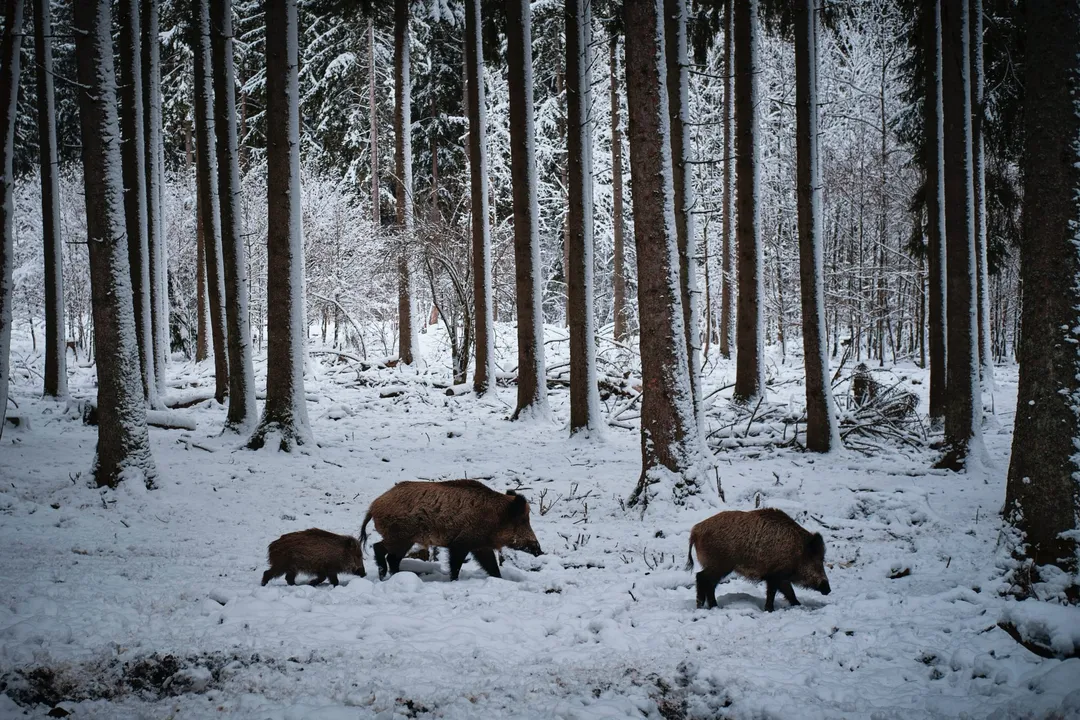
The wild boar, Sus scrofa, stands as a monument to evolutionary success, an adaptable suid whose native range once spanned most of Eurasia and North Africa, and whose descendants now populate almost every corner of the globe where humans have taken them. This species, which forms the wild ancestor of nearly all domestic pigs, possesses an ancient lineage, with genetic analyses estimating its divergence from other members of the Sus genus occurring near the beginning of the Pliocene epoch, between $3.5$ and $5.3$ million years ago. The initial success story of the wild boar began in Island Southeast Asia, from where it spread across the Eurasian supercontinent, demonstrating an exceptional ecological flexibility fueled by an omnivorous diet, resilient physiology, and crucial behaviors like foraging and wallowing. As they expanded throughout the Old World, these hardy animals outcompeted other suid species, such as the large, possibly swamp-adapted Sus strozzii, which became restricted to insular Asia.
# Suina Clade Structure
Understanding the wild boar requires placing it correctly within the mammalian order Artiodactyla, the even-toed ungulates. Pigs, hogs, and boars belong to the family Suidae and the suborder Suina. While closely related, the wild boar (Sus scrofa) is not genetically equidistant from all other swine-like animals. For instance, warthogs belong to the same family (Suidae) but occupy a separate evolutionary branch, clustering instead with bushpigs and babirusas. The peccaries, often confused with true pigs, are in a distinct family, Tayassuidae, though still within the broader Suina clade. More distantly, the phylogenetic path that leads to pigs diverges before connecting to the lineage that includes camels, ruminants (like deer and cattle), and, further still, hippopotamuses, which share a closer link with whales than they do with pigs. The wild boar itself is a plastic species, with as many as sixteen subspecies recognized, often grouped regionally—Western, Indian, Eastern, and Indonesian—each showing physical variations in skull structure, mane development, and hair density based on local conditions. The Indonesian subspecies, S. s. vittatus, is considered the most basal group, exhibiting a smaller relative brain size and more primitive dentition compared to its Eurasian relatives.
# Ancient Domestication Events
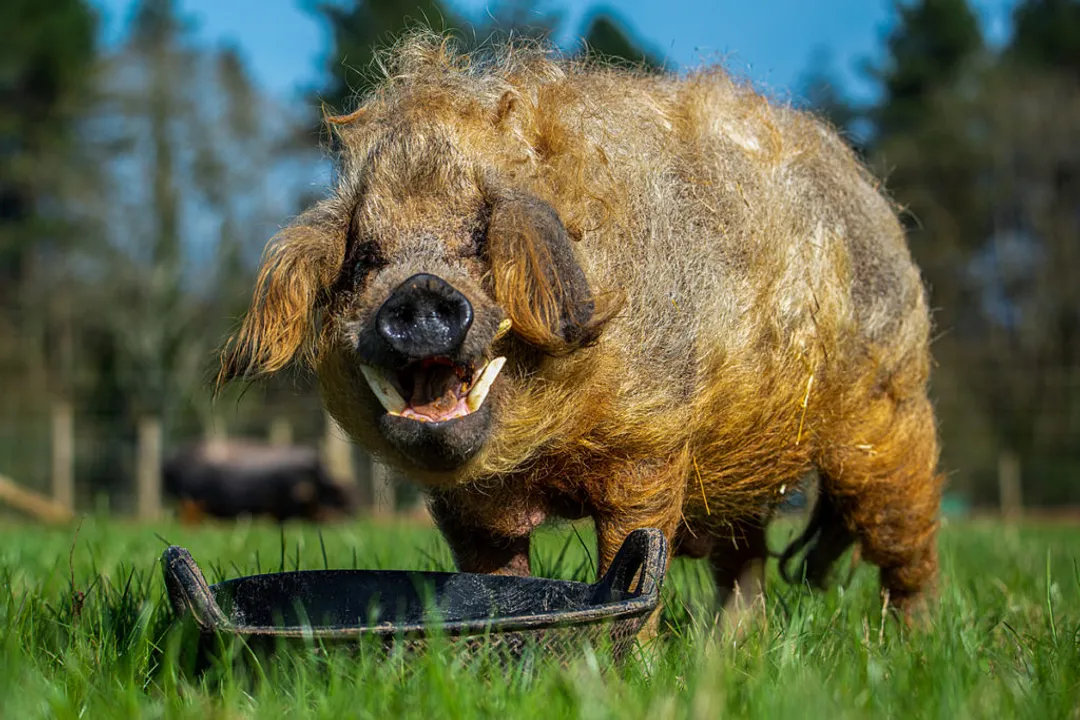
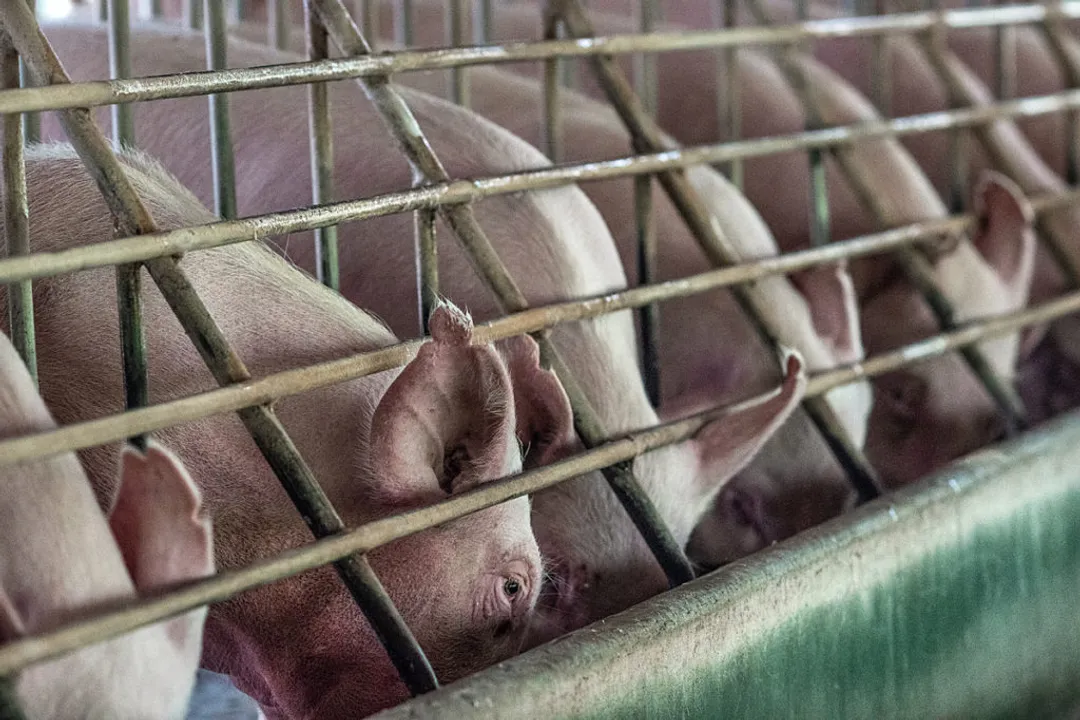
The long association between Sus scrofa and humans is marked by several distinct episodes of domestication, resulting in the vast array of domestic pigs seen today, Sus scrofa domesticus. Evidence points toward at least three separate primary domestication events.
The earliest efforts are believed to have occurred almost simultaneously around $9,000$ years ago in two major regions. In China, domestication likely involved penning livestock and feeding them refuse, a method that rapidly resulted in morphological changes leading to the rounder, short-legged pigs characteristic of modern Asian domestic stock. Concurrently, in the Near East, near the Tigris Basin (modern Turkey), domestication began around $13,000$ to $12,700$ BCE. This early Near Eastern process seems to have favored free-ranging practices where the pigs foraged more independently, which slowed the visible morphological shifts, meaning these early domestic animals remained quite similar to their wild counterparts.
A third, significant domestication event took place in Northern Europe around $6,500$ years ago, when farmers migrated from the Near East bringing their domesticated swine with them, which then interbred with local European wild boars. This mixing stimulated the development of the European domestic pig lineage, though those Near Eastern genes eventually died out in the local pig stock following further exchanges with domestic lines that had been exported from Europe back to the Near East.
A key evolutionary difference between the wild ancestor and its domesticated descendant lies in body composition, driven by selective breeding pressures. Wild boars typically concentrate muscle mass around the head and shoulders, necessary for digging and defense, with an underdeveloped hindquarter. In contrast, domestic pigs bred for meat production have far more developed hindquarters, often concentrating $70%$ of their body weight there.
# Global Spread and Feralization
The expansive native range of the wild boar across Eurasia was established before significant human intervention, but human activity has dramatically altered its global distribution since the Neolithic period. The introduction of domestic pigs to the Americas began with European explorers, notably Christopher Columbus in $1493$ on Caribbean islands, with Hernando De Soto introducing them to the southeastern United States in the mid-$1500$s. These free-ranging domestic pigs established robust feral populations, often causing conflict with early colonists and Native American tribes over resource competition, such as crop destruction, a historic precedent for modern ecological concerns.
The intentional introduction of pure Eurasian wild boars for sport hunting began later, around the late $1800$s and early $1900$s in the United States, often involving escapes from game preserves in places like New Hampshire. These pure boars subsequently bred with established feral domestic pigs, creating the widespread feral hog populations seen today, which are often hybrids of Eurasian wild boar and domestic stock. This hybridization, intentional releases, and general escapes have led to feral pig populations being reported in $44$ U.S. states. The phenomenon is not limited to the Americas; similar population re-establishments from escapes have occurred in Great Britain since the $1990$s.
It is a fascinating, if concerning, observation that the rapid morphological and behavioral shifts seen when a domestic pig reverts to a wild or feral state—sometimes called "razorbacks"—are based on existing, deeply embedded genetic potential. The genomic analysis of Eurasian wild boars reveals that natural selection has already shaped key genes associated with adaptation to diverse environments, impacting traits like pigmentation, metabolism, and muscle development. When a domestic pig escapes, it is not starting from scratch; it taps into an ancient, flexible genome capable of quickly maximizing traits beneficial for survival in the wild, whether it's altering diet, developing denser coats, or adjusting musculature away from the hyper-specialized hindquarters of a farm animal.
The inherent adaptability of Sus scrofa—its status as an "adaptive generalist"—makes managing these introduced populations incredibly challenging across its native and invasive ranges. Whether surviving in arid steppes, boreal taigas, or tropical regions, the species requires only adequate shelter, water, and food availability to thrive. This ecological tenacity, built up over millions of years of Eurasian evolution, is precisely what allows feral populations to become invasive pests, causing significant environmental and agricultural damage globally.
# Ongoing Adaptation and Genetic Resources
Modern genomic studies are now using the Eurasian wild boar as a template to understand adaptation on a continental scale. Research based on whole-genome sequencing of populations across Eurasia highlights the crucial role of Central Asian populations as a genetic conduit for intercontinental gene flow and adaptation. These studies have identified specific genes under selection, such as ADAMTS20, PDPK1, LPIN1, and ALPK2, which influence traits like pigmentation and fat/muscle metabolism. The adaptive variants found in wild populations are considered potentially valuable resources for improving domestic pig breeding programs, aiming to introduce resilience suited for diverse climatic and production contexts. This feedback loop—where wild adaptation informs domestic improvement, and subsequent escapes reintroduce these wild traits—underscores the continuous evolutionary interplay between the two forms of Sus scrofa.
It is worth noting, when considering the species' long evolutionary history, how profoundly the initial wild form was equipped to handle adversity. Wild boars in their native habitats can consume numerous poisonous plants without ill effect and possess unique nicotinic acetylcholine receptor mutations, shared with mongooses and honey badgers, which provide protection against snake venom—a clear example of evolutionary pressure shaping a specific physiological defense. This inherent hardiness, combined with a social structure led by an old matriarch in their sounders, explains why escaping domestic animals so readily transform into formidable, self-sustaining wild populations. The wild boar, in all its forms, remains a potent example of evolutionary success through flexibility and rapid response to environmental challenge.
Related Questions
#Citations
Wild boar - Wikipedia
Evolution of pigs? - Reddit
Introduction of Feral Hogs
Genetic history and adaptation of Eurasian wild boars inform ...
Pigs: How We Got Here - The Open Sanctuary Project