Wild Boar Locations
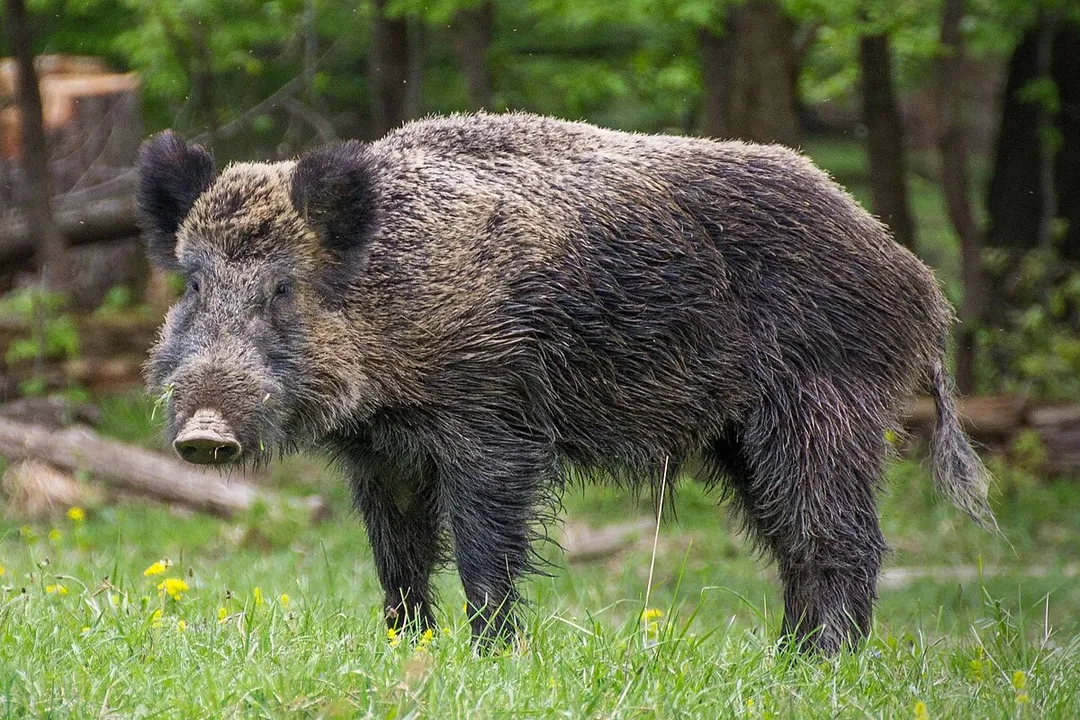
The search for wild boar locations requires navigating two very different geographical realities: the ecological mapping of their native and introduced habitats across the globe, and the deliberately placed coordinates within digital landscapes. The wild boar (Sus scrofa) itself is remarkably successful, stemming from a vast native range spanning much of Eurasia and North Africa. [1] This inherent adaptability has allowed them to become one of the world's most widespread large mammals, either as the original European wild boar or as established feral swine populations following introduction to new continents. [1][4] Consequently, pinpointing a "location" demands context regarding whether one is tracking an ecological phenomenon or following a programmed spawn point. [4]
# Real Range
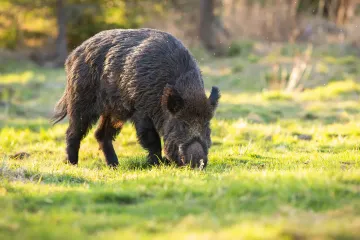
The wild boar’s distribution is a testament to its omnivorous diet and ability to thrive in varied climates. [4] In its ancestral environment, the species occupies a broad spectrum of habitats, often favoring environments that provide adequate cover and food resources throughout the year. [1] This includes deciduous and mixed woodlands, scrublands, and even areas bordering human cultivation. [4]
When discussing introduced populations, particularly in places like the Americas, the term often shifts to feral swine. These populations are generally the result of domestic pigs escaping and establishing wild breeding groups, or the hybridization of feral pigs with introduced European wild boar stock. [1] Regardless of the specific lineage, the result is a highly successful invasive species with a broad geographical footprint. [2]
# Habitat Needs
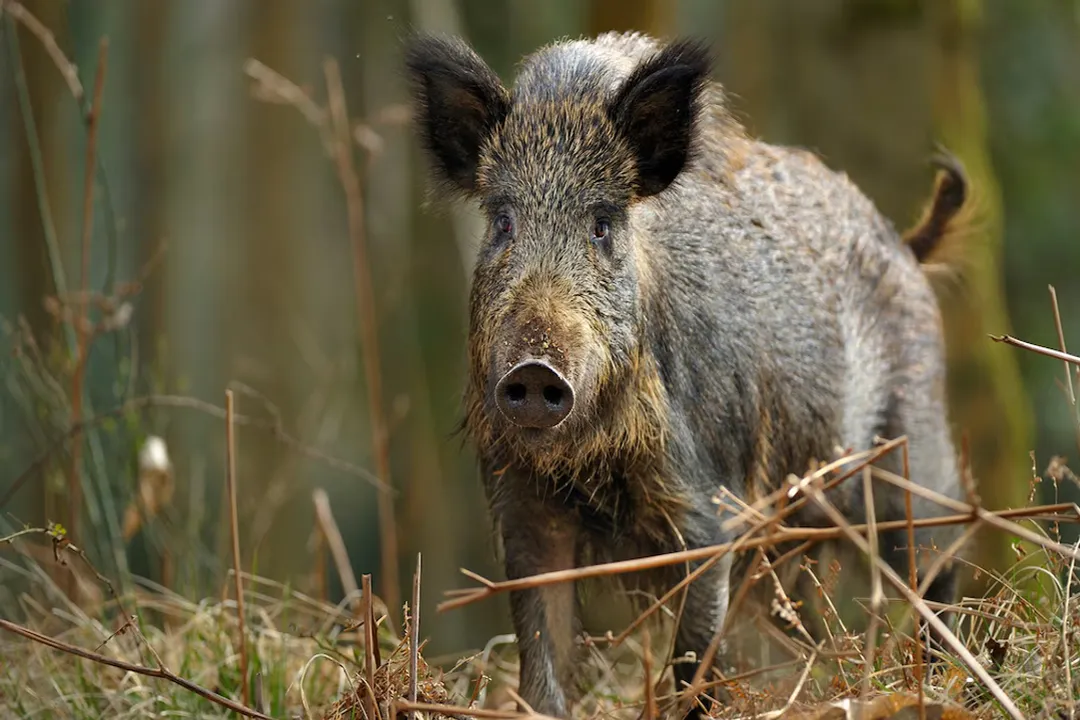
Understanding where a wild boar is likely to be found hinges on its immediate survival requirements: food, water, and cover. Boars are highly opportunistic omnivores, consuming roots, tubers, fruits, seeds, earthworms, and small vertebrates. [4] This dietary flexibility means their location is often dictated by seasonal forage availability. [4]
They typically seek dense vegetation, such as thickets or dense brush, to use as bedding and resting areas during the hotter parts of the day. [1] Proximity to water, whether it be streams, marshes, or mud wallows used for thermoregulation, is another critical factor. [4] While native populations might remain more closely tied to specific forest types, introduced feral groups demonstrate an exceptional tolerance for different environments, readily occupying grasslands, agricultural interfaces, and even semi-arid scrub, provided the fundamental needs of cover and water are met. [1]
For real-world observation or management, understanding the daily transit paths is more revealing than simply cataloging general habitat types. A consistent heuristic for finding wild boar activity involves tracking drainage areas that connect dense bedding thickets—where they rest during the day—to open agricultural fields or feeding grounds used at night. [1] The most reliable indicators, such as rooting patterns and established trails, frequently appear along these specific corridors rather than just within the general woodland boundary. [4]
# US Presence
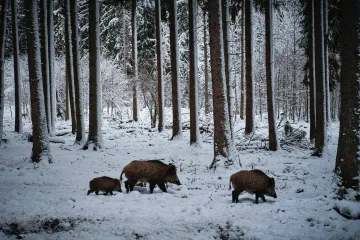
In the United States, the presence of feral swine represents a significant challenge to agriculture and native ecosystems. [2] The distribution is far from uniform, but concentrated areas show heavy establishment. Data tracked by the USDA's Animal and Plant Health Inspection Service (APHIS) confirms established populations across a wide swath of the country. [2]
The densest concentrations are historically found throughout the Southeastern states, though established and growing populations are also present in parts of the West and Midwest. [2] It is important to recognize that the term "feral swine" is an umbrella term encompassing escaped domestic pigs, their hybrids, and imported wild boar lineages. [1][2] The regulatory and management approach often treats them as a single invasive category due to their similar ecological impact. [2]
| Region Type | Typical Habitat Association | Primary Activity Zone |
|---|---|---|
| Southeastern US | Bottomland hardwoods, swamps, agricultural interfaces | Dense riparian cover and adjacent crop fields |
| Western US | Foothills, mountain brush, rangeland | Areas near permanent water sources in mixed terrain |
| Midwest | Mixed agricultural areas, woodlots | Edges of corn, soybean, or wheat fields adjacent to woodlots |
| [2] |
# Virtual Zones
The locations for wild boar are not confined to geography; they are frequently featured as environment elements or quarry animals in video games, where their placement is deliberately set by designers. [3][7][8][9] These digital locations follow game-specific logic rather than ecological imperatives. [6]
For instance, in the world of Red Dead Redemption 2, players seeking a boar for hunting—especially a perfect quality specimen—often need to venture into specific, dense woodland areas. [6] The Boar entity is commonly encountered in the thick forests surrounding Roanoke Ridge or within the more rugged, isolated sections of Lemoyne. [3] Players specifically discuss the challenge of finding the perfect boar, suggesting these locations are not guaranteed spawn points but areas of high probability. [6]
Other virtual environments place the boar to fulfill different gameplay roles:
- In the world of Genshin Impact, wild boars function as common forageable resources. [8] They are often situated in accessible, low-risk areas, such as the open fields surrounding Mondstadt or in specific groves within the Liyue region, making them easy targets for quick material collection. [8]
- In the high-seas adventure of Sea of Thieves, Wild Boars are livestock found on specific Isles. [7] Their location is fixed to these resource islands, requiring players to sail to a designated landmass to find them for meat or trade goods. [7]
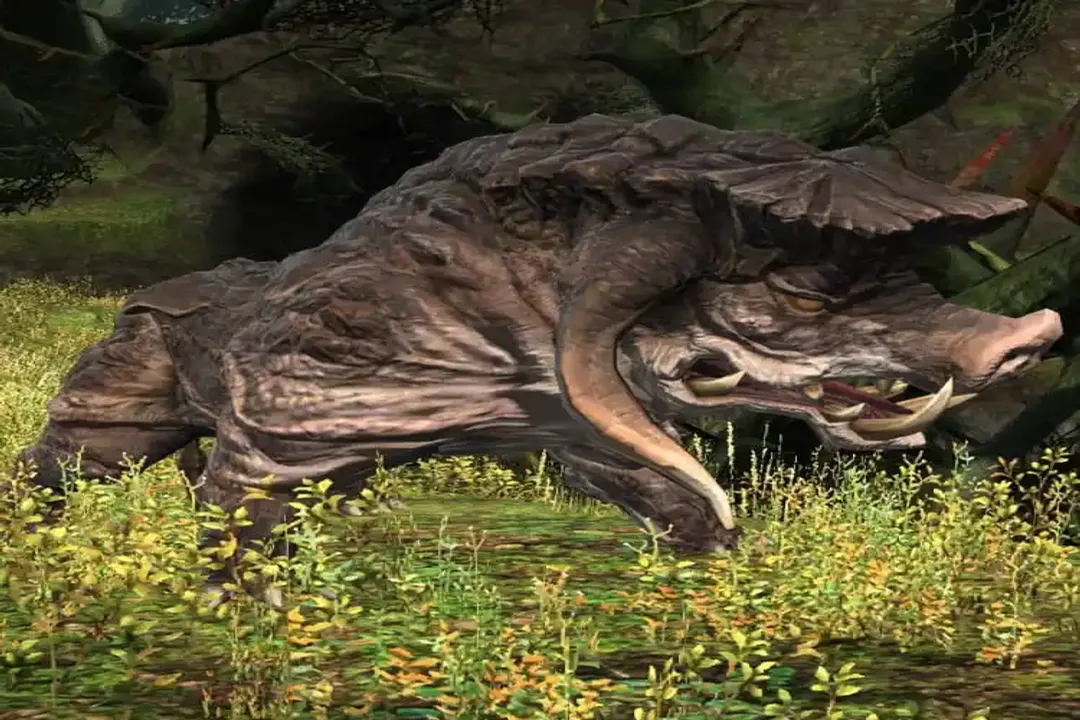
- Even in a massive multiplayer role-playing game like Final Fantasy XIV, where the boar is an enemy entity, its location is strictly mapped, such as its appearance in the Central Shroud region. [9]
# Locating Logic
Comparing the real and virtual worlds reveals a fascinating divergence in location determination. Real-world placement is determined by the slow, organic processes of resource availability and habitat suitability, which are constantly in flux. [1][4] Conversely, video game locations are hard-coded coordinates; a boar in RDR2 will appear at grid location X, Y regardless of the in-game season or weather, unless the game mechanics specifically dictate otherwise. [3][8]
Analyzing the placement reveals a difference in intent. In survival or hunting-focused games like Red Dead Redemption 2, boar locations are intentionally placed in remote, ecologically dense areas like Roanoke Ridge to encourage deep player immersion into survival mechanics and exploration. [3] By contrast, in resource-focused games like Genshin Impact or Sea of Thieves, the boars are often situated in areas that are more easily reachable or strategically located near central zones to serve as rapid, consistent consumables. [7][8] This highlights that a virtual location is less about natural habitat and more about serving the core loop of the game experience. [9]
#Videos
Red Dead Redemption 2 - Wild Boar Locations - YouTube
Related Questions
#Citations
Wild boar - Wikipedia
Feral Swine Population Distribution | Animal and Plant ... - usda aphis
Boar (RDR 2) | Red Dead Wiki - Fandom
Wild boar, facts and information | National Geographic
Red Dead Redemption 2 - Wild Boar Locations - YouTube
Where did you guys find a perfect boar in story mode? I've been ...
Wild Boar | The Sea of Thieves Wiki
Where to Find the Forest Boar and Basic Information - Game8
Wild Boar Location FFXIV - FF14 Hunting Log - FibroJedi