Wild Boar Facts
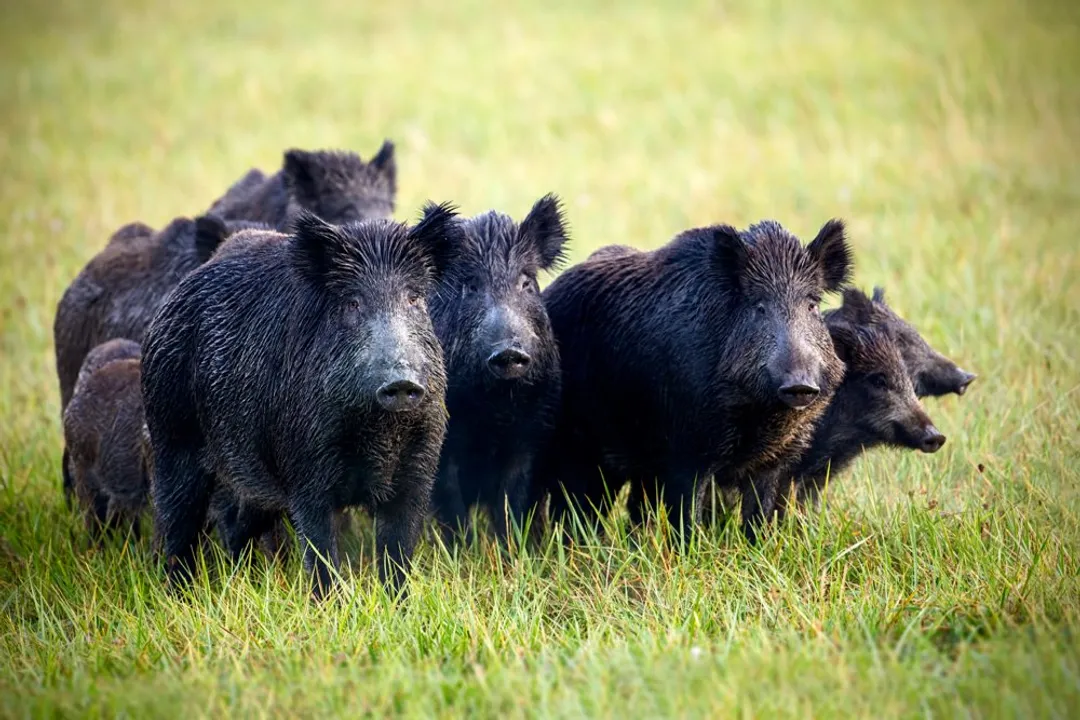
The wild boar, scientifically known as Sus scrofa, is one of the most widely distributed mammals on Earth, successfully colonizing environments ranging from dense European forests to harsh Asian scrublands. [2][6] These creatures are not merely tough; they are remarkably adaptable generalists, capable of surviving where many other large herbivores struggle. [1] Despite their common name, they encompass a wide range of appearances and subspecies, often interbreeding with domestic pigs where their territories overlap, leading to the classification of feral hogs in many introduced regions. [7] To truly understand this animal, one must look past the generalized image and delve into its complex biology, social structure, and powerful impact on the landscapes it inhabits. [2]
# Physical Traits
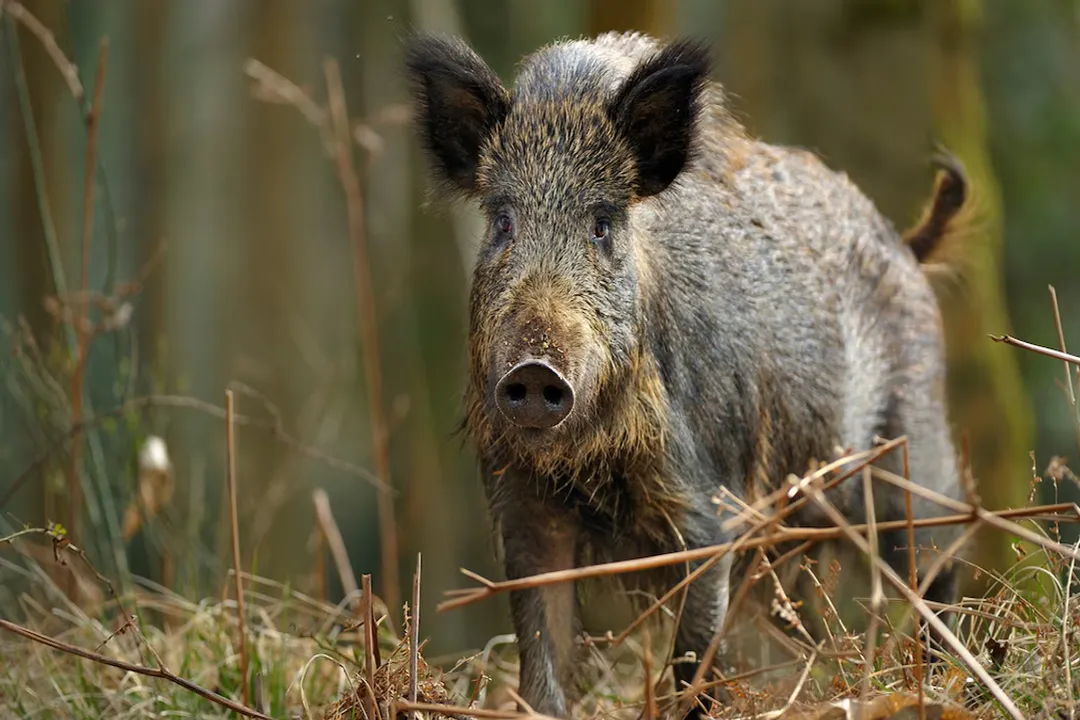
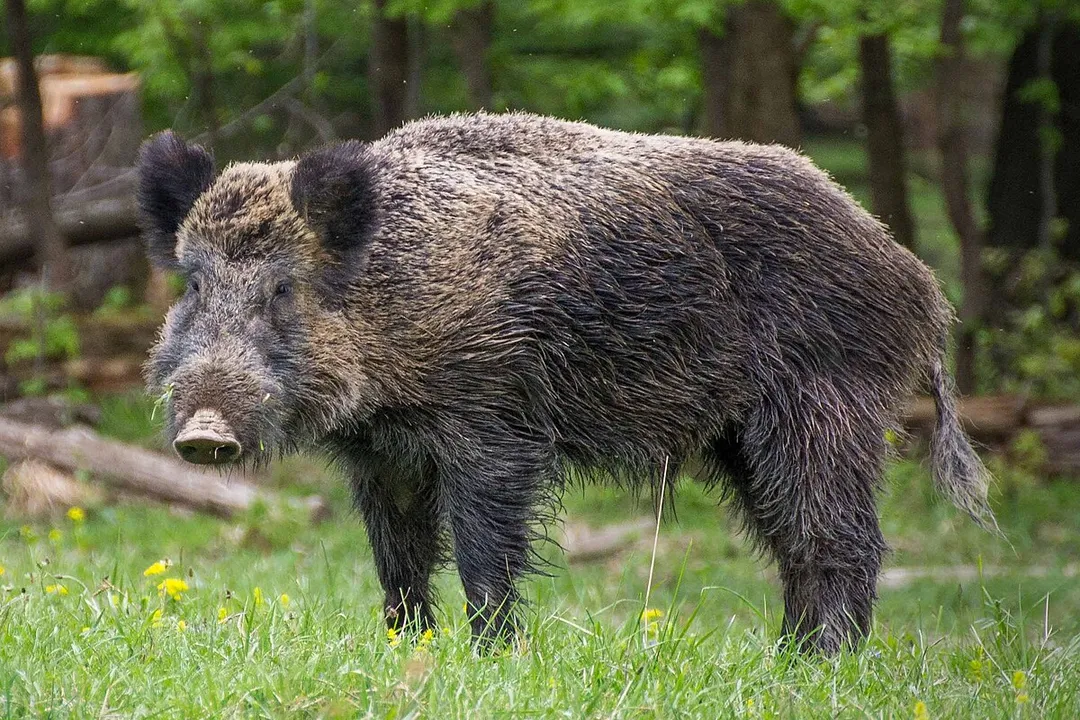
A wild boar’s physical appearance immediately communicates its rugged nature. They possess a stocky build, short legs, and a relatively long snout perfectly adapted for excavation. [2][6] Sexual dimorphism is distinct; males, called boars, are noticeably larger and more robust than the females, or sows. [6] In their native European ranges, an adult male might weigh between 55 to 110 kilograms (121 to 243 pounds), though individuals in other parts of the world, particularly feral populations in the Americas, can exceed 300 kilograms (660 pounds). [2]
Their body is covered in thick skin overlaid with coarse, bristly hair, which provides excellent insulation and protection. [2] Coat color varies significantly, generally ranging from dark brown to black in adults. [2][10] However, the young are instantly recognizable. Piglets are born displaying distinct camouflage: dark brown or black fur marked with several horizontal, light-colored stripes running down their bodies. [2][10] These stripes are vital for hiding in dappled forest light, but they typically fade as the piglet matures, usually disappearing after about six months of age. [2][10]
The most formidable features on an adult boar are the tusks. These are actually the elongated, continuously growing lower canine teeth. [2] While both sexes possess them, they are significantly more pronounced in the males, curving sharply upwards and serving as crucial tools for defense and dominance displays during mating season. [2][6] Their sensory capabilities are also noteworthy; they possess an excellent sense of smell that far surpasses their eyesight, allowing them to locate buried food sources effectively. [2]
The physical modifications seen in wild boars offer a direct survival advantage over their domesticated counterparts. Where a domestic pig might rely on shelter and easy access to food, the boar’s thick hide resists abrasions from dense undergrowth, and its powerful snout is specialized for digging through tough soil and rooting out tubers and grubs—a necessary adaptation for survival in unmanaged environments. [2]
# Feeding Habits
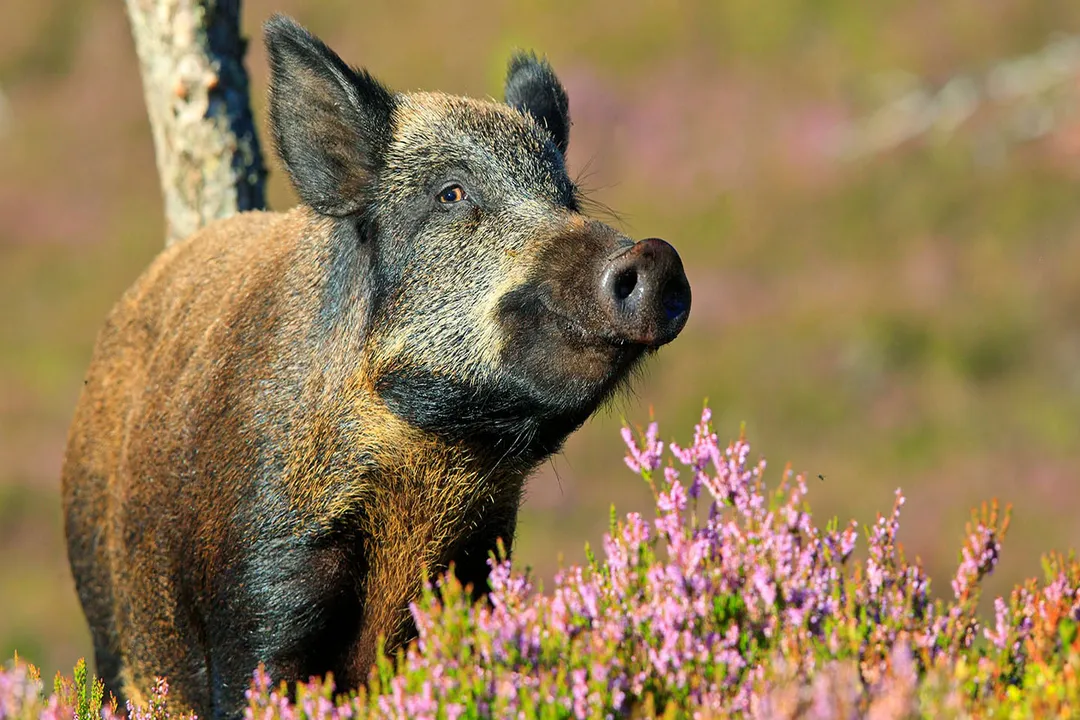
Wild boars are true omnivores, a key factor in their ecological success. [1][6] Their diet is incredibly varied and dependent almost entirely on what is locally available across the seasons. [2] They are masters of the rooting behavior, using their strong snouts to turn over soil and leaf litter in search of sustenance. [1]
Their foraging turns up a wide range of food items:
- Plant Matter: Roots, bulbs, tubers, grasses, fruits, and especially nuts like acorns and beech nuts when available. [1][2][6]
- Animal Matter: Insects, earthworms, larvae, small reptiles, amphibians, bird eggs, and even carrion. [1][2][6]
This opportunistic feeding strategy means that in agricultural areas, they pose a threat to crops, consuming grains, potatoes, and other cultivated vegetables. [7] In healthy woodland ecosystems, however, their diet can actually play a role in forest health, for example, by consuming pest insects or dispersing seeds from eaten fruits. [6]
Because their diet is so flexible, their peak activity often aligns with the availability of high-calorie foods. For instance, in many deciduous forests across Europe, the autumn acorn crop heavily influences their feeding patterns and energy storage leading into winter. [2] Understanding this seasonal dietary shift is important for land managers; a poor mast year (low nut production) can force boars into agricultural fields much earlier than usual, increasing potential conflicts with human interests. [2]
# Social Order
Wild boars exhibit interesting social dynamics that often vary based on sex and age. [6] They typically live in family units called sounders. [2][6] A sounder is usually composed of several related females (sows) and their offspring. [2] This group structure is matriarchal, often led by the oldest, most experienced sow. [6] This leadership is critical for navigating foraging grounds and avoiding danger.
In contrast, mature males (boars) are often solitary creatures. [2] They tend to avoid the sounders except during the breeding season, known as the rut. [2] When they do join the sounders for mating, dominant males establish their place through displays of aggression, often involving their sharp tusks. [2]
Their activity patterns are generally dictated by safety and climate. They are largely nocturnal or crepuscular (active at dawn and dusk) to avoid high daytime temperatures and human disturbance. [2] To manage heat and remove ectoparasites like ticks, they frequently engage in wallowing—rolling around in mud or damp soil. [2] This behavior is not just about cooling; the dried mud coating acts as a protective layer against biting insects once it hardens.
# Reproduction Rates
Reproduction in Sus scrofa is relatively rapid, contributing to their ability to quickly colonize new areas or rebound from population control measures. [2] The gestation period lasts approximately four months, typically ranging from 115 to 140 days. [2] A sow will usually give birth to a litter containing between 4 to 12 piglets, though larger litters are possible. [2]
As mentioned previously, the newborn piglets are striped for camouflage. [2] Because the sow must devote significant energy to nursing and protecting her young, and because the young grow quickly, they can reach sexual maturity within about a year, though this varies based on nutritional status and environmental conditions. [2] This combination of large litter sizes and relatively early maturity is why boar populations can expand so quickly when conditions are favorable and predators are scarce. [2]
# Global Distribution
The story of the wild boar is one of native success overlaid with invasive expansion. [2][7] Native populations of Sus scrofa are historically widespread across Eurasia and North Africa, inhabiting a vast range of climates. [2] They are highly successful in native settings where ecological balances, including natural predation, are maintained. [6]
However, when introduced outside their native range—such as in the Americas, New Zealand, and Australia—they often become highly problematic invasive species. [1][7] In these new environments, they face few natural predators, allowing their populations to explode unchecked. [7] This invasive status is largely due to their high reproductive rate and generalist diet, which allows them to thrive by exploiting diverse food resources. [7]
The impact of these introduced populations is substantial. Their constant rooting disturbs the soil structure, degrades water quality by increasing erosion, and damages native vegetation, which can impact native wildlife that depends on that specific habitat structure. [1][7] In agricultural regions, they are significant pests due to crop destruction. [1][7]
Here is a snapshot comparing key characteristics of the wild boar across its range:
| Trait | European Wild Boar | Feral Hog (e.g., North America) |
|---|---|---|
| Scientific Status | Native/Managed Population | Introduced/Invasive Species |
| Typical Max Weight | Up to 300 kg (660 lbs) | Often exceeds 300 kg (660 lbs) due to hybridization and nutrition |
| Social Structure | Sounders, Solitary Males | Highly variable; sometimes larger sounders or solitary, depending on habitat pressure |
| Primary Threat | Hunting/Natural Predators | Lack of natural predation/Habitat Destruction |
| Coat Texture | Coarse and protective [2] | Highly variable, often thicker in colder zones [2] |
This ecological comparison highlights that while the Sus scrofa genome is consistent, the expression of its traits—like size and social behavior—is profoundly shaped by local conditions and the history of human introduction. [2][7]
# Adapting to New Environments
The wild boar’s ability to thrive globally stems from an inherent behavioral flexibility that few large mammals share. Consider the concept of niche creation; where a specialized animal requires a specific type of habitat, the boar actively modifies its environment to suit its needs. [1] By rooting, they create small disturbances in the forest floor, which, while damaging to a monoculture crop, can promote biodiversity in a natural woodland by opening up spaces for new plant germination. [6]
When we examine their dietary habits in detail, it becomes clear that their success is rooted in their willingness to substitute food sources rather than starve. If acorns are scarce one year, the boar will simply shift its primary energy acquisition to insect larvae, roots, or even small vertebrates. [2] This generalist approach means that unlike a deer, which might suffer population crashes during a hard winter with poor browse availability, the boar has a built-in buffering system against localized food scarcity. [1][6] This inherent adaptability is why managing their populations often requires consistent, aggressive control efforts rather than relying on natural cycles to thin them out. When human management pressure is removed, populations rebound with astonishing speed, a fact well-documented in regions where hunting quotas are relaxed. [7] They truly are survivors built for variable, sometimes harsh, conditions.
#Videos
Amazing Wild Boar Facts for Kids - YouTube
Related Questions
#Citations
Wild boar, facts and information | National Geographic
Wild boar - Wikipedia
Wild Boar - National Invasive Species Information Center (NISIC)
Wild Boar (Sus scrofa) - British Mammals - Woodland Trust
Wild boar Facts for Kids
Sus scrofa (wild boar) | INFORMATION - Animal Diversity Web
Wild Pigs - Invasive Species Centre
Wild Boar - Facts, Diet, Habitat & Pictures on Animalia.bio
Wild Boar Facts | Croatia & Slovenia Wildlife Guide
Amazing Wild Boar Facts for Kids - YouTube