What shared trait with other large tuna supports the high metabolic rates needed for hunting?
Maintaining muscle temperatures above ambient water temperature (warm-blooded tendencies)
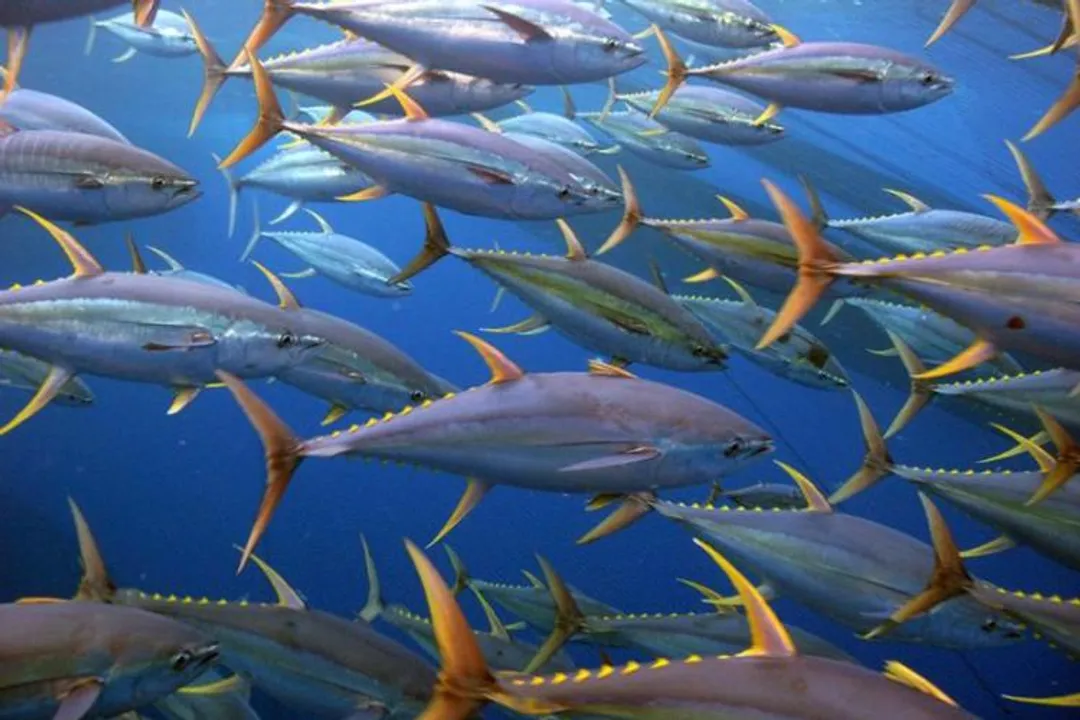
Yellowfin tuna possess a physiological adaptation common to large, active tuna species that is critical for their sustained high performance as predators: they are partially warm-blooded, or more accurately, regional endotherms. This means they have the biological capacity, via mechanisms like the retia mirabilia, to maintain their core swimming muscle temperatures significantly above the temperature of the surrounding ocean water. This elevated internal temperature dramatically increases enzyme efficiency and muscle power output. This constant maintenance of high muscle temperature demands a high metabolic rate and constant, successful foraging, which directly supports the incredible burst speed required for rapid, coordinated attacks necessary to engulf schools of smaller, fast-moving prey before they can disperse.
#Videos
Facts: The Yellowfin Tuna - YouTube