What critical internal feature is absent in the Yellowfin Tuna, requiring constant swimming for depth maintenance?
Answer
Swim bladder
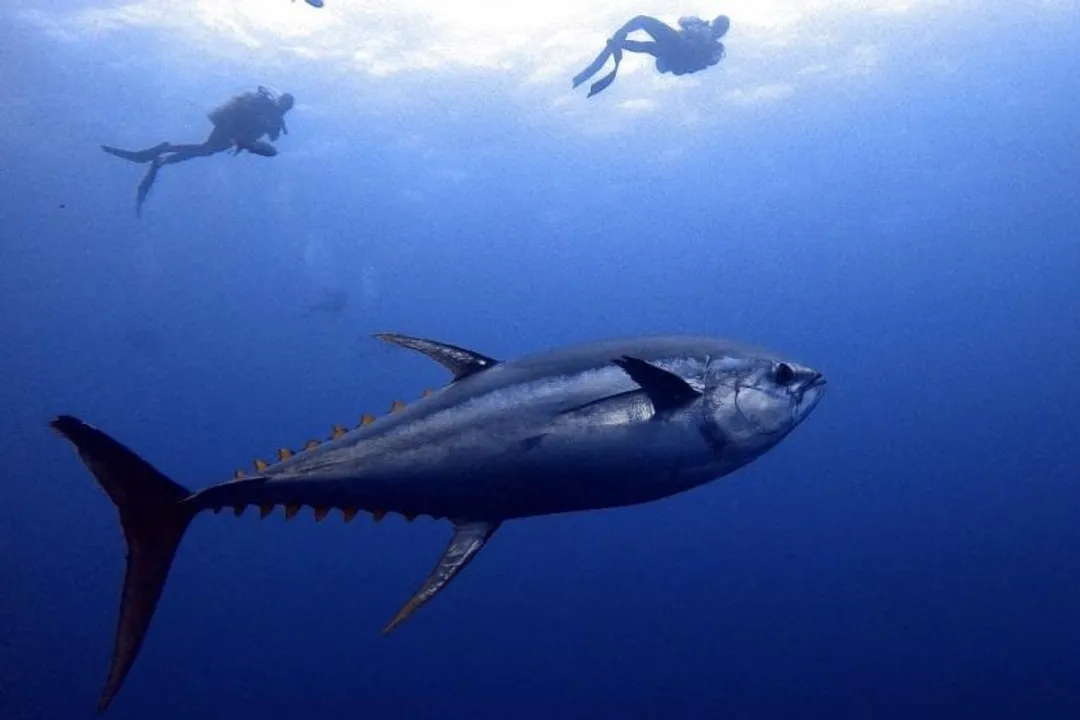
The Yellowfin Tuna physiologically lacks a swim bladder, which is an organ utilized by many other bony fish species to regulate buoyancy passively and maintain depth without continuous energy expenditure. Because this gas-filled organ is absent, the Yellowfin tuna must rely entirely on constant, active swimming to maintain its precise position within the water column. This requirement dictates its perpetually active lifestyle and hunting behavior. Furthermore, this anatomical difference means that if a Yellowfin tuna is brought rapidly to the surface from deep waters, it is highly vulnerable to barotrauma compared to species that possess a functional swim bladder.
Related Questions
What critical internal feature is absent in the Yellowfin Tuna, requiring constant swimming for depth maintenance?What specific coloration of the fins gives the Yellowfin Tuna its common name?What physical attribute is described as highly streamlined and torpedo-shaped, reflecting adaptation for sustained swimming?How many stabilizing finlets typically run from the second dorsal and anal fins to the caudal peduncle in Yellowfin Tuna?What color covers the dorsal side of the Yellowfin Tuna to camouflage it against deep water when viewed from above?What is the maximum recorded weight for a mature Yellowfin Tuna specimen mentioned in maximum dimensions?What specialized structure acts like stabilizers on an airplane wing, located on either side of the caudal peduncle?Where is the small corselet of scales located on the Yellowfin Tuna's body?What characteristic of the Yellowfin Tuna's mouth structure suggests a diet of prey swallowed whole?What visual cue, besides fin color, might suggest an observer is looking at a Bigeye tuna instead of a Yellowfin tuna?