Yellowfin Tuna Physical Characteristics
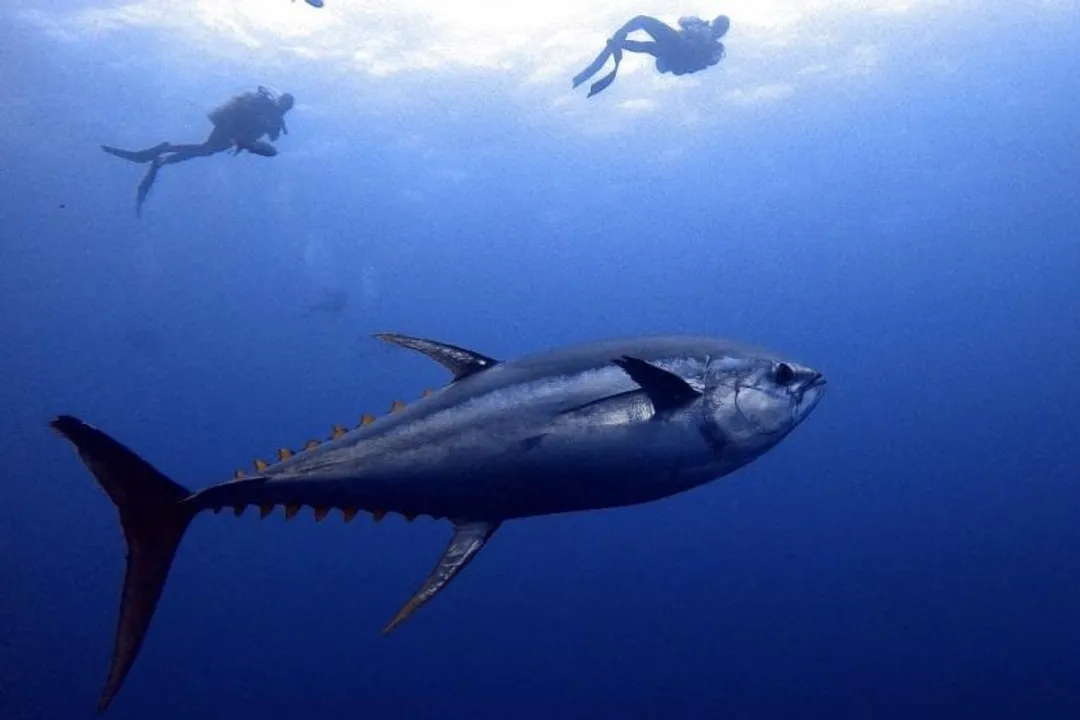
The visual profile of the Yellowfin Tuna, Thunnus albacares, immediately communicates its identity as a creature built for impressive speed across the open ocean. Its physique is highly streamlined and taut, reflecting an adaptation honed for powerful, sustained swimming rather than bottom-dwelling maneuvering. The body is generally described as slender, torpedo-shaped, and robust enough to handle the rigors of pelagic life. This hydrodynamic efficiency is key to their ecological role as apex predators in many oceanic zones.
# Coloration Patterns
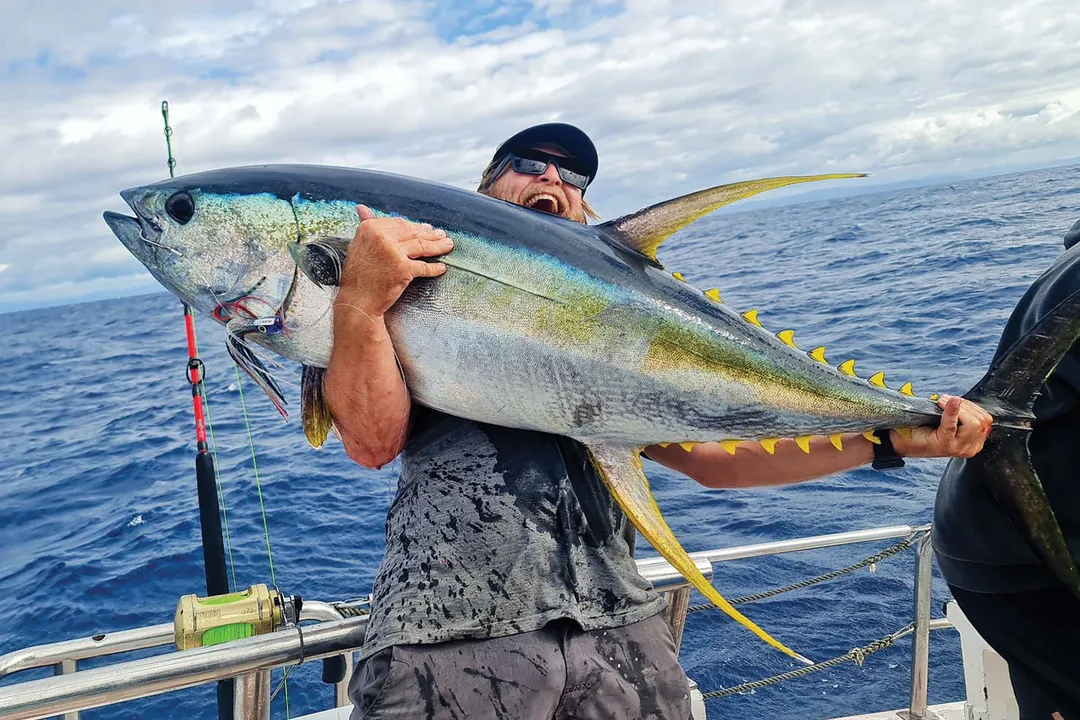
The visual signature of the Yellowfin is dominated by a striking contrast between its upper and lower halves. The dorsal side, or back, presents a deep, rich hue, often described as dark blue or dark metallic blue to almost black. This dark pigmentation helps camouflage the fish when viewed from above against the deep water beneath. Moving toward the flanks, the color transitions to a bright, silvery tone that covers the sides before meeting the lighter, often purely silver, underside or belly. This countershading—dark above, light below—is a classic marine camouflage strategy.
A distinguishing feature, responsible for its common name, is the brilliant coloration of its fins. In healthy specimens, particularly adults, the dorsal, pectoral, anal, and pelvic fins exhibit a vivid golden or bright yellow hue. This characteristic is so definitive that it often serves as the quickest way for an observer or angler to confirm the species, especially when viewed alongside similar-looking tunas.
# Fin Structure
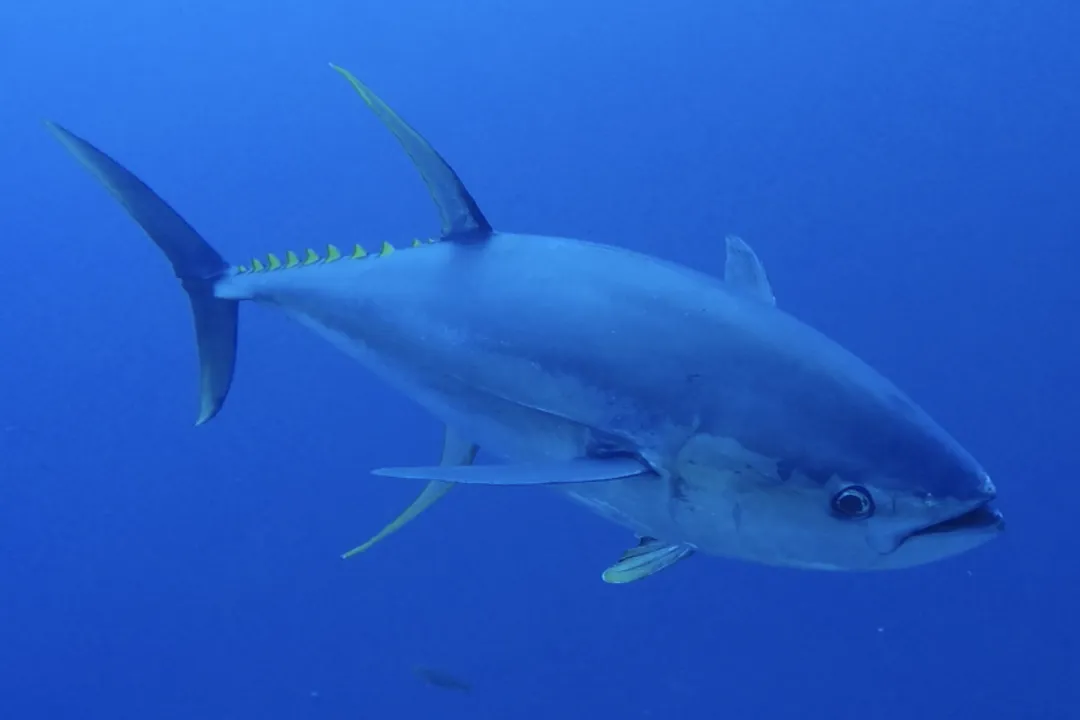
Perhaps the most defining physical traits, beyond coloration, involve the specialized arrangement of the fins located toward the rear of the body. Yellowfin tuna possess a series of small stabilizing structures called finlets that run from the end of the second dorsal and anal fins down to the caudal peduncle, the narrow part of the body to which the tail fin is attached. While the exact number can vary slightly, sources consistently note that there are four to nine such finlets present.
The second dorsal fin and the anal fin are notably elongated, particularly in larger individuals. These fins extend far back along the body's posterior section. In some instances, these extended fins—and sometimes the tips of the caudal fin—may display a dusky or blackish band alongside the dominant yellow, though the overall impression remains yellow. The caudal (tail) fin itself is lunate, or crescent-shaped, and is supported by a pronounced caudal keel on either side of the peduncle, acting like stabilizers on an airplane wing to aid in high-speed movement.
# Size and Scale
Yellowfin tuna are among the larger tuna species, representing a significant presence in marine ecosystems. While size varies greatly depending on geography and maturity, they are generally categorized as large fish. Mature specimens commonly achieve lengths of up to six feet and can weigh as much as 400 pounds. In terms of sheer maximum dimensions recorded, the species can reach a total length (TL) of up to 230 centimeters and a maximum recorded weight near 200 kilograms.
Considering the sheer mass these fish attain, their structure must be immensely powerful. It is fascinating to note that despite this size and their high-energy lifestyle, their skin covering is relatively minimal compared to some other fish families. They possess a small corselet of scales located near the pectoral fins and gill opening, but much of the rest of the body is covered only by very fine, embedded scales.
# Internal Details
Peering beneath the exterior reveals adaptations necessary for their predatory lifestyle. The mouth of the Yellowfin is relatively small for a fish of its size, and its teeth are small. This structure suggests a diet consisting of smaller prey items that are swallowed whole, rather than large, struggling quarry that requires significant tearing or gripping.
One critical, yet unseen, physical characteristic often cited is the absence of a swim bladder. Unlike many bony fish that use this gas-filled organ to regulate buoyancy and maintain depth without expending energy, the Yellowfin must rely on constant swimming to maintain its position in the water column. This physiological necessity reinforces the observation that they are built and required to be perpetually in motion. If one were to chart the average depth preferences across different oceanic zones, the lack of a swim bladder means that changes in depth require muscular effort, unlike species that can actively float at different strata. This absence also means that when brought rapidly to the surface from deep water, they are far more susceptible to barotrauma than fish with functional swim bladders, a point sometimes noted in fishing circles regarding the handling of deep-caught specimens.

# Morphological Differences and Variations
When comparing the Yellowfin to its relatives, specific measurements can be telling. The ratio of the second dorsal fin length to the anal fin length is a key differentiator used by ichthyologists, as these fins can be quite long, sometimes appearing nearly equal in length, though the second dorsal is typically slightly longer than the anal fin.
For the general observer, understanding how the fin color relates to species identification can be useful in the field. While all sources confirm the yellow fins, it’s worth considering that the vibrancy can sometimes be linked to the fish's immediate condition or sexual maturity, though sources do not detail this. A quick check in a fast-moving environment often involves assessing three key areas simultaneously: the dark blue back, the silver belly, and the distinct pure yellow on the fins—if the fins appear reddish or orange, or if the dorsal fin is exceptionally high, one might be looking at a closely related species like the Bigeye tuna. The streamlined body, which allows them to reach speeds estimated to be close to 50 mph, requires this perfect balance of fin shape and musculature.
| Feature | Description | Measurement/Note |
|---|---|---|
| Body Shape | Streamlined, torpedo-like | Built for speed |
| Dorsal Color | Dark blue to black | Countershades silver belly |
| Fin Color | Brilliant golden or yellow | The namesake characteristic |
| Maximum Length | Up to 2.3 meters | 7.5 feet is the maximum reported TL |
| Internal Feature | Lacks a swim bladder | Requires constant swimming to maintain depth |
Another subtle yet important aspect of their physical makeup is related to their feeding mechanics. The small teeth suggest that Yellowfin are adept at chasing down and engulfing fast-moving prey like squid and smaller fish whole, relying on speed for capture rather than aggressive tearing of flesh. This method of feeding is entirely supported by their highly evolved muscular structure and low drag profile. While it is difficult to quantify without dissection, the sheer muscle mass required to propel a 400-pound, bladderless animal at high speed through dense seawater highlights an extraordinary power-to-weight ratio among large fish. This anatomical reality dictates where and how they hunt, keeping them active in the water column rather than stationary.
Related Questions
#Citations
Yellowfin Tuna – Discover Fishes - Florida Museum of Natural History
Yellowfin tuna - Wikipedia
Thunnus albacares, Yellowfin tuna : fisheries, aquaculture, gamefish
Learn about yellowfin tuna - Mass.gov
Yellowfin Tuna - Oceana
Yellowfin tuna | Animals - Monterey Bay Aquarium
Yellowfin Tuna | NC DEQ
Yellowfin Tuna - Species Guide
Yellowfin Tuna | California Sea Grant