Yellowfin Tuna Diet
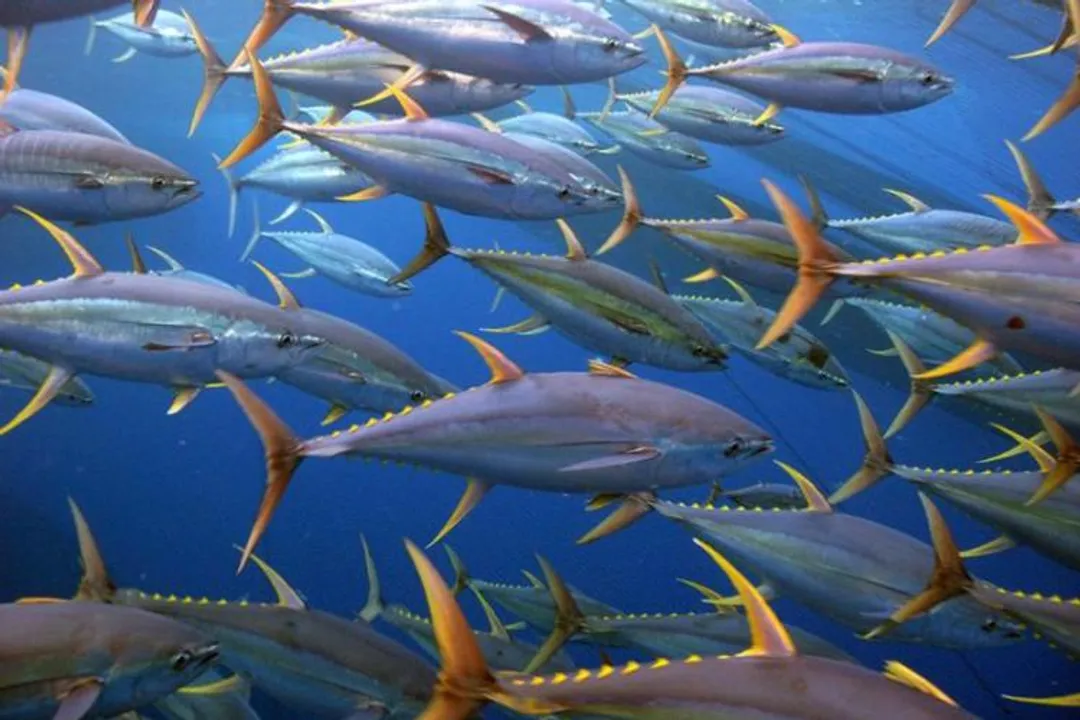
The existence of the yellowfin tuna, Thunnus albacares, in the world’s warm and temperate oceans is defined by its perpetual motion and its role as a formidable predator. [1][3][5] These large, fast-swimming fish are obligate carnivores, meaning their survival is entirely dependent on consuming other marine life. [3][7] Understanding what yellowfin consume is key to understanding their migration, behavior, and their importance within the marine food web. [9]
# Predatory Nature
As a highly migratory species inhabiting tropical and subtropical waters globally, the yellowfin tuna must be an adaptable and opportunistic feeder to sustain its high metabolism and rapid growth. [1][3][5] Their feeding strategy relies on actively pursuing prey rather than passive filtering or scavenging. [7] Because they are often found near floating objects or aggregations of schooling fish, it suggests they are highly tuned to finding dense concentrations of their next meal. [4] This active predation style requires them to efficiently process a diet composed mainly of protein-rich animals. [1]
# Primary Diet Items
The diet of the yellowfin tuna is not monolithic; it shifts depending on what is abundant in their immediate vicinity. However, scientific analysis of stomach contents reveals a clear hierarchy of preferred food sources. [9] Generally, their diet centers around three major categories: fish, cephalopods, and crustaceans. [1][3][4]
Fish often constitute the largest volume of their intake across various studies. These typically include smaller, pelagic species that travel in schools, such as sardines, anchovies, and mackerel. [1] When a yellowfin encounters a dense bait ball, this becomes the primary energy source until the school disperses. [9]
Cephalopods, which include squid and octopus, represent another significant component of the yellowfin diet. [3] Squid, in particular, are high in protein and are frequently consumed, especially by larger specimens. [9]
Crustaceans, such as shrimp and crabs, also make an appearance, though often in smaller proportions than fish or squid. [1][4] Smaller or juvenile yellowfin tuna might rely more heavily on these smaller, slower-moving benthic or near-bottom dwellers when larger prey isn't readily available. [9]
The relative importance of these prey types can be distilled through sampling data. One analysis of stomach contents showed that when assessing the total volume of food consumed, whole fish contributed the majority, followed by squid/octopus, and then crustaceans in descending order. [9]
# Diet Adjustments
The sheer breadth of the yellowfin’s range—from surface waters to significant depths in both tropical and subtropical zones—necessitates a flexible menu. [3][5] This environmental variability is the biggest driver behind dietary differences observed between different populations.
# Location and Depth
A tuna feeding near a coastal upwelling zone will have access to different crustaceans and small forage fish than one deep in the oceanic mid-water column far from continental shelves. [9] Furthermore, yellowfin are known to feed across a wide vertical range. While they frequently feed near the surface, they also dive to considerable depths to hunt. [4] When they descend into cooler water layers, the available species change dramatically, forcing them to switch from warm-water surface fish to different deep-dwelling squid or crustaceans. [9]
This constant relocation and depth change suggests that a successful yellowfin is less of a specialist and more of an extremely efficient generalist. For instance, in studies near Hawaiian waters, while the mainstays remain the same, researchers noted that even small zooplankton, like copepods, might enter the diet, especially for younger fish or when larger prey is momentarily scarce. [9]
# Size Effect
There is a clear relationship between the size of the predator and the size of the prey it targets. A smaller, younger yellowfin cannot consume a large mackerel or a foot-long squid. Consequently, juveniles focus on smaller prey items like larval fish, small shrimp, and other tiny invertebrates. [9] As the tuna grows, its wider gape and increased stamina allow it to tackle larger, more energy-dense prey, leading to a diet dominated by medium-sized fish and larger cephalopods. [3]
It is useful for anyone tracking these fish to understand this scaling effect. A simple way to visualize this nutritional shift is to consider the energy return. A small tuna needs a high volume of small prey to grow quickly, whereas a large tuna prioritizes fewer, larger meals that offer a greater caloric payoff for the energy spent hunting them down. [1][9]
# Foraging Strategies
Yellowfin tuna exhibit behavior that suggests high levels of coordination, especially when targeting schooling prey. While not definitively proven to hunt in the same coordinated pack structure as some other predators, their tendency to aggregate around bait balls indicates they capitalize on opportunities where prey density is extremely high. [4]
Their diet is heavily influenced by what aggregates near them. They frequently associate with drifting objects, such as seaweed mats or debris, which attract smaller fish and invertebrates, creating a temporary buffet. This opportunistic targeting is a significant survival mechanism in the vast, often nutrient-sparse open ocean. [4]
When an angler tries to target these fish, understanding this feeding dependency offers a key insight: success often hinges not just on what they eat, but how that food appears. If a yellowfin is accustomed to chasing fast-moving baitfish near the surface, a slow-moving, deep-set lure will likely be ignored. Conversely, if they are feeding on slower, bottom-associated squid, a presentation mimicking that vertical profile is more effective. [6] Thinking about the presentation of the meal—its speed, depth, and grouping—is as critical as knowing the meal's basic composition. The decision to strike is often a rapid assessment of opportunity versus risk, driven by the accessibility of dense, high-calorie food sources. [9]
# Ecological Impact
The dietary habits of the yellowfin tuna place them high up in the pelagic food web. By consuming vast quantities of smaller fish and squid, they exert considerable top-down pressure on those populations. [1] They act as a natural regulator, keeping the numbers of mid-level predators and forage fish in check within their vast territories. [3]
This high-level position also makes them sensitive indicators of ecosystem health. Changes in the abundance of their preferred prey—perhaps due to overfishing of baitfish stocks or shifts caused by ocean warming—will directly impact the health, size, and distribution of the yellowfin populations themselves. [5] If the foundational food sources decline, the yellowfin’s diet broadens out of necessity to include less desirable or lower-energy items, impacting their growth rates and reproductive success. [9]
# Conclusion
The yellowfin tuna’s diet is a dynamic reflection of its pelagic lifestyle. It is a creature built for speed and efficiency, adapted to exploit whatever schooling fish, squid, or crustaceans are most densely packed in the moment, whether near the sunlit surface or in the twilight depths. [1][3][4] Their ability to switch successfully between these food groups across diverse oceanic environments is what allows them to maintain their status as one of the ocean's most successful and widespread predatory fish. [5] For observers and scientists alike, tracking these dietary shifts provides essential data points on the overall balance of life in the world’s oceans. [9]
Related Questions
#Citations
Yellowfin Tuna - Oceana
Diet composition and feeding habits of yellowfin tuna Thunnus ...
Yellowfin tuna - Wikipedia
Yellowfin Tuna - Marine Species Portal
Pacific Yellowfin Tuna | NOAA Fisheries
Yellowfin Tuna, what do they eat? - Boating and Fishing Forum
TIL bluefin and yellowfin tuna are carnivorous and have high trophic ...
Yellowfin tuna | Animals - Monterey Bay Aquarium
[PDF] Diet of yellowfin tuna in the Pacific Ocean - SOEST Hawaii