Yellowfin Tuna Scientific Classification
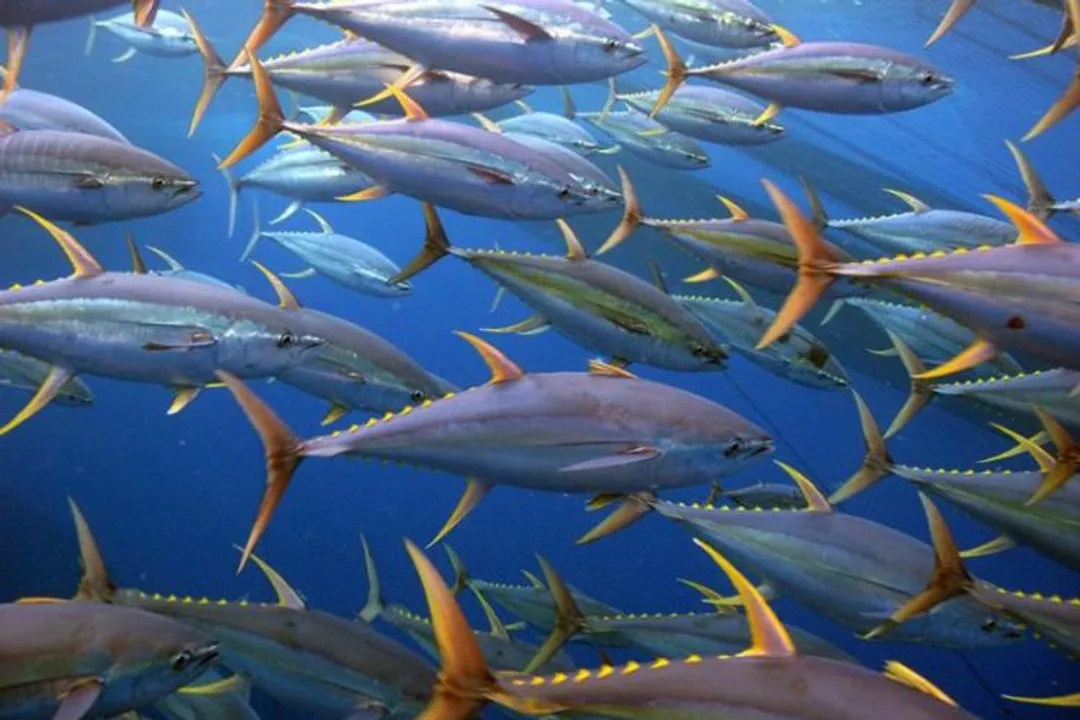
The Yellowfin Tuna, known scientifically as Thunnus albacares, occupies a fascinating position within the tree of life, a classification that tells a detailed story about its evolutionary history and relationship to other marine life. [2][4][7] Understanding this scientific ordering moves us past common names, like Allison tuna or simply yellowfin, and into the structured language used by biologists globally. [3][8] Every step down the taxonomic ladder reveals a shared characteristic with a broader group of creatures. [2][5]
# Kingdom Animalia
The classification begins at the broadest level, placing this powerful pelagic predator firmly in the Kingdom Animalia. [2][5] This kingdom assignment is a given for any creature one might actively swim alongside, signifying multicellularity, heterotrophic nutrition (it must consume other organisms for energy), and a lack of cell walls. [2] While this may seem obvious for a large, fast-swimming fish, it is the essential first step in defining its biological grouping alongside every other animal on Earth. [5]
# Phylum Chordata
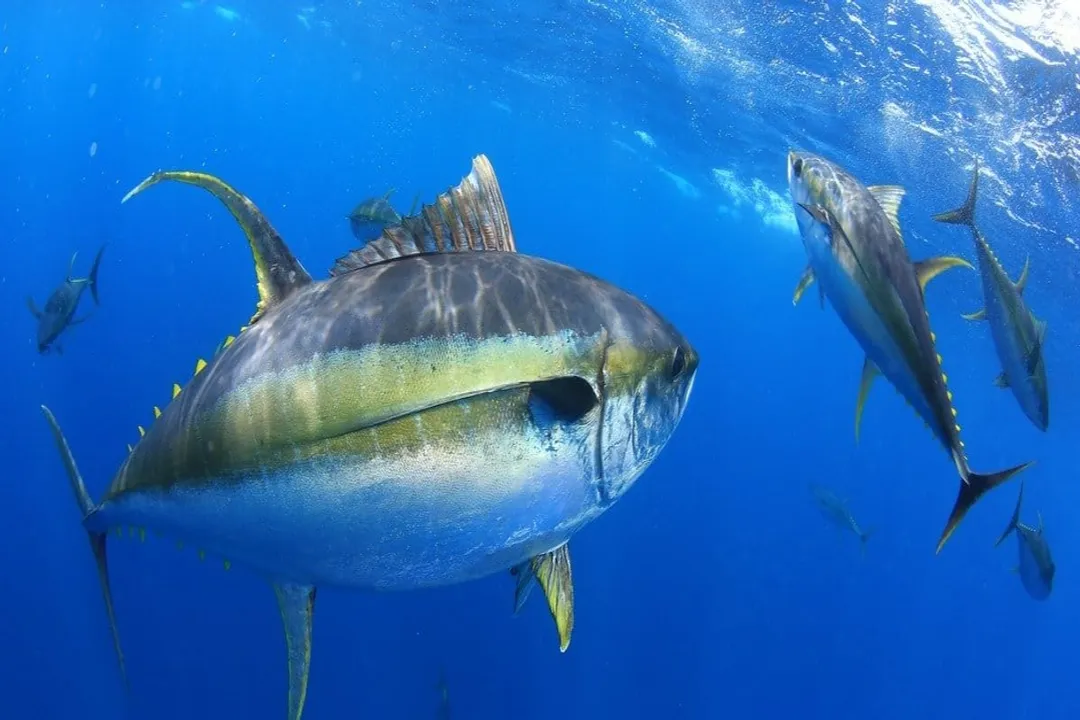
Moving inward, the Yellowfin Tuna belongs to the Phylum Chordata. [2][5] This places it among animals that, at some stage in their development, possess a notochord—a flexible rod providing skeletal support—a dorsal hollow nerve cord, pharyngeal slits, and a post-anal tail. [5] Most well-known chordates are vertebrates, and T. albacares certainly fits that description, sharing this phylum membership with birds, mammals, and all other fishes. [2]

# Class Actinopterygii
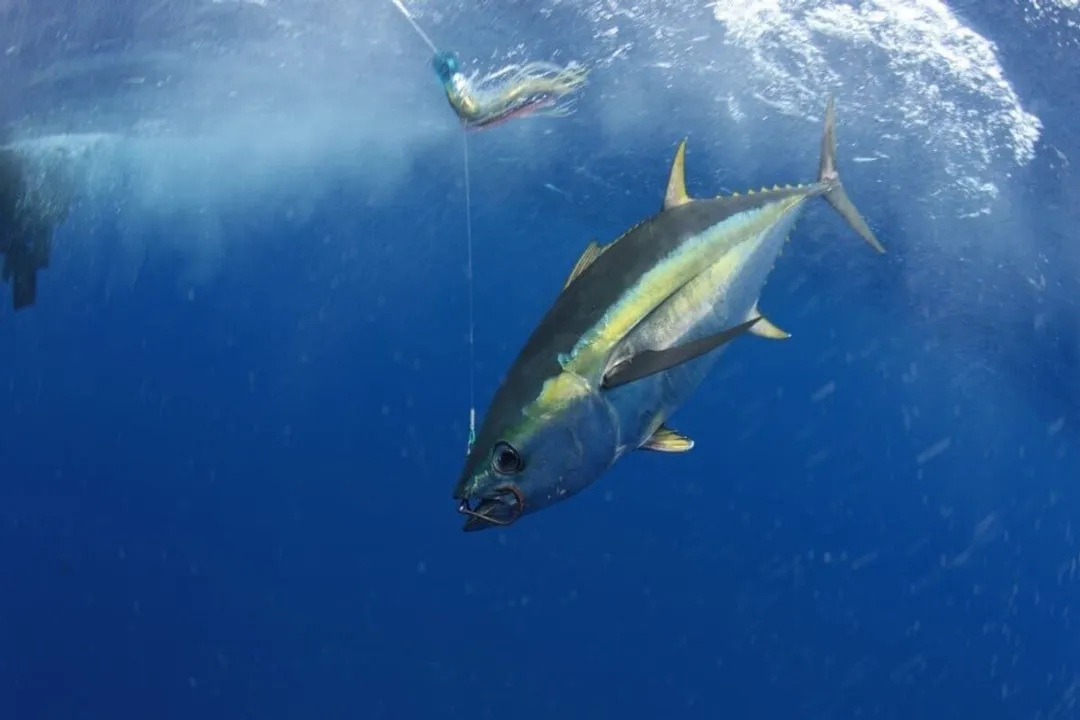
The next step narrows the field considerably into the Class Actinopterygii, commonly known as the ray-finned fishes. [2][5] This group represents the vast majority of modern fish species, characterized by fins supported by bony spines or rays, which contrast sharply with the fleshy, lobe-like fins found in Sarcopterygii (lobe-finned fishes, our distant ancestors). [2] The highly maneuverable fins afforded by this skeletal structure contribute to the high-speed swimming capabilities characteristic of tunas. [5]
# Order Perciformes
Deeper still, we find the Yellowfin Tuna within the Order Perciformes. [2][5] This is one of the largest and most diverse orders of bony fishes, often referred to as the perch-like fishes. [2] While the order is incredibly varied, encompassing everything from gobies to true perches, the assignment here groups T. albacares with species that typically have two dorsal fins (though modified in tunas) and ctenoid scales. [5] It is interesting to note that while the Yellowfin is a fast-moving, migratory species, its deep placement within Perciformes shows its evolutionary connection to more sedentary, bottom-dwelling relatives that form the bulk of this order. [2]
# Family Scombridae
The Family Scombridae is where the Yellowfin Tuna starts to look much more familiar to the average seafood consumer. [2][5][7] This family encompasses the mackerels, bonitos, and, critically, the tunas. [7] These are predominantly marine, oceanic, and predatory fishes known for their streamlined bodies, built for incredible speed across vast distances. [5] Grouping them here signifies a shared suite of adaptations for a pelagic existence, including powerful muscles and complex physiological traits that allow them to maintain body temperatures above the surrounding water, a key competitive advantage in cooler, deeper waters. [7] Considering that this family includes species like the Bluefin and Skipjack, it’s clear that Scombridae represents a lineage highly successful in exploiting open ocean resources. [2]
# Genus Thunnus
The assignment to the Genus Thunnus confirms the Yellowfin’s status as a "true tuna". [2][4][5] This genus is reserved for the larger, more robust members of the Scombridae family, distinguished by specific morphological characteristics, such as the structure of their swim bladder and the presence of a specific number of dorsal fin rays and vertebrae. [4][5] Within this genus, we find the titans of the ocean, like the Atlantic Bluefin (T. thynnus) and the Yellowfin (T. albacares). [4] While fisheries science often debates the exact number of species within Thunnus based on genetic markers and geographic boundaries—with some regions noting differences between Atlantic and Pacific stocks—the genus itself defines this elite group of highly migratory, warm-bodied predators. [1] This group is evolutionarily united by adaptations for sustained, high-speed pursuit hunting. [2]
# Species Thunnus albacares
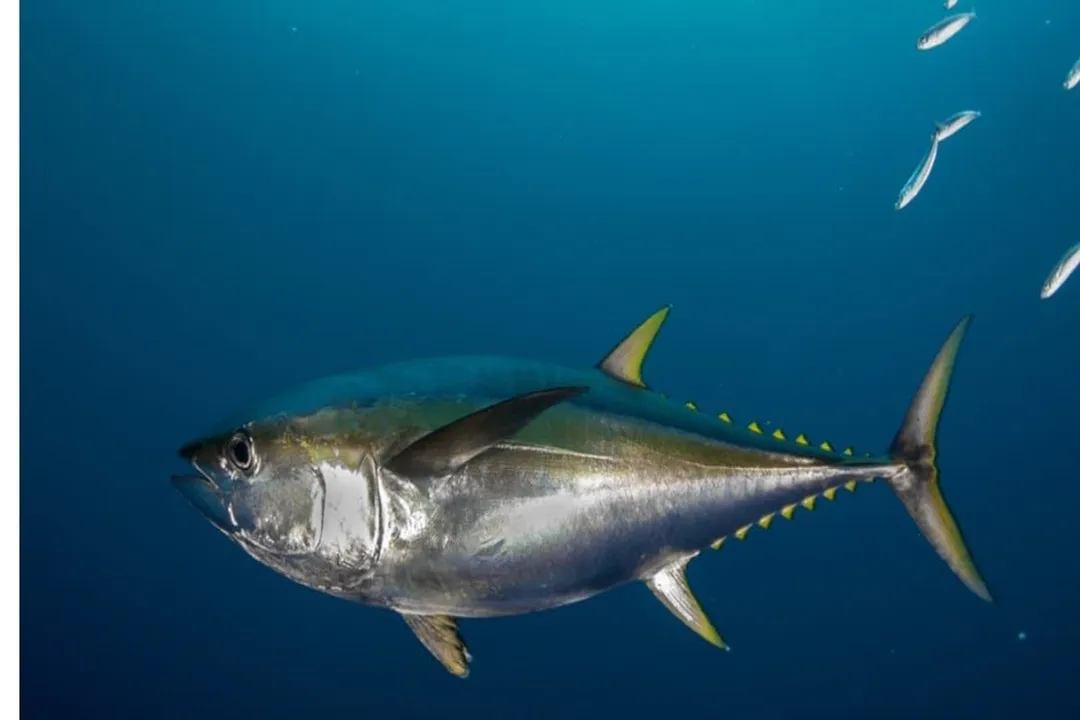
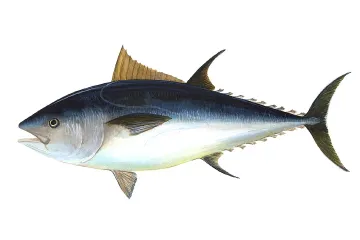
The final designation, the binomial nomenclature Thunnus albacares, names the species specifically. [2][4][5] The species name albacares translates roughly from the Latin for "white flesh," which is perhaps less accurate for the yellowish flesh than for some other tuna, but the common name "Yellowfin" is derived from the striking, brilliant yellow color of its second dorsal and anal fins, as well as its finlets. [3][8]
This species is distributed globally across tropical and subtropical waters of the Atlantic, Pacific, and Indian Oceans. [1][3][6] While classified universally as T. albacares, the ecological differences between populations—such as the Atlantic Yellowfin Tuna (T. albacares) [1] versus Pacific populations—can be significant enough to warrant different management strategies, even if the fundamental taxonomy remains fixed. This highlights a common challenge in taxonomy: classification describes shared ancestry, but biological reality often requires recognizing regional divergence within that shared structure. [1] For example, while one might expect a fish distributed worldwide to have perfectly uniform growth rates, the reality for yellowfin in the Eastern Pacific versus the Western Indian Ocean involves differing growth curves influenced by local oceanographic conditions. [4]
# Nomenclatural History and Synonyms
The scientific identity of the Yellowfin Tuna has a recorded history of nomenclature, which is standard for well-studied species. [5] The initial scientific description is often credited to Cuvier in 1832, under the name Thynnus albacares. [5] Over time, as scientists refined their understanding of the Scombridae family, other names were applied to what we now recognize as T. albacares. These synonyms, such as Neothunnus macropterus, are important for historical or older literature searches. [5] When encountering older scientific texts about tuna, recognizing these alternative names is crucial to tracing the lineage of research, as the classification was less stable before modern genetic tools confirmed the current grouping. [5]
# Key Characteristics in Context
The placement of Thunnus albacares within this classification hierarchy directly informs its recognized physical characteristics. [3][8] The combination of its Perciformes ancestry and Scombridae membership results in the torpedo shape, high muscle mass, and fin structure responsible for its impressive size, sometimes exceeding 200 cm in length and 200 kg in weight. [4] The specific morphology that separates it from, say, a Skipjack (Katsuwonus pelamis), lies in the details of its anatomy—for instance, the presence of a dark lateral line and the distinctive yellow fins—features that help authorities distinguish it for regulatory purposes. [3][8]
| Rank | Classification | Defining Trait Context |
|---|---|---|
| Kingdom | Animalia | Multicellular, heterotrophic [2] |
| Phylum | Chordata | Possesses a notochord/spinal cord [5] |
| Class | Actinopterygii | Ray-finned bony fish [2] |
| Order | Perciformes | Perch-like fishes, broad diversity [2] |
| Family | Scombridae | Mackerels, bonitos, tunas; streamlined, predatory [7] |
| Genus | Thunnus | True tunas, large, powerful, warm-bodied [4] |
| Species | T. albacares | Distinct yellow fins; global tropical/subtropical distribution [1][3] |
The specific biological traits associated with this classification, such as the ability to maintain elevated muscle temperatures, allow Yellowfin to occupy different niches than some of its less physically capable relatives in the Order Perciformes. [7] This physiological edge, rooted in its evolutionary specialization within the Thunnus genus, dictates where and how it feeds, ultimately influencing the data scientists use to manage its stocks across international waters. [1]
# Distribution and Life History Connection
While scientific classification primarily focuses on morphology and genetics, the distribution data serves as a practical extension of that identity. [1][6] Thunnus albacares is cosmopolitan in warm waters. [6] Its wide presence confirms its successful adaptation to tropical and subtropical environments, distinguishing it ecologically from temperate species like some other Thunnus members. [1][3] The fact that it is found from the Atlantic to the Pacific, as documented across various regional and global species databases, underscores that while geographic separation exists, the core T. albacares species identity remains robust across these oceanic basins. [1][6] This broad distribution implies a high degree of environmental tolerance within the constraints defined by its classification as a warm-water pelagic fish. [3]
Related Questions
#Citations
Atlantic Yellowfin Tuna | NOAA Fisheries
Yellowfin tuna (Thunnus albacares) longevity, ageing, and life history
Yellowfin Tuna – Discover Fishes - Florida Museum of Natural History
Thunnus albacares, Yellowfin tuna : fisheries, aquaculture, gamefish
Thunnus albacares (Bonnaterre, 1788) - WoRMS
Yellowfin Tuna, Thunnus albacares (Bonnaterre 1788)
Yellowfin Tuna (Thunnus albacares) | U.S. Fish & Wildlife Service
Yellowfin Tuna, Thunnus albacares - MarineBio Conservation Society
Yellowfin Tuna Fish Facts - Thunnus albacares - A-Z Animals