What major components constitute the primary diet of the Olive Python as a top-tier predator?
Answer
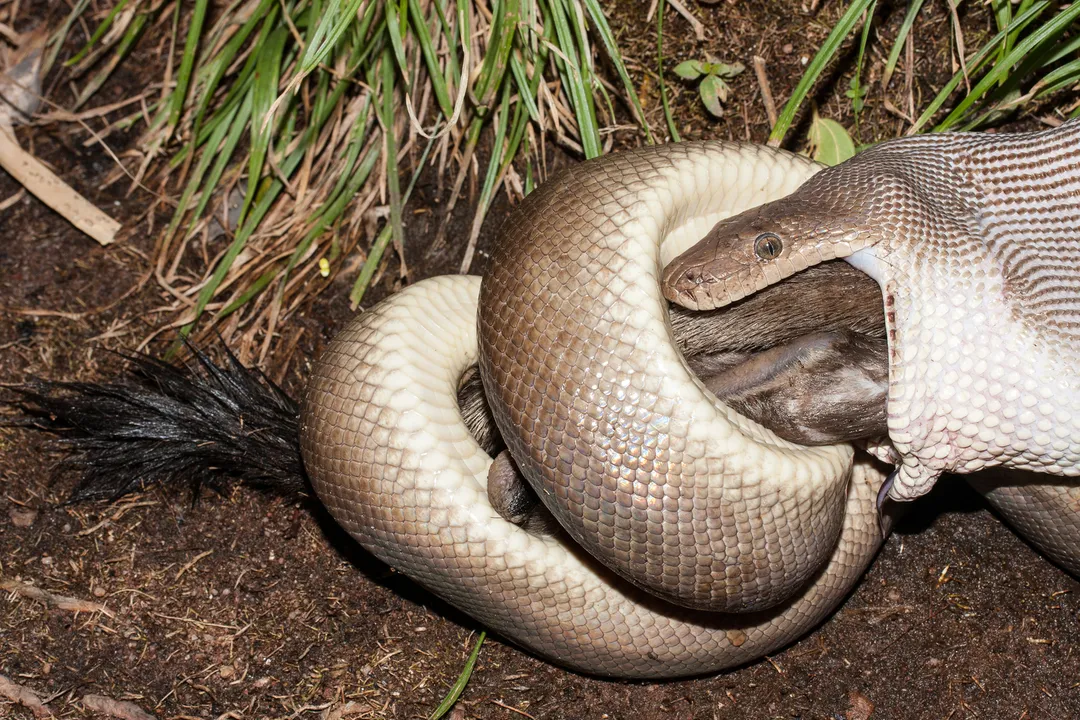
Warm-blooded prey, specifically mammals like rodents, bandicoots, and small wallabies
The diet of the Olive Python is predominantly focused on warm-blooded prey, which forms a significant portion of its food intake. Mammals are cited as central to their menu, with examples including rodents, bandicoots, and even small wallabies, dependent on the snake's substantial size. While birds are also taken, particularly if hunting occurs in trees or near nesting sites, and smaller reptiles are occasionally consumed opportunistically, the emphasis is placed on mammals as the primary food source due to their high energy content.
Related Questions
What older scientific classification was formerly assigned to the Olive Python, *Liasis olivaceus*?Which characteristic dictates that adult female Olive Pythons typically surpass their male counterparts in size?How does the coloration of juvenile Olive Pythons contrast with the typical muted palette of mature adults?What specific challenging environment has the Pilbara subspecies of the Olive Python adapted to successfully?What method of prey subjugation does the non-venomous Olive Python employ after seizing its victim?What major components constitute the primary diet of the Olive Python as a top-tier predator?If aggressively handled or cornered, what physical attribute, other than defensive hissing, can inflict serious injury upon a person?What term describes the reproductive strategy where the female Olive Python lays eggs rather than giving birth to live young?What specialized metabolic activity does the female Olive Python engage in while actively incubating her clutch of eggs?What combination of habitats illustrates the extensive environmental adaptability of the Olive Python across its broad distribution?