What are the characteristics of potoos?
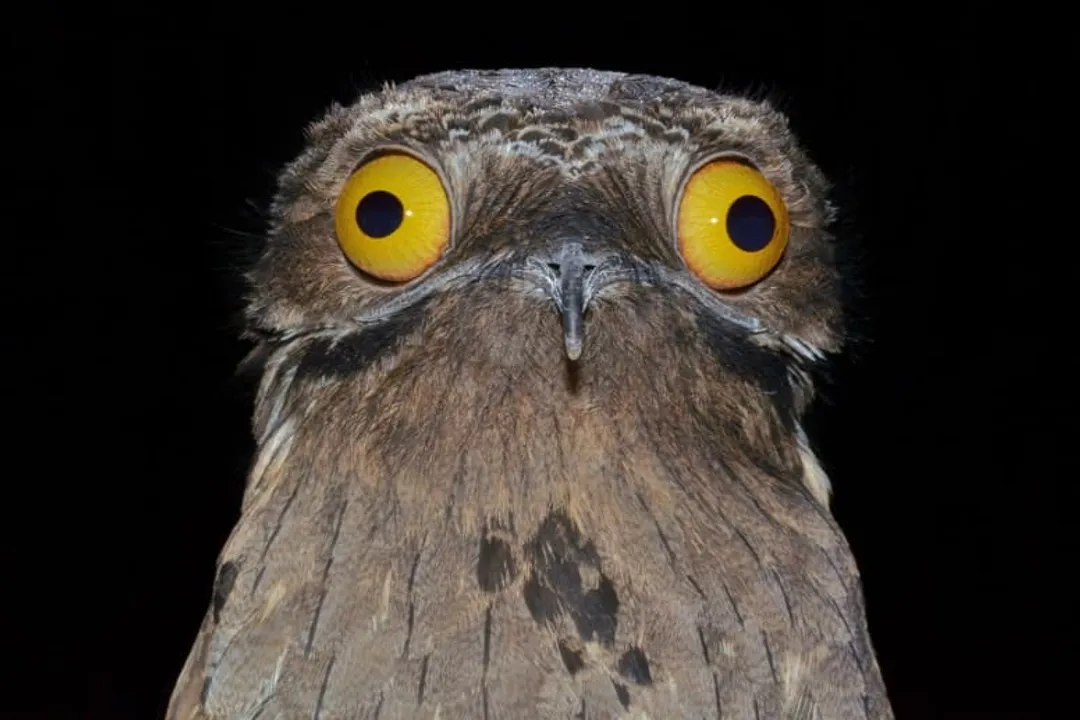
The potoo is a truly singular avian creation, often described as one of the strangest-looking birds in the world, yet its bizarre appearance is the key to its survival. [1][5] These birds are masters of disguise, perfectly adapted to blending into the woodland environments across Central and South America where they reside. [1][4] They are nocturnal hunters, spending their daylight hours frozen in postures that render them nearly invisible to predators and unsuspecting observers alike. [3][4][6]
# Cryptic Plumage
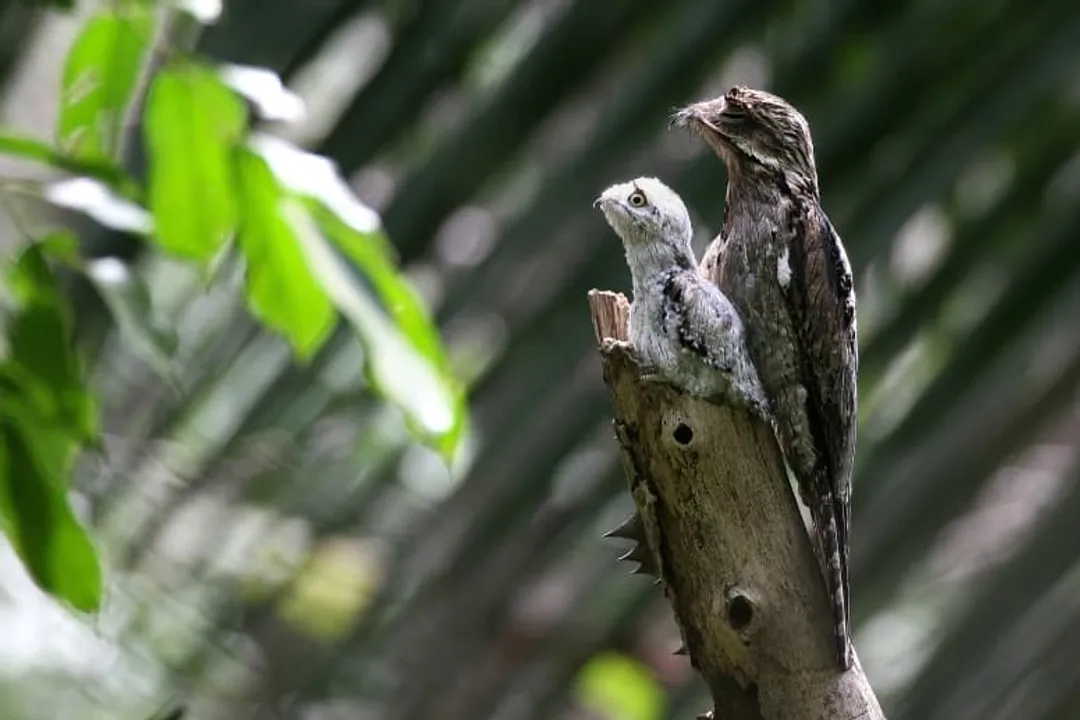
The primary characteristic defining the potoo is its phenomenal camouflage, achieved through cryptic coloration and pattern matching. [4] Their plumage is a mottled mix of grays, browns, and whites, which mimics the texture and color of weathered bark, lichen, or tree stumps. [1][5] This isn't just passive coloring; it's an active strategy tied directly to their roosting behavior. [4]
When resting, the potoo aligns itself perfectly with a broken branch or tree snag, stretching its body vertically and tightening its feathers. [4][7] In this "broken branch" posture, the bird becomes virtually indistinguishable from the dead wood itself. [1][9] This strategy requires meticulous placement; a potoo will often choose a perch where the break in the wood aligns precisely with the line of its body. [4]
# Nocturnal Habits

As strictly nocturnal creatures, potoos are primarily active from dusk until dawn. [3][6] Their world revolves around hunting flying insects under the cover of darkness. [5] They are aerial insectivores, meaning they catch their prey in mid-air. [1][7] Unlike some night flyers that hunt continuously, potoos often employ a 'sally-and-return' technique. [5] They sit silently on a chosen perch, wait for an insect to fly by, sally out from the perch to snatch the meal, and then immediately return to the same or a nearby spot to wait for the next opportunity. [5] Their diet typically consists of moths, beetles, and other large nocturnal invertebrates. [1][7]
# Vision Features
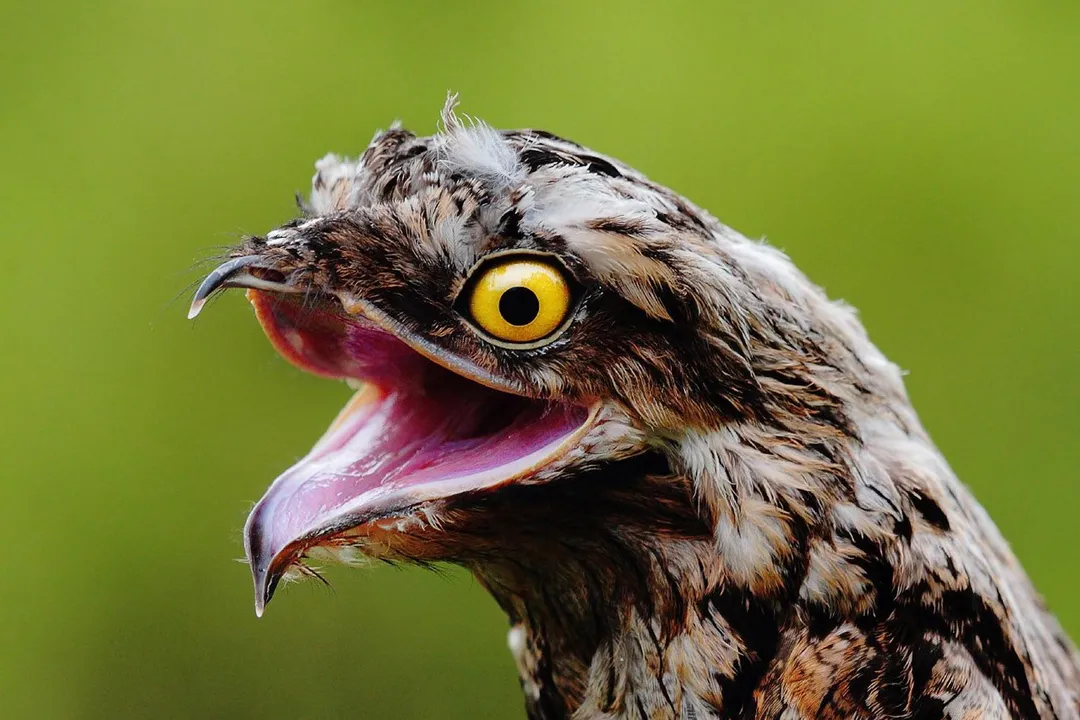
The large, round eyes of the potoo are perhaps their second most defining feature after their camouflage. [1][6] These enormous eyes are perfectly suited for gathering the limited light available at night, granting them excellent vision for spotting moving insect prey. [6] What is truly remarkable, however, is their eyelid structure. Even when a potoo appears to be completely closing its eyes while perched in its camouflage stance—a behavior that should render it blind—it is not entirely shut off from the world. [1][9]
The potoo's eyelids possess distinct slits, or small notches, running vertically along the edge of the upper lid. [1] These specialized slits allow the bird to maintain a degree of visual access to its surroundings while keeping its eyes sufficiently closed to enhance its disguise. [6][9] To an observer relying on the bird maintaining a completely closed-eye posture for its concealment, this feature is the ultimate biological cheat code; the bird maintains its statue-like appearance while still monitoring for approaching threats or prey movements. [1] This dual-functionality—visual acuity and perfect physical mimicry—demonstrates an evolutionary refinement in cryptic defense unmatched by many other ground or branch-roosting species that rely solely on feather pattern. [1]
# Calls Sounds
While silent and still during the day, potoos announce their presence at night with a suite of haunting vocalizations. [5] These calls are loud, strange, and often described as mournful or eerie. [5] The specific sounds vary depending on the species and context, but they are frequently jarring to the human ear, contributing to their mystique and association with spooky nighttime tales in local folklore. [5] For instance, the Great Potoo is known for its deep, resonant, and often very loud calls. [8]
# Roosting Style
The characteristic upright posture is central to the potoo's daily rhythm. [4][7] When adopting this stance, the bird compresses its body, elongates its neck, and points its bill skyward. [7] They prefer open, exposed perches for this display, such as the top of a dead snag or a fence post, placing themselves in direct view of any approaching danger, yet relying entirely on their resemblance to inert wood for protection. [4][7] This reliance on static disguise means they only move if absolutely necessary, conserving energy throughout the long daylight hours. [7]
# Species Range
Potoos are not a single bird but a small family (Nyctibiidae) comprising about seven recognized species, distributed widely across Central and South America. [1][7] One of the most recognized and largest members is the Great Potoo (Nyctibius grandis). [7][8][9] This massive species, found in humid lowland forests from southern Mexico down to northern Argentina, can measure up to 60 centimeters (about 24 inches) in length. [7][8][9] Smaller relatives, like the Common Potoo, are found in more diverse habitats. [1] The various species generally share the same specialized feeding habits and reliance on camouflage, though size differences influence their typical prey size and preferred perch height. [7]
If we look at the Great Potoo specifically, its sheer bulk compared to, say, a small nightjar, suggests an interesting ecological niche. While many aerial insectivores are small, maximizing agility, the Great Potoo’s size, coupled with its massive gape, implies an evolutionary preference for maximizing the volume of insects captured during each successful foraging sally rather than maximizing the frequency of sallies. This might be advantageous in areas where large, slow-moving nocturnal insects are abundant. [7][8] The family's distribution generally follows the forested tropics, underscoring their dependence on dense, structurally complex environments that offer both abundant insect life and suitable woody debris for daytime concealment. [1][7]
#Videos
Potoos Are Hauntingly Cute - YouTube
Related Questions
#Citations
Potoo | Nocturnal Bird Species, Adaptations & Habits | Britannica
10 Facts About the Creatively Camouflaged Potoo Bird - Fact Animal
What are the characteristics of potoos? - Facebook
Potoos: Bizarre Nocturnal Birds Hiding in Plain Sight
Weird & Wonderful Creatures: The Potoo - AAAS
Potoos Are Hauntingly Cute - YouTube
Nyctibius grandis (great potoo) - Animal Diversity Web
Great Potoo - The Canopy Family
What is a great potoo? - BBC Science Focus Magazine