How can you identify an Olive Python?
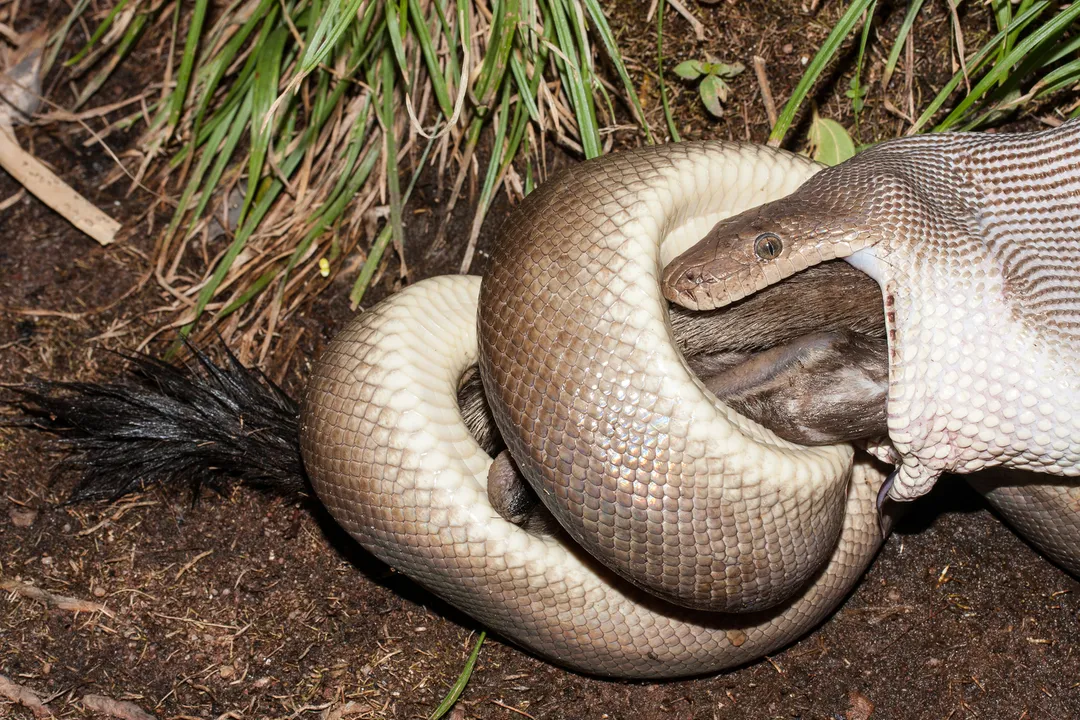
Distinguishing an Olive Python from a casual glance can be tricky, especially given the presence of other large, often similarly colored snakes in its native range. This substantial constrictor, scientifically known as Liasis olivaceus, warrants careful observation when trying to confirm an identification, as it shares territory and sometimes appearance with species like the Water Python (Liasis fuscus). Knowing the key physical markers, habitat preferences, and regional variations is central to accurately spotting this impressive Australian native.
# Physical Stature
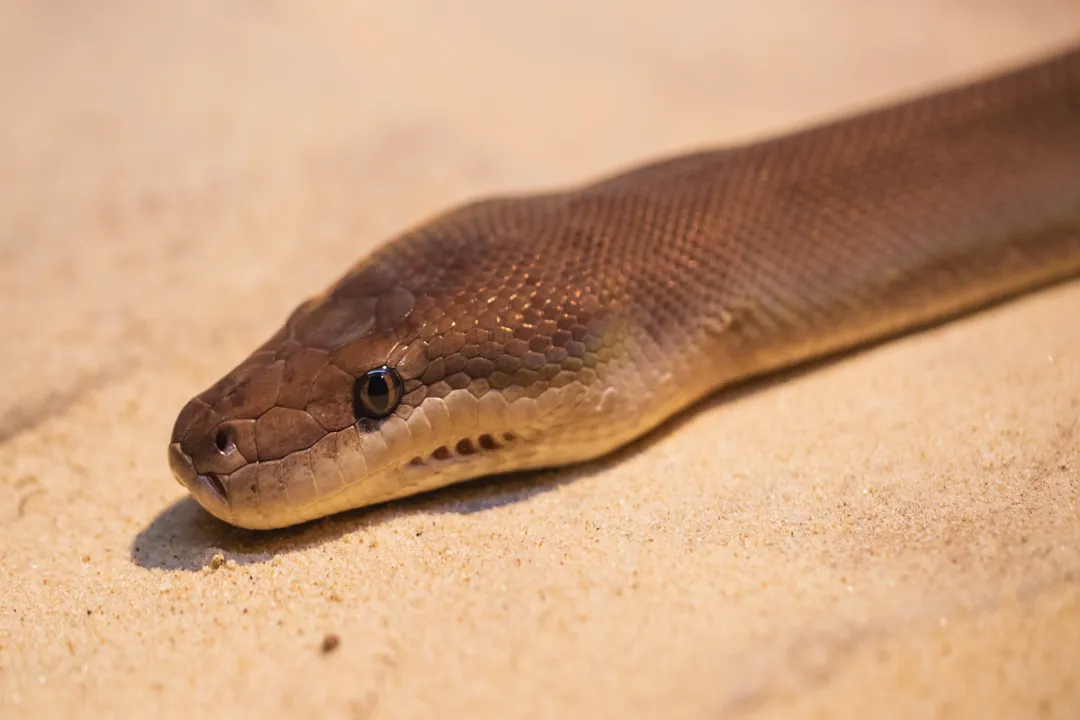
The Olive Python is a large, powerful snake, frequently reaching lengths that command attention. Adult males often measure between 2 and 2.5 meters (about 6.5 to 8 feet) in length, though females can be slightly smaller on average. They possess a relatively heavy build for a snake of their length, contributing to their imposing presence. While impressive in size, it is important to remember that size alone is not a definitive identification marker, as other large pythons can reach comparable dimensions. Nevertheless, seeing a snake exceeding the 2-meter mark in northern or central Australia often points toward one of the larger non-venomous species, making the Olive Python a prime candidate.
# Skin Texture Color
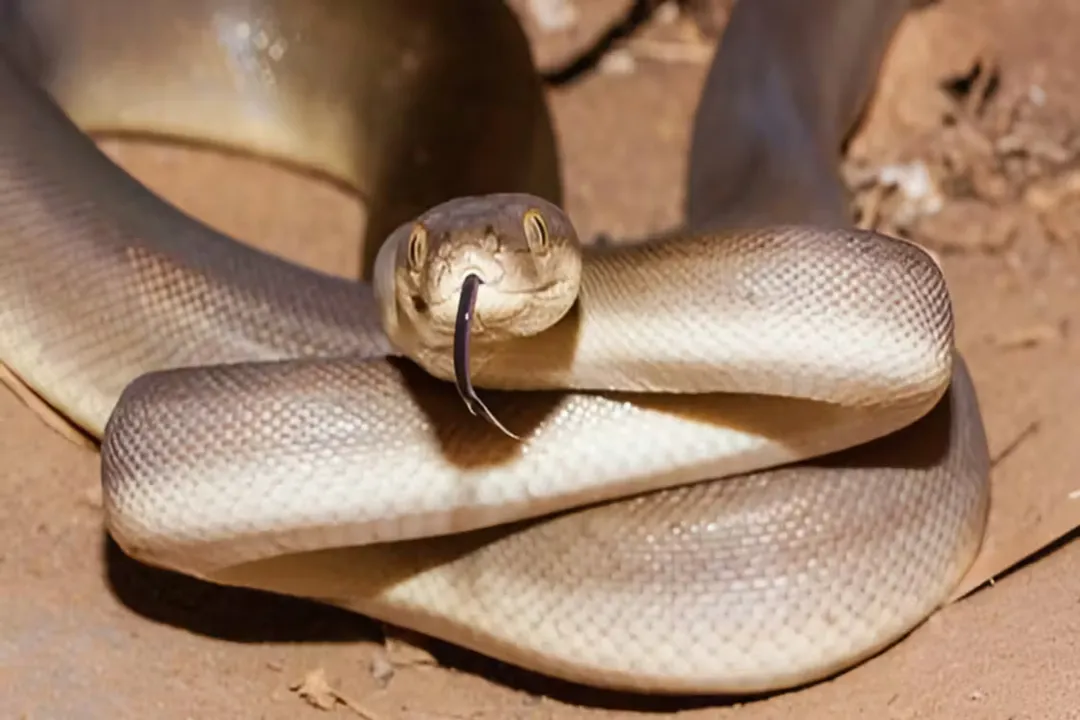
The snake derives its common name from its characteristic coloration, which is typically a shade of olive-brown to deep olive-green. However, the term "olive" covers a surprisingly broad spectrum in this species. In many individuals, the color is a uniform, dark, almost blackish hue, particularly in younger snakes or those from wetter habitats. Conversely, snakes found in arid regions, such as the Pilbara subspecies, often exhibit a much paler, lighter tan or yellowish-brown base color, which can cause initial confusion if one is expecting a dark green specimen. Another factor influencing perception is the snake's health and recent feeding; a well-fed snake might appear darker and more uniform, while a cleaner, recently shed individual might show brighter hues. A feature to look for, even in very dark specimens, is a lighter underside, which contrasts subtly with the darker dorsal scales.
When comparing a dark specimen to its lookalike, the Water Python, a key difference emerges in how the color is distributed. While both can be dark, the Olive Python generally presents a more uniform appearance across its body, lacking the distinct dark blotching or patterning often seen on Water Pythons, especially when juveniles. When handling or viewing very close-up photos, one might observe that the Olive Python has relatively smooth scales, which contribute to its sleek look compared to some other rough-scaled reptiles.
# Head Features
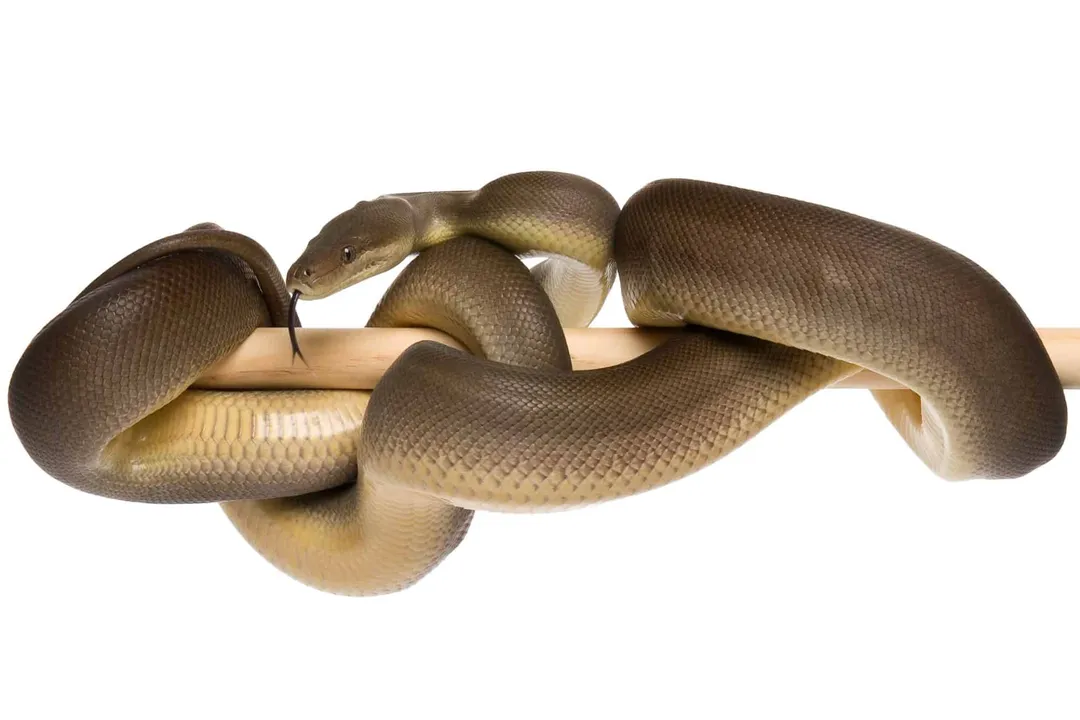
Identifying the head structure is critical for confirming the species, especially when environmental factors obscure the body coloration. The head of the Olive Python is generally distinct from its neck, appearing somewhat broader and more elongated than some other native snakes. Specifically, the snout is often described as somewhat blunt.
Examining the scales on the head reveals another reliable trait. Olive Pythons possess numerous small scales covering the top of the head. More specifically, look at the supralabial scales—the scales bordering the upper lip. Olive Pythons typically have between 15 and 18 supralabial scales. This specific number is a scientific metric often used by herpetologists, and while field identification rarely involves counting every scale, knowing the typical scale arrangement provides expert confirmation. Furthermore, the eye placement and pupil shape—vertical pupils in low light conditions—are typical of nocturnal pythons, but not unique identifiers against all lookalikes.
# Habitat Association
Where you encounter the snake provides significant context for identification. Olive Pythons are widely distributed across northern and central Australia. Their habitat is incredibly adaptable, ranging from dry, rocky terrain and arid savannas to wetter coastal areas and woodlands. The subspecies found in the Pilbara region, for example, thrives in the arid environments characterized by gorges and rocky outcrops.
This adaptability means that finding an Olive Python near a permanent water source is common, which ironically leads to the most frequent misidentification. Unlike the truly aquatic Water Python, which is intrinsically tied to permanent water bodies such as swamps, rivers, and swamps, the Olive Python is primarily terrestrial or semi-arboreal. While an Olive Python will certainly drink and may be found near water, its core existence does not depend on it being permanently submerged or living directly on the water's edge. If you see a very large snake coiled high in a tree branch overlooking dry scrubland, that behavior strongly favors the Olive Python over the generally ground-dwelling Water Python.
To effectively narrow down possibilities in the field, one can create a quick assessment matrix. If the sighting is near a permanent, swampy river system and the snake appears to be swimming or resting at the water's edge, lean toward Liasis fuscus. If the sighting is in rocky ranges, arid grassland, or atop a substantial tree with no immediate reliance on deep water, the probability of it being Liasis olivaceus increases significantly.
# Comparison Water Python
The most crucial step in identifying an Olive Python is successfully differentiating it from the Water Python (Liasis fuscus), which shares much of the Olive Python’s range in tropical northern Australia. This distinction is essential because while both are non-venomous constrictors, they are recognized as separate species, and incorrect identification can lead to unnecessary alarm.
Here is a comparative summary to aid in separation:
| Feature | Olive Python (L. olivaceus) | Water Python (L. fuscus) |
|---|---|---|
| Primary Color | Uniform olive-brown to dark black; often paler in arid zones | Usually darker, often mottled or blotched, especially as juveniles |
| Habitat Preference | Highly adaptable; arid areas, rocky ranges, woodlands; semi-arboreal | Strongly associated with permanent water bodies like swamps, rivers, and coastal areas |
| Build | Large, heavy-bodied | Generally considered more slender or whippier than the Olive Python |
| Snout | Often appears somewhat blunt | Typically has a slightly more pointed snout profile |
One useful observation that experienced observers often note relates to the condition of the scales around the eyes and nostrils. While both species have distinct loreal scales (the scale between the eye and the nostril), the Water Python often exhibits a slightly different arrangement or texture there compared to the smoother, more defined features of the Olive Python. Another subtle yet persistent field difference, though not universally true, is that Water Pythons tend to maintain a darker, more distinctly patterned look even into adulthood, whereas the Olive Python often fades to a more uniform, dusty olive or tan as it matures, particularly in drier environments.
# Subspecies Variation
The vast geographical spread of the Olive Python means that it exhibits regional differences that can confuse identification if one only learns the characteristics of a single population. The species is widespread across mainland Australia, and the subspecies found in New Guinea, the Papuan Olive Python (Liasis olivaceus olivaceus), also warrants mention, though it is geographically separate.
# Pilbara Type
The Pilbara Olive Python, found in the remote, arid northwest of Western Australia, is a fantastic example of local adaptation. These specimens are typically much paler than their tropical northern counterparts. Instead of deep olive, expect colors leaning toward light tan, pale brown, or even a sandy yellow, often allowing them to blend almost perfectly with the rocky, sparsely vegetated terrain where they live. If you are observing a large python in the Pilbara region that appears sandy-colored, it is far more likely to be a regional Olive Python than a Water Python, which would struggle to survive in such consistently dry conditions.
# Papuan Python
While geographically distinct and sometimes classified separately, the Papuan Olive Python from New Guinea is clearly related and shares the general body plan and non-venomous nature. These snakes are often reported to be extremely dark, frequently approaching black, especially when young, which aligns with the dark morphs seen in some Australian coastal populations. Understanding that the 'olive' descriptor applies to a snake that can look black, green, brown, or tan depending on its locale is essential for accurate identification across the entire range of this complex.
# Behavioral Clues
While physical structure is paramount, how a snake behaves can offer supporting evidence. As noted, the Olive Python is comfortable away from permanent water sources, frequently taking advantage of trees or elevated rock ledges for basking or surveying its territory. This arboreal inclination is a helpful clue. When viewing a snake high up in the canopy, it is generally safer to assume it is an Olive Python unless in a known Water Python habitat where they are also known to climb.
Moreover, Olive Pythons are known to be active hunters, often utilizing their large size to overpower prey such as mammals and birds. While many snakes exhibit nocturnal activity, Olive Pythons are frequently seen active during the day in cooler weather or in shaded areas, contrasting with some other large pythons that might be strictly hidden during daylight hours. When observing behavior, note the animal's response to disturbance; generally, the Olive Python tends to be defensive when cornered, but capable of retreating quickly when given an escape route, reflecting its status as a large, powerful predator. Observing whether the snake immediately seeks cover in deep water or moves toward terrestrial cover or high ground can sometimes resolve an identification query when coloration is ambiguous.
Related Questions
#Citations
Olive python - Wikipedia
Can you identify this venomous snake species? - Facebook
[PDF] Olive Python(Liasis olivaceus)
Olive or Water Python? | Aussie Pythons & Snakes Forum
The Pilbara olive python: The secret giant of Australia's red heart
Ausn Olive python or water python ? Spotted near Cardwell, FNQ.
Olive python Animal Facts - Liasis olivaceus
PNG Snakes : Papuan Olive Python - Apodora papuana