What are the characteristics of a tanager?
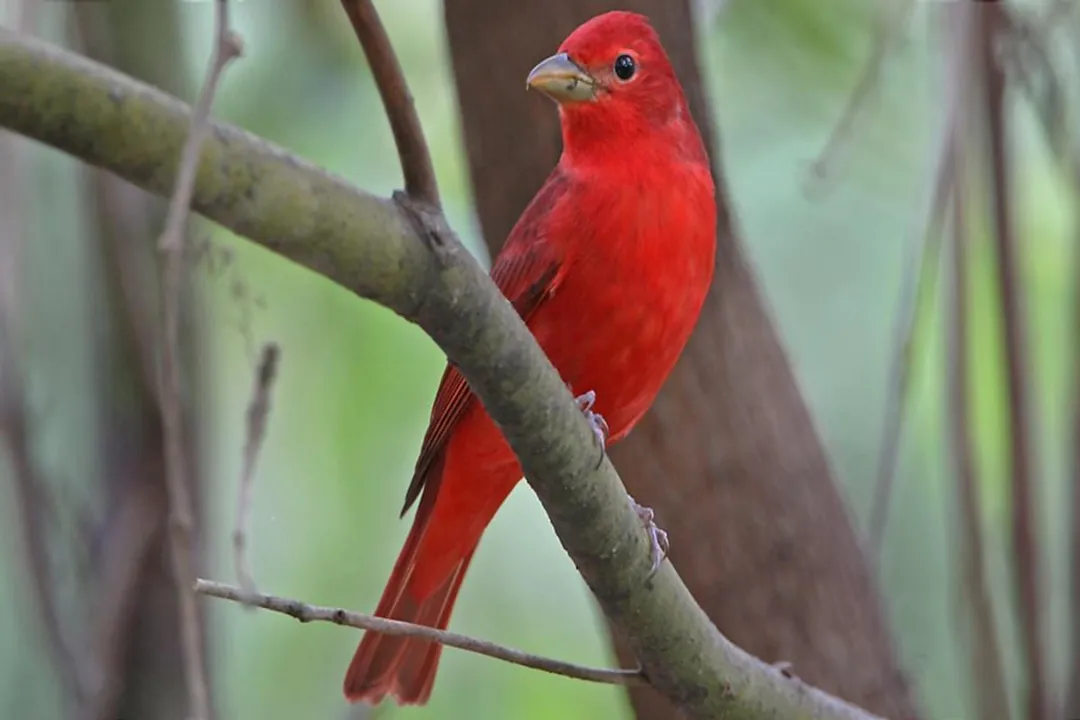
The study of tanagers reveals a group of birds defined less by rigid uniformity and more by brilliant variation within a specific physical mold. These birds, belonging to the family Thraupidae, are primarily inhabitants of the New World tropics, though several species venture into North America seasonally or as breeders. When one pictures a tanager, the immediate thought is often one of vivid, saturated color, yet the fundamental characteristics that tie this diverse group together are rooted in their physical structure and primary diet.
# Physical Build

Tanagers are typically described as small to medium-sized birds, characterized by a relatively stocky build. They possess a somewhat thick, conical bill, which serves as a key identifier across many species. This bill structure hints at their feeding habits, being sturdy enough to manage both insect prey and fruit pulp. While the bill is generally stout, there is a subtle degree of variation; the bill shape, size, and color can actually aid in differentiating closely related species when field marks are otherwise confusing.
Their feet are passerine, designed for perching, which suits their typical behavior of flitting through the canopy or shrubbery of forests and woodland edges. Body shapes can sometimes appear short and chunky, especially compared to more slender, long-tailed songbirds.
One subtle aspect often overlooked by casual observers is the difference in overall size. While none are massive birds, the variation between the smallest and largest tanagers can be noticeable in the field. For instance, knowing the typical size of a nearby species allows an observer to rule out possibilities quickly, even when plumage is confusingly similar or viewed from a distance.
# Bill Structure Analysis
The description of a "thick, conical bill" is more than just a morphological note; it is an adaptation reflecting an omnivorous diet centered on the forest's fruit bounty. A conical bill is excellent for crushing seeds and tearing into soft fruit casings, providing the necessary leverage that a thinner, more pointed bill—like that of a warbler specializing in snatching small, soft-bodied insects from leaves—lacks. However, the tanagers’ diet also includes a high percentage of insects, particularly during nesting season when protein demands soar. This dual capability—the strength for fruit and the dexterity for insects—suggests a highly successful generalist feeding strategy in the often-rich but sometimes seasonally variable tropical and subtropical ecosystems they call home. The presence of a strong bill allows them to exploit resources unavailable to more specialized feeders.
# Plumage Spectacle
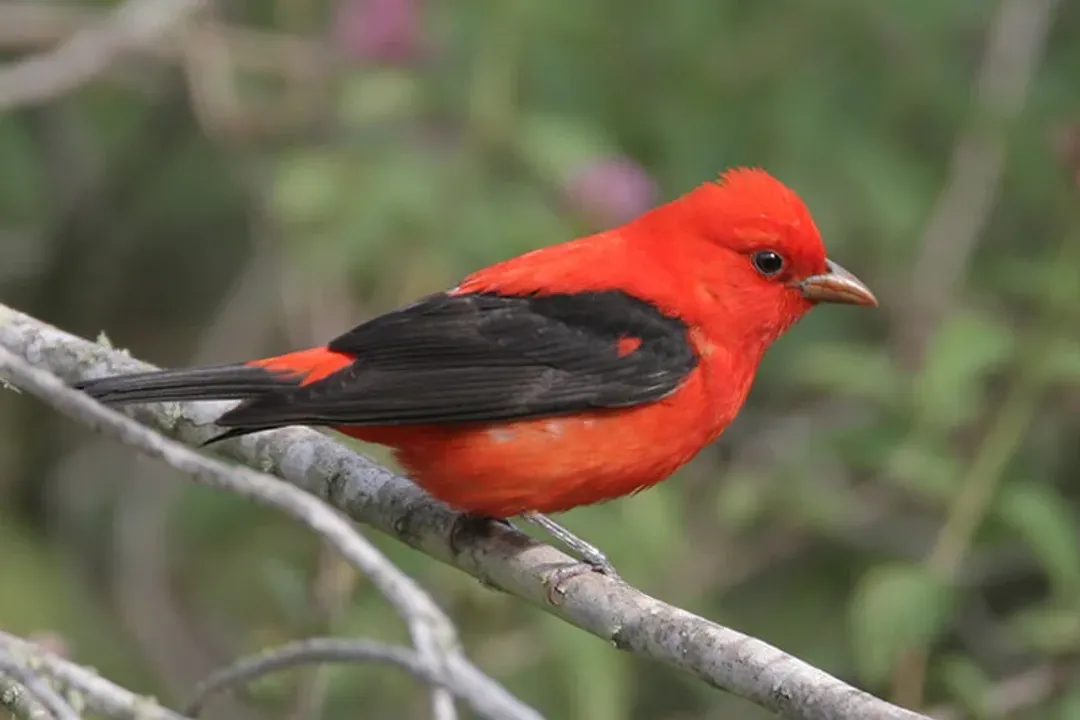
The most compelling characteristic that draws birdwatchers to the tanager family is undeniably their spectacular coloration. While not every member is uniformly brilliant—females and winter plumages are often subdued—the breeding males of many species are among the most brilliantly colored birds in their respective ranges.
The range of color seen across just a few North American examples illustrates this diversity:
- The All-Red Forms: Species like the Summer Tanager and the Hepatic Tanager feature males that are entirely red. The Summer Tanager male is a deep, uniform red across his entire body. In contrast, the Hepatic Tanager male is also entirely red but lacks the white wing bars often present in other species. This similarity between all-red males presents a common identification challenge for birders in the Southwest.
- Contrasting Colors: The Western Tanager offers a classic example of high contrast, where the male sports a brilliant, unmistakable red head that sharply contrasts with a bright yellow body and a black back, complemented by two distinct white wing bars. The Scarlet Tanager similarly combines fiery red with stark black wings and tail.
# Sexual Dichromatism
A significant characteristic within the tanager group is the degree of sexual dimorphism in plumage, often manifesting as stark dichromatism between the sexes.
| Species Example | Male Plumage | Female Plumage | Primary Difference |
|---|---|---|---|
| Summer Tanager | Bright, uniform red | Yellowish or olive-green | Females lack red pigment entirely |
| Western Tanager | Red head, yellow body, black back | Dull, often yellowish-green overall | Females are much duller, lacking the bright head patch |
This pattern is widespread; the females of brightly colored species are frequently much duller, often sporting shades of yellow, olive, or green. This difference serves an ecological purpose, likely providing better camouflage for the female while incubating the nest, reducing predation risk on the nest site. Observing the female plumage is often as crucial as noting the male’s brilliance for accurate species identification, especially in regions where multiple tanager species overlap in their non-breeding seasons.
# Life Habits and Habitat
Tanagers generally favor woodlands, forests, and areas with substantial tree cover. Their geographical distribution is heavily weighted toward the Neotropics, meaning the majority of species live in Central and South America.
The species found in the United States often follow migratory patterns. The Western Tanager, for example, breeds across western North America, moving south to Mexico and Central America for the winter. Summer Tanagers, conversely, are found east of the Rockies and generally migrate to Central America and northern South America for the non-breeding season. The Hepatic Tanager has a different distribution, present in the Southwest US, extending through Mexico and into South America. This variation in range means that simply identifying a tanager in a specific region often narrows down the possibilities considerably.
# Observation Tip for Field Identification
When attempting to identify a tanager, especially in regions like the mountainous Southwest where several species may coexist or overlap seasonally, focusing on subtle field marks can make the difference between a correct ID and a frustrating guess. For instance, if you observe an all-red male, the absence or presence of wing bars is critical. If wing bars are present, it leans toward a Summer Tanager in some areas, but a close look at the wing feather edging or bill color (if visible) is required, as the Hepatic Tanager lacks these bars altogether. If the bird shows a black back with yellow and red, like the Western Tanager, note the extent of the black and the wing bar pattern—the combination is highly diagnostic. Learning these subtle structural differences, rather than relying solely on the broad color description, elevates one's birding expertise.
# Diet and Foraging Niche
The core of the tanager's characteristic behavior is linked to its mixed diet of insects and fruit. They are active foragers, frequently observed gleaning insects from foliage or snatching them mid-air. This insectivorous component is vital, especially when feeding rapidly growing young.
Fruit forms the bulk of their diet when available, which varies seasonally. They consume berries and small fruits readily. This reliance on fruit means that their presence in a particular area can fluctuate based on local fruiting cycles, making them somewhat transient visitors even when they are within their breeding range.
While the family Thraupidae is generally associated with these diets, it is worth noting that some members can occasionally be seen feeding on nectar or even seeds, showcasing adaptability. The Western Tanager, for example, has been documented feeding heavily on insects like caterpillars and moths during its breeding season in the high mountain forests of the west.
# Analyzing Habitat Preference
The tendency for tanagers to inhabit wooded areas and often forage in the mid-to-upper canopy suggests a preference for environments rich in mature vegetation that supports both dense insect populations and substantial fruit production. Unlike ground-foraging species, tanagers spend most of their time relatively high up. This aerial or canopy-based foraging strategy means that birders should look up frequently when scanning known woodland habitats. If you are in a region known to host them, checking fruiting trees or bushes, even isolated ones near open areas, can yield a sighting, as they are drawn to localized food bonanzas. This preference for the canopy may also contribute to why females are often overlooked; their duller, greener plumage blends perfectly with the sun-dappled leaves where they spend their time foraging and nesting.
# Taxonomic Placement
The classification of tanagers has seen changes over time, which is common in ornithology as genetic research refines relationships between bird families. Currently, most true tanagers are grouped within the family Thraupidae. This classification places them alongside some American sparrows, honeycreepers, and grosbeaks, reflecting evolutionary connections that might not be obvious from a quick visual inspection alone.
While the term "tanager" is sometimes applied more loosely to other birds that share bright colors—a phenomenon known as convergence—the Thraupidae group remains the core reference point. Recognizing that they share common ancestry with other New World fruit-eaters helps explain their shared bill morphology and dietary preferences, even as plumage styles diverge wildly between genera.
Understanding the Thraupidae context confirms that these are strictly New World birds, distinguishing them from Old World groups that might share a similar common name or color pattern. The study of the group in regions like the Andes mountains, where the diversity of tanagers explodes, reveals an incredible array of forms that hint at the evolutionary potential locked within this South American lineage. Although the North American species represent only a fraction of the family's total diversity, they exhibit enough of the classic characteristics—bright colors, stocky build, and mixed diet—to serve as excellent ambassadors for the group.
Related Questions
#Citations
Summer Tanager Overview, All About Birds, Cornell Lab of ...
Summer tanager bird characteristics and behavior - Facebook
5 Types of Tanagers Birders Should Know - Birds and Blooms
Tanager | Description, Species, & Facts - Britannica
Tanagers - Desert Museum
Western Tanager - Montana Field Guide
Hepatic Tanager | Audubon Field Guide
Meet the Stunning Tanagers That Make the U.S. Their Summertime ...
Western Tanager - Wild Birds Unlimited