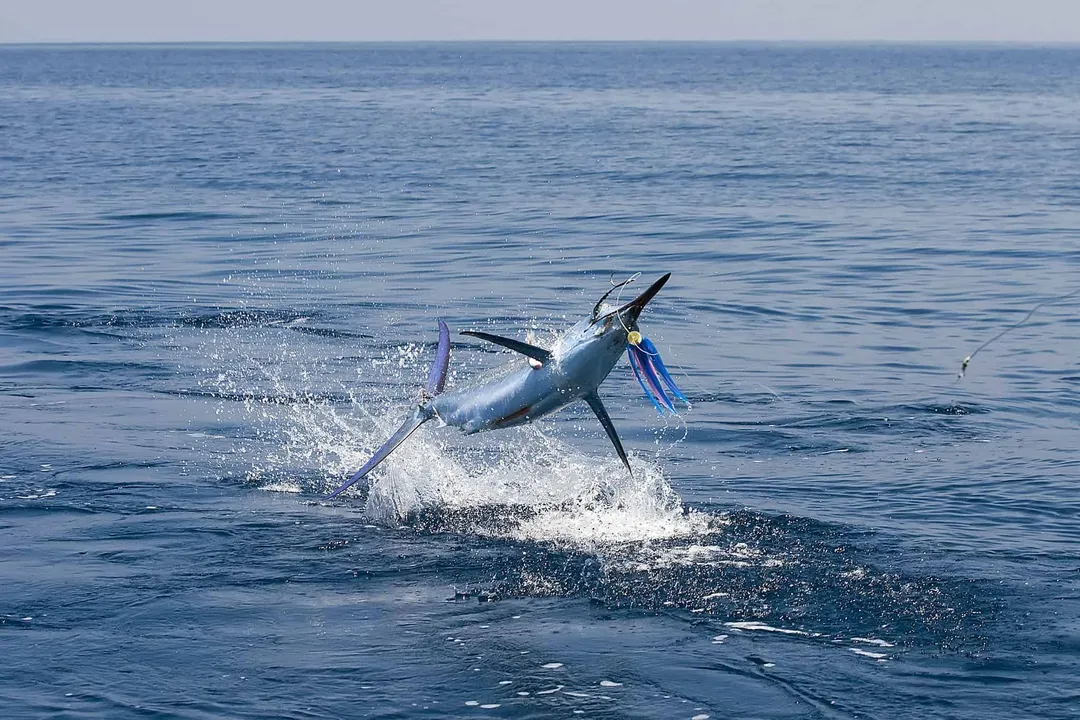
What life history trait makes the white marlin particularly vulnerable to overfishing according to its conservation profile?
Relatively late maturity, slow growth rates, and moderate fecundity.
The susceptibility of the white marlin to declines from heavy fishing mortality is linked directly to its inherent life history strategy, which is common among many large pelagic predators. Key factors contributing to this vulnerability include a relatively late age of sexual maturity, slower rates of growth compared to some other ocean species, and only moderate fecundity (the ability to produce offspring). Species possessing these traits cannot replace lost individuals quickly enough to sustain high harvest rates. Consequently, the removal of a significant number of mature, reproductively successful adults places extreme, sustained pressure on the overall population structure, hindering recovery efforts even if fishing pressure slightly decreases.