What is the typical structure and location of the nest constructed by Whimbrels on the Arctic breeding grounds?
Answer
A shallow scrape on the ground, often lined with vegetation, in dry upland tundra areas
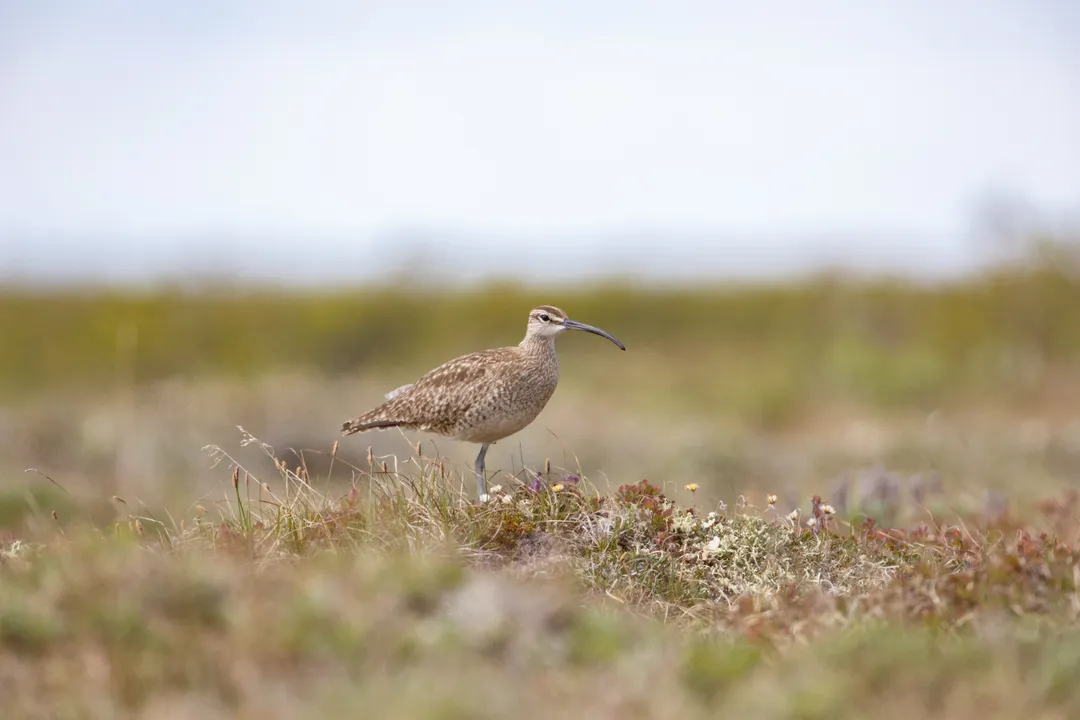
The nesting process for the Whimbrel on the Arctic tundra is relatively simple regarding structure but occurs in a challenging environment. The nest itself is fundamentally a shallow scrape made directly into the ground surface. To provide minimal insulation and structure, this scrape is typically lined with available vegetation found in the surrounding area. While they may occasionally situate these scrapes near wetter spots, the preferred location tends to be in the drier, upland sections of the tundra habitat. This strategy ensures the eggs are protected until the precocial chicks hatch and begin foraging quickly.
Related Questions
What is the most remarkable physical characteristic of the Whimbrel distinguishing its silhouette?What specific facial pattern helps dedicated birders distinguish the adult Whimbrel from relatives like the Long-billed Curlew?Where are the Whimbrel's typical breeding grounds located in the Northern Hemisphere?What habitat predominantly characterizes the Whimbrel's non-breeding season locations?What specialized foraging behavior, enabled by the bill structure, do Whimbrels employ to find buried prey?How is the characteristic vocalization of the Whimbrel during migration or flight typically described?What primary food sources make up the diet of Whimbrels found in mud and sand substrates?What is the typical structure and location of the nest constructed by Whimbrels on the Arctic breeding grounds?What term describes the developmental state of Whimbrel chicks shortly after they hatch on the tundra?Why do regional conservation groups express concern for the North American subspecies despite the global 'Least Concern' status?