What is the primary ecological role enabled by the wolffish's dual dentition?
Answer
Exploiting a food source unavailable to fish with simpler dentition, like sea urchins and clams.
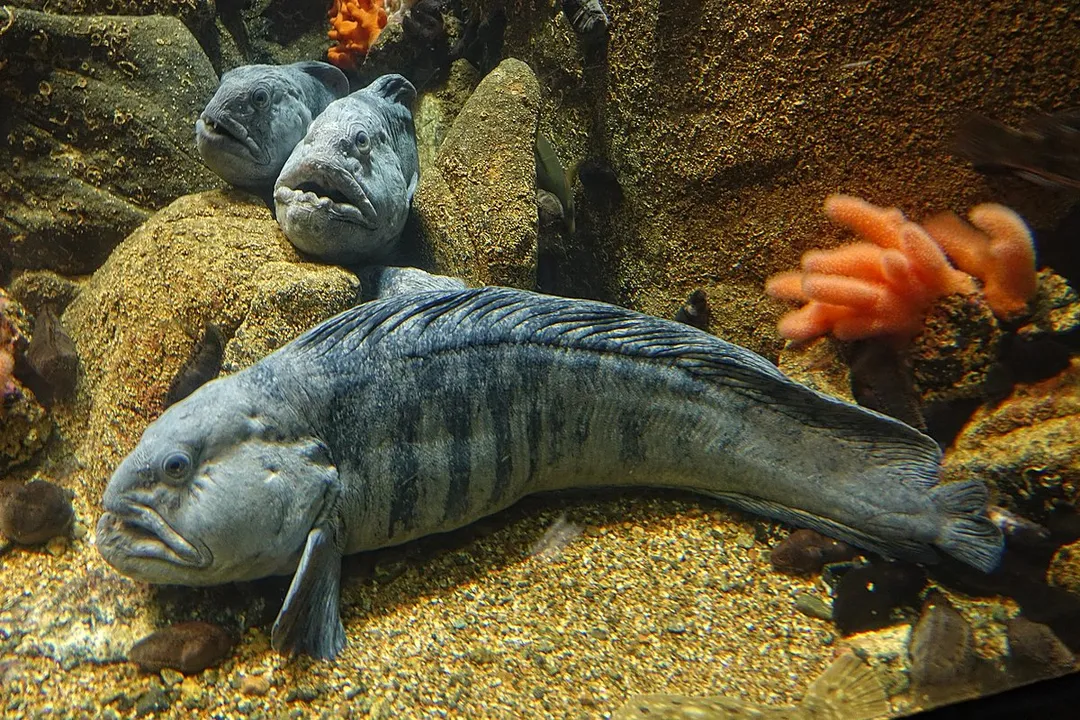
The unique dental architecture of the Atlantic Wolffish, featuring both sharp canine teeth for gripping and strong molar teeth for crushing, shapes its specific ecological niche. This dual-tool approach allows the wolffish to specialize in consuming prey that possesses formidable defenses, such as sea urchins, crabs, and clams. This ability to process hard-shelled benthic invertebrates places it as a specialized benthic predator whose main challenge involves overcoming the structural defenses of its prey, rather than engaging in high-speed evasion.
Related Questions
How does the Atlantic Wolffish body compare structurally to a true eel?What happens where the Atlantic Wolffish dorsal fin meets the caudal fin?What key feature describes the texture and composition of the wolffish skin?After the initial sharp, canine-like teeth, what structure characterizes the rear jaws?What is the primary ecological role enabled by the wolffish's dual dentition?What is characteristic of the Atlantic Wolffish's coat color identification?What maximum length can the Atlantic Wolffish species potentially attain?How long can data suggest the Atlantic Wolffish might inhabit the cold depths?How many spines are typically contained within the dorsal fin of the Atlantic Wolffish?What is the primary function of the relatively modest pectoral fins?