How does the Atlantic Wolffish body compare structurally to a true eel?
Answer
It is substantially more robust and thickset than a true eel.
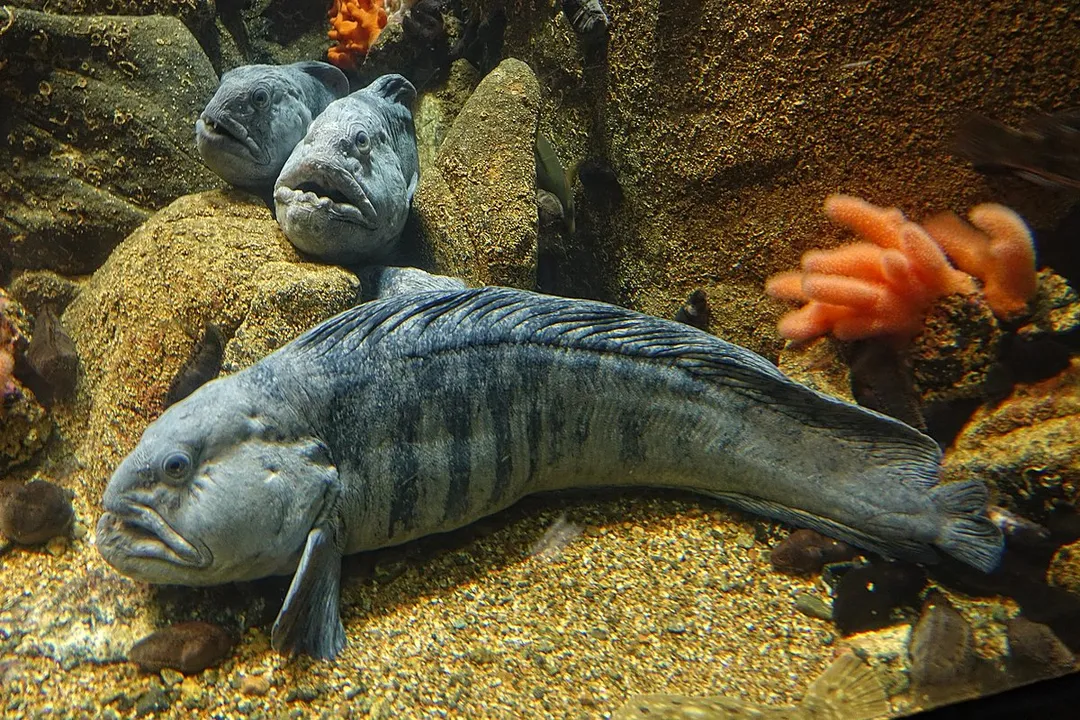
The Atlantic Wolffish, despite having an almost serpentine, eel-like body structure, is distinctly different from a true eel because it is significantly more robust and thickset. Its body plan is elongated and laterally compressed, features that suit navigation along complex, rocky, or gravelly bottoms rather than the pursuit capabilities associated with streamlined fish shapes. This robust build, combined with muscularity, differentiates it from the typical configuration of true eels.
Related Questions
How does the Atlantic Wolffish body compare structurally to a true eel?What happens where the Atlantic Wolffish dorsal fin meets the caudal fin?What key feature describes the texture and composition of the wolffish skin?After the initial sharp, canine-like teeth, what structure characterizes the rear jaws?What is the primary ecological role enabled by the wolffish's dual dentition?What is characteristic of the Atlantic Wolffish's coat color identification?What maximum length can the Atlantic Wolffish species potentially attain?How long can data suggest the Atlantic Wolffish might inhabit the cold depths?How many spines are typically contained within the dorsal fin of the Atlantic Wolffish?What is the primary function of the relatively modest pectoral fins?