What is the primary adaptive function attributed to the dense, dark coloration of the Western lowland gorilla's fur?
Answer
Insulation against cool, damp environments
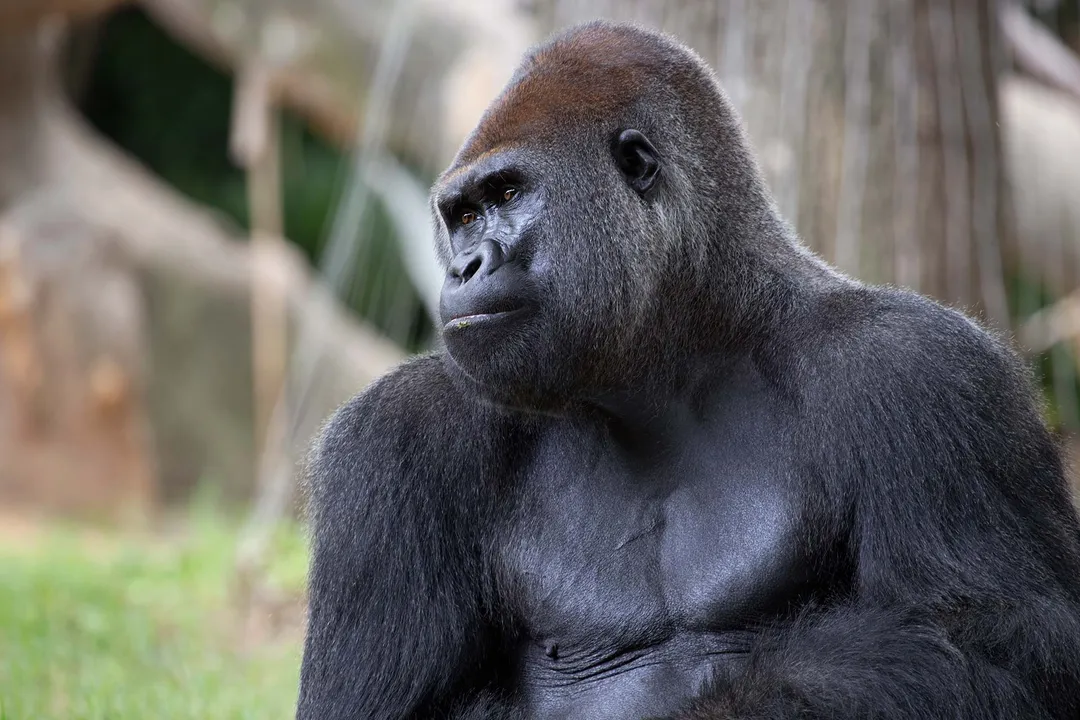
The Western lowland gorilla resides in environments characterized by dense equatorial rainforests that are often cool and notably damp. The fur covering these apes is dense and dark, usually appearing black or dark brown. This thick coat provides crucial thermal regulation, acting as insulation to help maintain core body temperature against the persistent humidity and cooler temperatures inherent to their shaded, wet habitat. While camouflage is a passive benefit, the primary role emphasized is protection from environmental thermal stress.
Related Questions
What is the typical weight range cited for adult female Western lowland gorillas?At what approximate age does the silver saddle patch typically develop on a male Western lowland gorilla?What specific part of the hand provides support during terrestrial knuckle-walking locomotion?What prominent cranial feature anchors the massive jaw muscles in mature male gorillas?Which of these listed countries is identified as part of the Western lowland gorilla's geographical range?How do the arm length and leg length generally compare in the skeletal build of the Western lowland gorilla?What is the primary adaptive function attributed to the dense, dark coloration of the Western lowland gorilla's fur?What is the highest weight listed for a mature adult male Silverback in the summary metrics?What is the demonstrated longevity potential for Western lowland gorillas living in protected environments like zoos?What distinguishes the face structure of the Western lowland gorilla, related to diet processing?