What is the primary adaptation reflected in the numerous small teeth of the zebra shark?
Answer
Crushing the hard shells of mollusks and crustaceans.
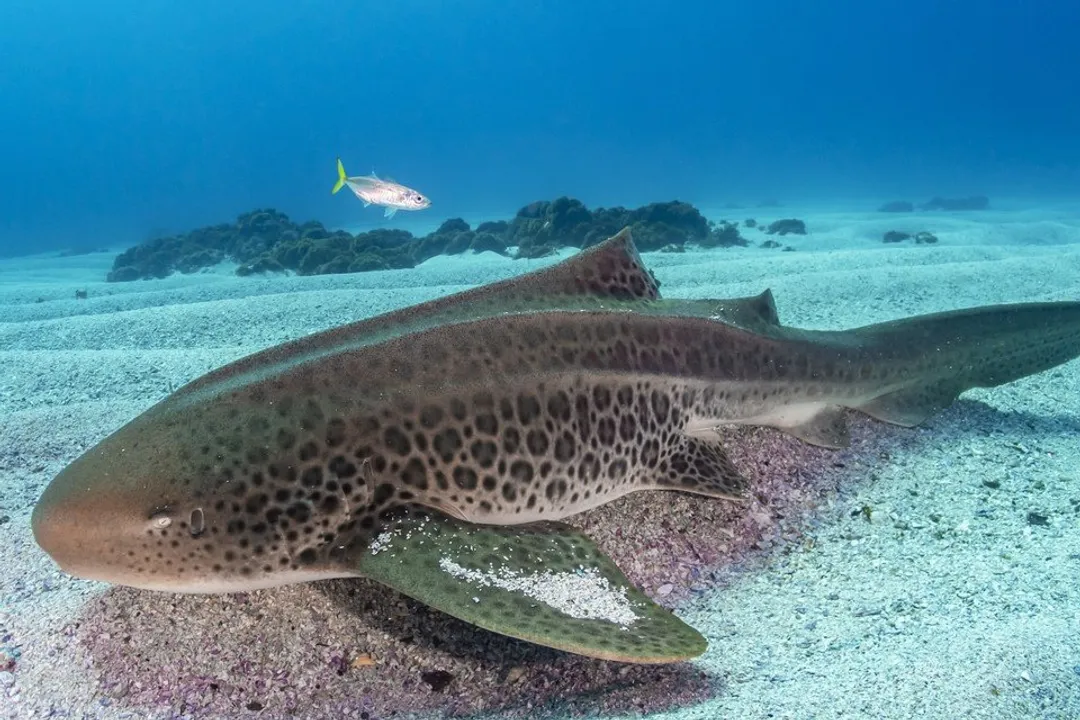
The dentition of the zebra shark is a direct morphological reflection of its specialized diet, which centers on bottom-dwelling, hard-shelled invertebrates. The shark's mouth is equipped with numerous teeth, but these are characterized as small rather than large or razor-sharp. They are not adapted for the function of tearing flesh from large animals. Instead, their structure and arrangement are specifically adapted for crushing, enabling the shark to effectively break through the robust shells and carapaces of its preferred prey items, which primarily consist of mollusks and crustaceans found along the seafloor.
Related Questions
How does the coloration pattern of Stegostoma fasciatum change from juvenile to adult?What structural feature defines the zebra shark's remarkably long caudal fin?What is the commonly measured length range for an adult zebra shark specimen?Where is the mouth situated on the head of the zebra shark, reflecting its feeding style?What visual characteristic defines the appearance of young zebra sharks?How many gill slits does the zebra shark possess on each side of its head?Which specialized electroreceptors do zebra sharks use to detect faint electrical fields from buried prey?What physical feature aids in identifying a zebra shark regardless of its stage of pattern change?What is the primary adaptation reflected in the numerous small teeth of the zebra shark?To which distinct family, Stegostomatidae, does the zebra shark belong?