What is the inherent design purpose of a wombat's sharp teeth, considering its diet?
Answer
To act as efficient cutters for shearing fibrous native grasses, roots, and bark
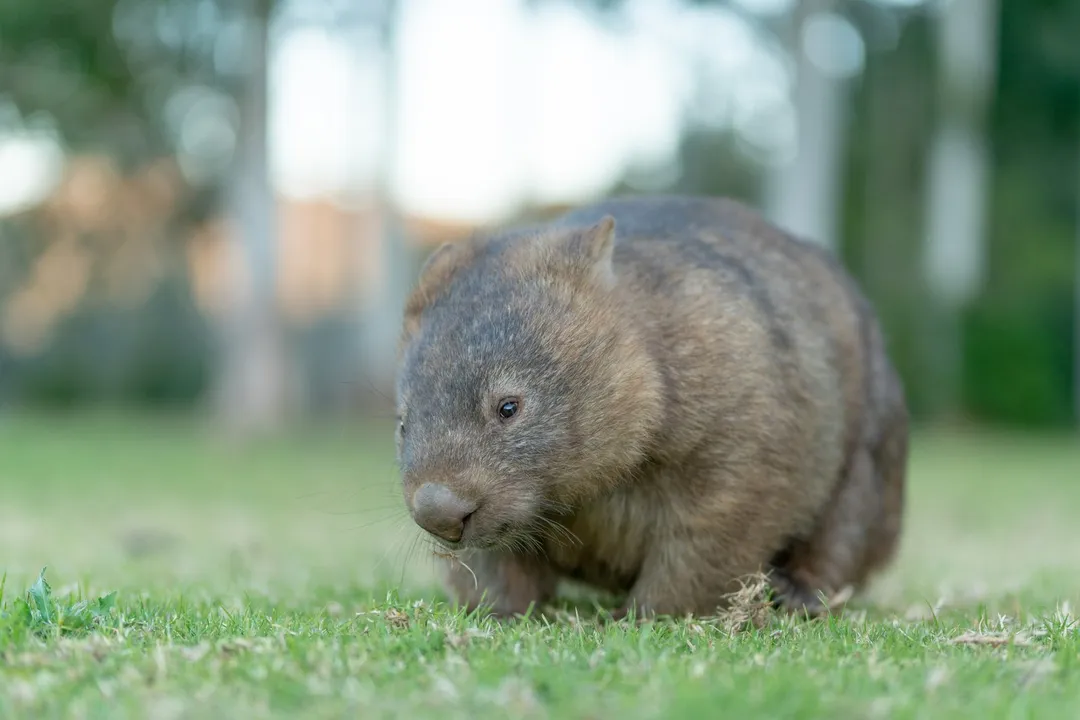
Although a wombat's bite can inflict painful wounds when directed at a person, the anatomical design of its teeth is specialized for its herbivorous diet. The teeth function primarily as efficient cutting or shearing instruments. Their structure is optimized for processing tough, fibrous vegetation, such as native grasses, roots, and bark that form the bulk of their food intake. This suggests the bite force is primarily engineered for mastication rather than aggressive flesh-tearing.
#Videos
Wombats are cute, but what about when they attack? | REACTION
Related Questions
How is the physical structure of an adult wombat described, given their weight range of 20 kg to 38 kg?What maximum short burst speed can a wombat attain?What is the primary defense tactic employed by a wombat when cornered underground in its burrow?What happens to the temperament of young, hand-reared joeys when they reach maturity or puberty?What is the inherent design purpose of a wombat's sharp teeth, considering its diet?What secondary injury risk is highlighted by the Canberra incident involving a woman and a wombat?Which condition may cause a wombat to display disorientation and increased defensiveness?How does habituation caused by human feeding practices potentially lead to wombat aggression?Why is manual restraint of a wild adult wombat often considered impossible without veterinary assistance?What common physical consequence follows a serious wombat bite or scratch that requires immediate medical follow-up?