Do babirusa tusks hurt them?
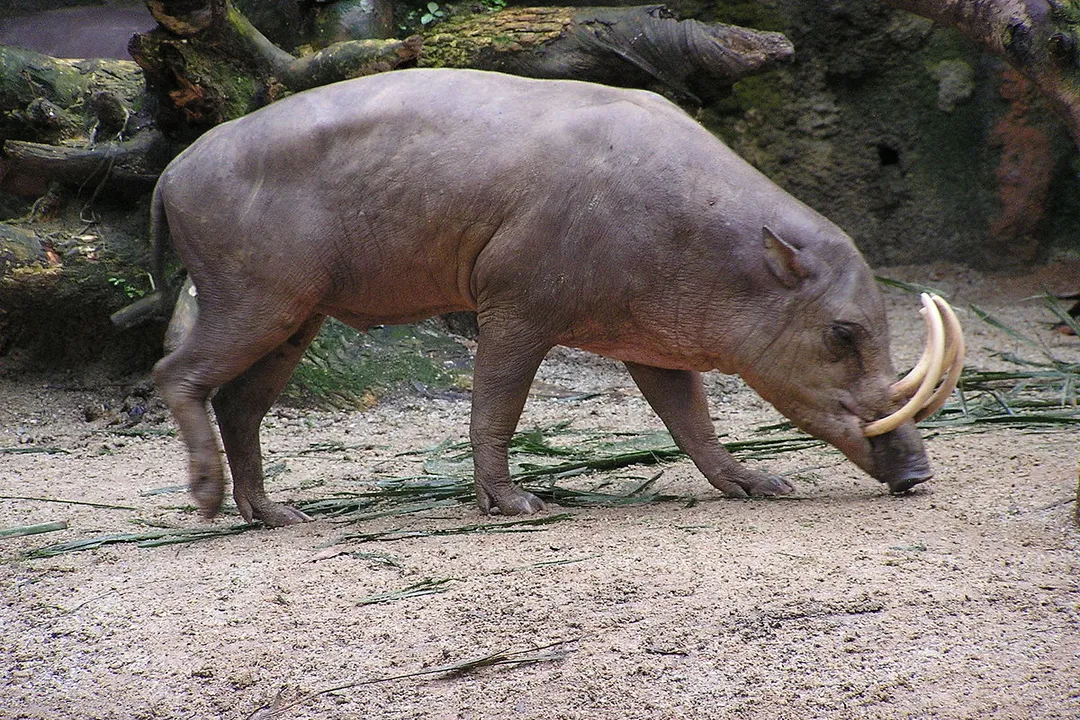
The male babirusa, often called the "pig-deer" due to its unique appearance, possesses one of the most striking and peculiar dental arrangements in the entire animal kingdom, leading to frequent discussions about the practicality and potential detriment of its elongated canine teeth. [2][5] These pigs, native to the Indonesian islands of Sulawesi, Sula, Togian, and Buru, carry sets of tusks that look almost impossibly designed, particularly the upper pair that sprouts from the snout and curls drastically backward. [4]
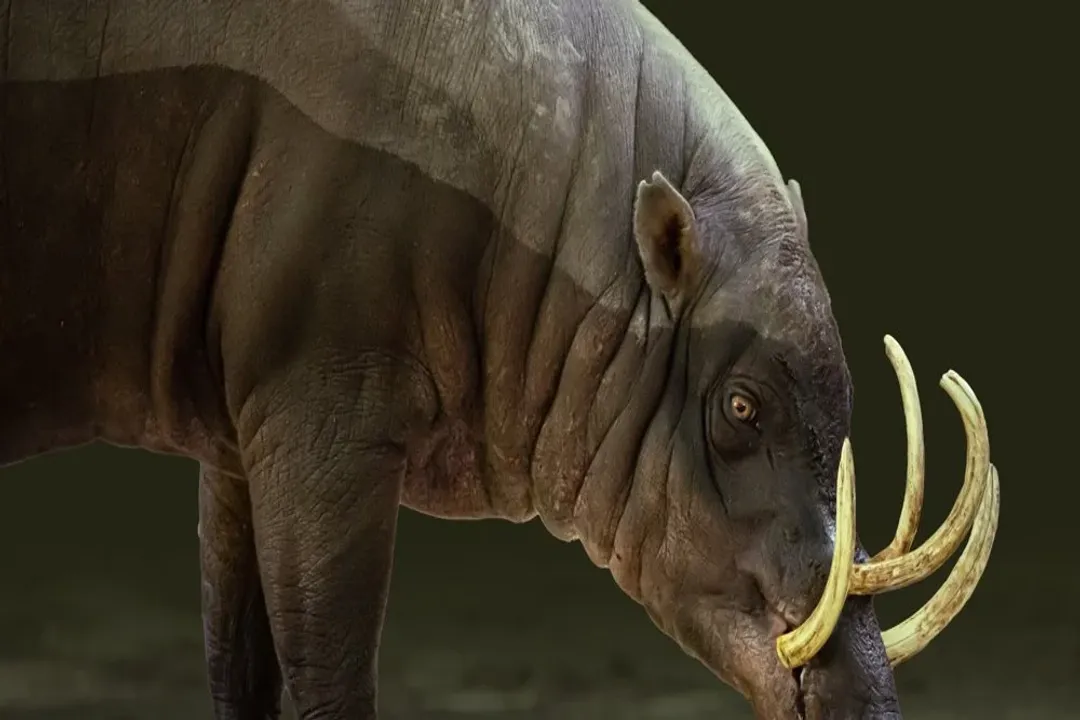
The primary concern surrounding these features is self-mutilation. It is the male’s upper set of tusks—which are actually the canine teeth growing upward through the snout—that causes the most alarm because they curve sharply back toward the animal’s forehead and eyes. [4] This trajectory creates a genuine biological hazard where the tusk could potentially puncture the skin, orbit, or even penetrate the skull itself. [1][3]
# Upper Tusks
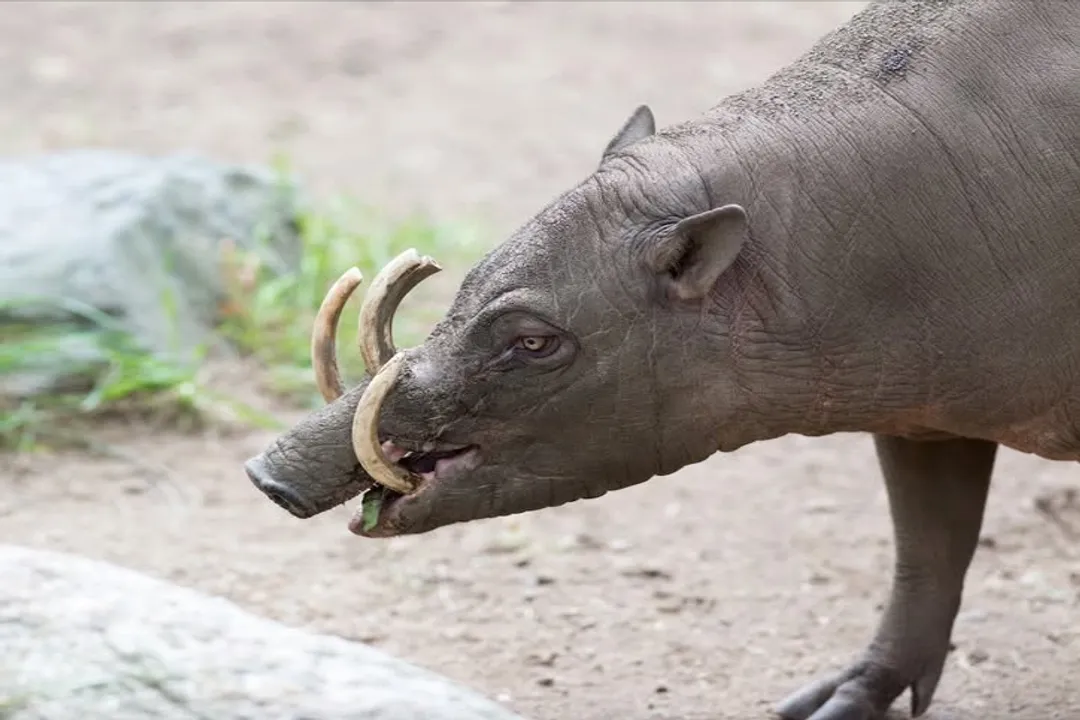
The dental architecture of the babirusa is sexually dimorphic; only the males typically develop these imposing tusks. [4] There are two pairs of tusks: the lower pair emerges from the lower jaw and points upward, similar to tusks found on other wild pigs, while the upper pair grows from the maxilla, angling upwards and then curving back over the face. [4] These upper tusks continue to grow throughout the babirusa's life, as they are composed of ivory. [4] Because of this continuous growth and the pronounced backward curve, the potential for auto-trauma is very real. [1]
It is theorized that the primary evolutionary driver for these massive tusks is intraspecific combat—males use them when fighting rivals over territory or mating rights. [1][4] In this context, the tusks act as weapons, and the curvature might even serve to lock an opponent’s weapon during a struggle. However, this benefit comes with a substantial trade-off, as survival hinges on the tusk not crossing its own path and piercing the skull or face. [1]
# Risk Assessment
The question of how often this self-penetration occurs remains a topic of conversation among naturalists and biologists. [3] Some perspectives suggest that the risk is severe enough that it regularly leads to the death or serious incapacitation of older males, effectively acting as a natural check on the population or the lifespan of dominant males. [1][3] If the tusk grows long enough to penetrate the skull, the resulting infection or injury would likely prove fatal in the wild, where medical intervention is impossible. [3]
However, evidence suggests that nature might have built-in safeguards, though they are not completely foolproof. [3] One observation is that babirusas often wear down their tusks, particularly the lower set, by continuously rubbing them against trees or rocks. [4] While this action primarily keeps the lower tusks from becoming overly obstructive, it might also contribute to slight abrasion or alteration of the upper tusk trajectory over time. [4] Whether this natural wear is sufficient to consistently prevent skull penetration for all individuals is difficult to confirm from observational data alone. It appears that while it is a genuine possibility for lethal injury, it might not be as frequent as casual observers might assume, potentially affecting only a minority of males or those past their prime mating years. [3] A captive environment, for instance, eliminates the wear from rubbing against hard surfaces, meaning a zoo-housed male might actually face a higher risk if its tusks are not managed, though this is speculative regarding natural growth rates. [8]
# Lower Canines
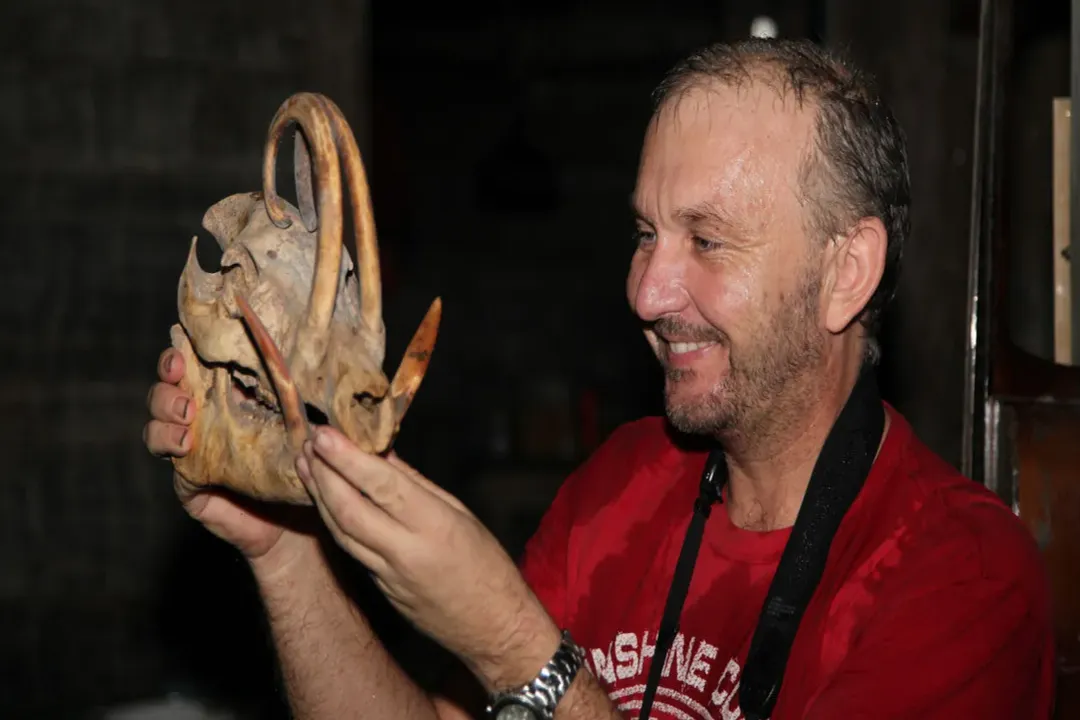
The lower tusks, which are the true canine teeth, also pose unique challenges, although they do not carry the same risk of drilling into the skull. [4] These teeth grow straight upwards from the lower jaw. [4] While they do not threaten the braincase, they can grow long enough to interfere significantly with the animal’s ability to fully close its mouth. [4] Imagine trying to eat or drink with your front teeth constantly protruding past your upper lip; the babirusa faces this practical difficulty. [4] Their diet, consisting primarily of fallen fruit, leaves, roots, and tubers, requires rooting in the soil, and long, cumbersome lower teeth could complicate this necessary foraging behavior. [6]
# Tusk Function
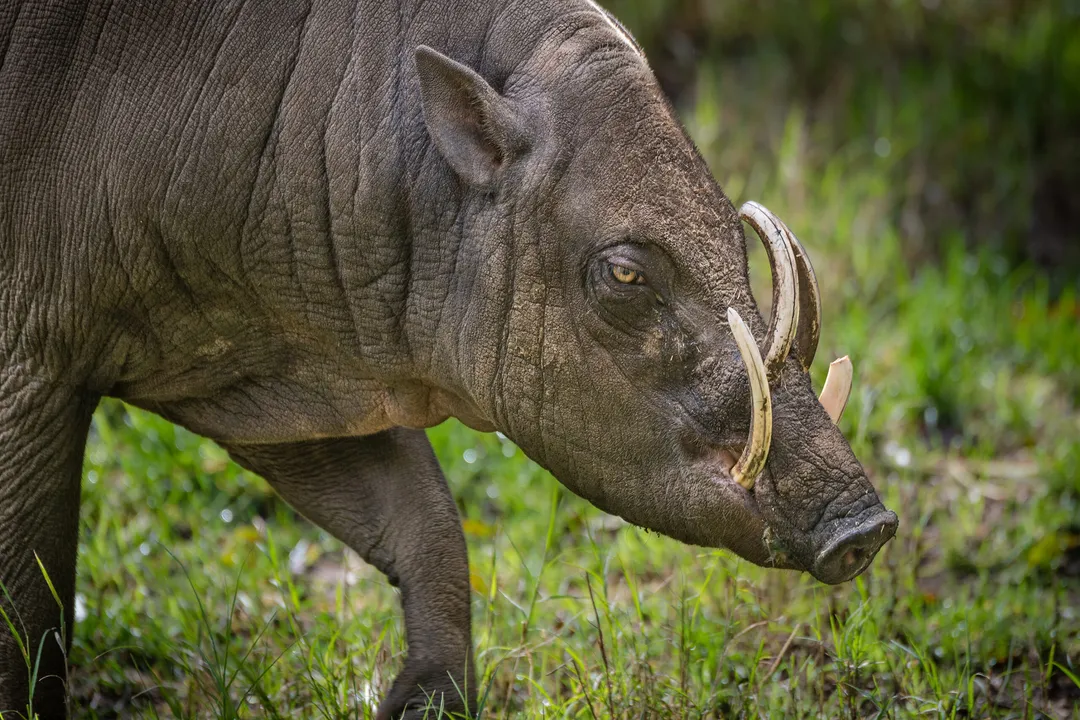
If the tusks present such a significant threat to the animal’s own life, their evolutionary advantage must be substantial enough to outweigh the risk. [1] As noted, the primary role is believed to be in combat, confirming male dominance. [1][4] In a species where reproductive success is tied to male-male competition, having the superior weaponry—even if dangerous—is a winning strategy for passing on genes. This phenomenon is known as autotomic selection, where a trait that increases mating success also carries a survival cost. [1] The animals that survive despite having highly exaggerated tusks demonstrate superior physical fitness and fighting ability. [1]
Furthermore, the tusks may play a role in display. The sheer size and visibility of the upper tusks make the male incredibly conspicuous, serving as a visual signal of fitness to females and a deterrent to weaker rivals without the need for a physical fight. [5]
# Captive Management
When observing babirusas in managed care settings, such as at the Los Angeles Zoo, one notices that while the animals possess the same natural weaponry, the environment removes certain survival pressures while introducing others. [8] In the wild, an injured animal is quickly removed from the gene pool. In captivity, if a tusk begins to grow dangerously close to the skull or becomes excessively cumbersome, veterinarians may intervene. [8] This often involves filing down or trimming the tusks to prevent actual injury, a procedure necessary precisely because the animal is protected from the natural selective pressures that would normally cull those with malformed or dangerously growing tusks. [8] The fact that keepers must regularly manage the length suggests that in the wild, some animals likely reach a point where the tusks become a serious liability, even if they never fully penetrate the skull. For example, if the lower tusks grow so long they impede foraging ability, the animal’s nutritional intake would suffer long before a fatal tusk puncture occurred, representing a slower form of negative selection. [6]
The existence of these elaborate, life-threatening appendages highlights a fascinating aspect of natural selection. It suggests that for the male babirusa lineage, winning the right to breed has historically demanded carrying around a literal burden, a piece of biological architecture that is simultaneously a symbol of virility and a ticking clock against the animal's own survival. [1]
Related Questions
#Citations
Why do babirusa have tusks that can end up killing them?
Meet the Babirusa, a Wild Pig with Massive Teeth
How often does the tusk of Babirusa pigs grow long ...
Babirusa
Talk about terrifying teeth! The male babirusa, or “pig-deer ...
Babirusa: Conserving the Bizarre Pig of the Sulawesi Forest
Babirusa - Los Angeles Zoo and Botanical ...