How strong was Epicyon's bite?

The discussion surrounding the power of Epicyon's bite often revolves around its impressive stature and its classification among some of the most formidable prehistoric canids ever to walk the Earth. [1][7] While specific bite force readings in pounds per square inch (PSI) derived from biomechanical modeling of its fossilized skulls are not readily available in general scientific summaries, the evidence points overwhelmingly toward an incredibly powerful, specialized crushing mechanism. [5] We must therefore look closely at its anatomy and ecological role to understand the sheer force this giant hunting dog could exert. [1][7]
# Canine Lineage
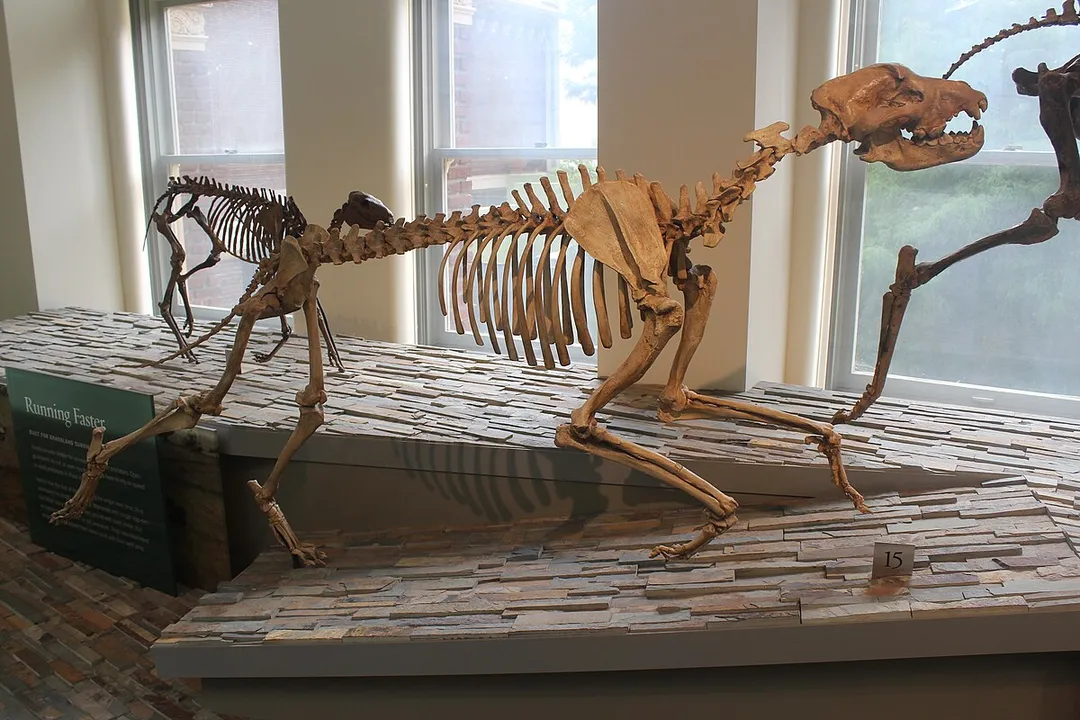
Epicyon was not a direct ancestor of modern dogs, but rather a member of the extinct subfamily Borophaginae. [3][7] This group earned the evocative nickname "bone-crushing dogs" because of their distinct dental adaptations. [5] Unlike the long, sleek canids we recognize today, which are often adapted for stamina and shearing meat with blade-like carnassials, the borophagine dogs possessed broader, blunter teeth. [3] This difference in dental architecture is the primary clue to understanding their bite strength; their entire cranial structure appears built for maximizing pressure, not just tearing flesh. [5]
# Crushing Dentition
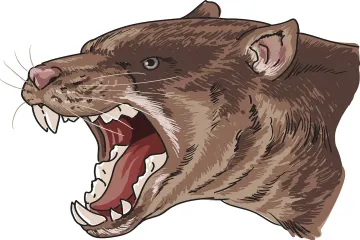
The specialization of Epicyon's teeth suggests an intent beyond simple predation. When paleobiologists examine the fossil remains of these canids, they observe molar and premolar structures that are notably stout and robust compared to contemporary carnivores. [3] This morphology indicates an adaptation for consuming hard materials, likely including bone marrow and dense skeletal fragments. [1][5] Accessing marrow is a high-energy strategy that requires significantly more force than cleanly slicing muscle tissue.
Consider the mechanics: a predator that regularly breaks bone must manage immense compressive loads without fracturing its own jaw or teeth. This suggests that the musculature attaching to the jawline of Epicyon would have been heavily developed, designed to deliver and sustain crushing pressures over a short period. [5] This contrasts sharply with the specialized shearing jaws of many modern carnivores that focus on rapid tissue removal.
# Power Comparisons
Determining the exact magnitude of this force requires comparisons to extant animals, though these are often drawn from popular speculation in paleontological communities rather than direct scientific papers. [6] Given that Epicyon was a massive animal, potentially weighing over 130 kilograms depending on the specific species, its bite would have needed to be formidable to bring down large prey during the Miocene epoch. [3][6]
Some discussions place Epicyon in direct comparison with apex predators like the African lion. [6] While a modern lion possesses a bite optimized for suffocating large prey via a throat grip, its bone-crushing capacity is still significant. [6] If we look at modern large predators known for bone consumption, such as hyenas, their bites are characterized by high sustained crushing pressure, sometimes estimated in the 1,000 PSI range or more, necessary for their osteophagic habits. [5] Given the Epicyon's classification as a "bone-crusher," its bite pressure, when directed squarely onto a sturdy bone, might have approached or even slightly exceeded the lower end of estimates for large modern felids optimized for strength over speed. [5][6]
A compelling way to frame this power is to consider the mechanical advantage offered by its robust skull. While a modern wolf or even a large grizzly bear has a powerful bite, the structure of Epicyon's jaw suggests a system engineered for applying maximum mechanical stress directly perpendicular to the target. One might infer that the Epicyon's bite was less about the total duration of the bite and more about the intensity of the initial, targeted crush, maximizing the load transferred through those specialized, sturdy molars. [3]
# Ecological Impact
The implication of such a strong bite extends far into Epicyon's ecological role. A predator capable of routinely fracturing bone has a massive advantage in resource acquisition. It is not merely competing for the meat of a carcass; it is claiming the entire caloric return, including the nutrient-rich marrow locked inside the skeletal structure. [1] This capability would have allowed Epicyon to efficiently clean up kills left by other predators or to dispatch prey quickly through skeletal trauma rather than prolonged strangulation. [1][7]
Imagine a scenario where Epicyon encounters a large, fallen herbivore. Where a more gracile canid might struggle to access the rib cage or femurs, Epicyon could potentially reduce large portions of the skeleton to fragments suitable for ingestion. [5] This behavioral difference implies a lower degree of reliance on scavenged, partially eaten carcasses and a greater ability to exert dominance over a kill site based on pure destructive power. [1]
To illustrate the potential contrast in biting strategies among canids, we can map inferred specialization:
| Canid Type | Primary Bite Adaptation | Implied Force Focus | Example Function |
|---|---|---|---|
| Modern Wolf (Canis lupus) | Shearing Carnassials | High Speed/Deep Puncture | Rapid tissue severance [3] |
| Epicyon (Borophagine) | Robust, Blunted Molars | High Compression/Sustained Crush | Bone breakage and marrow access [5] |
| Modern Hyena (Crocuta crocuta) | Extreme Crushing Power | Maximum PSI for bone | Complete carcass utilization [5] |
This table highlights that Epicyon sat squarely in a niche where sheer compressive power was a defining feature of its feeding strategy, placing it closer to specialized bone-crushers than to typical coursing hunters. [5] If we were to estimate its biting prowess by assuming its jaw mechanics delivered pressure comparable to a creature of similar inferred build, its bite might have been engineered to deliver forces in the range where significant structural failure of thick mammalian bone becomes inevitable, perhaps placing it in the upper tiers of predatory bite strengths among extinct mammals. [6] The strength was less about a quick snap and more about being able to hold and squeeze until the target structure gave way. [3]
Related Questions
#Citations
The giant hunting dog Epicyon taking down prey on ...
Epicyon - VS Battles Wiki - Fandom
Epicyon
The grey wolf is the biggest living canid, weighing around ...
Epicyon - Bone Crushing Dog - Creature submission archive
Epicyon vs African Lion. Who wins? If the ...
Epicyon | Dinopedia - Fandom
Jaguar vs Epicyon | The World of Animals