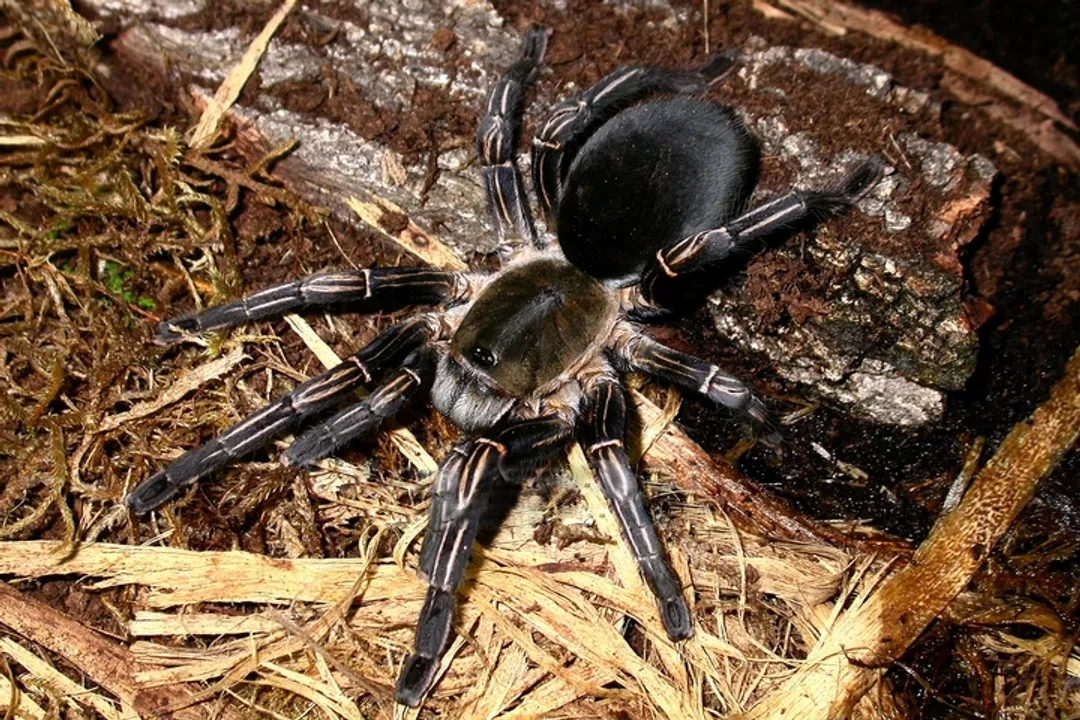
What is the implication of placing A. seemanni within the Family Theraphosidae regarding its lifestyle?
It suggests a sedentary, terrestrial existence and potential for urticating hairs
The Family Theraphosidae specifically groups together the creatures commonly recognized as tarantulas, encompassing both New World and Old World varieties. Placement within this family immediately suggests a fundamental terrestrial habit, meaning the spider spends most of its life on the ground rather than in trees, which influences enclosure setup requirements, such as providing substrate depth for burrowing. Furthermore, if the specimen is a New World species, as *A. seemanni* is, this placement strongly implies the presence of urticating hairs, a specific defensive mechanism where barbed hairs are kicked off the abdomen when threatened, a trait absent in Old World tarantulas.