What is the distinguishing defensive chemistry associated with the Subfamily Formicinae, where *A. gracilipes* is placed?
Answer
Defense achieved by spraying formic acid
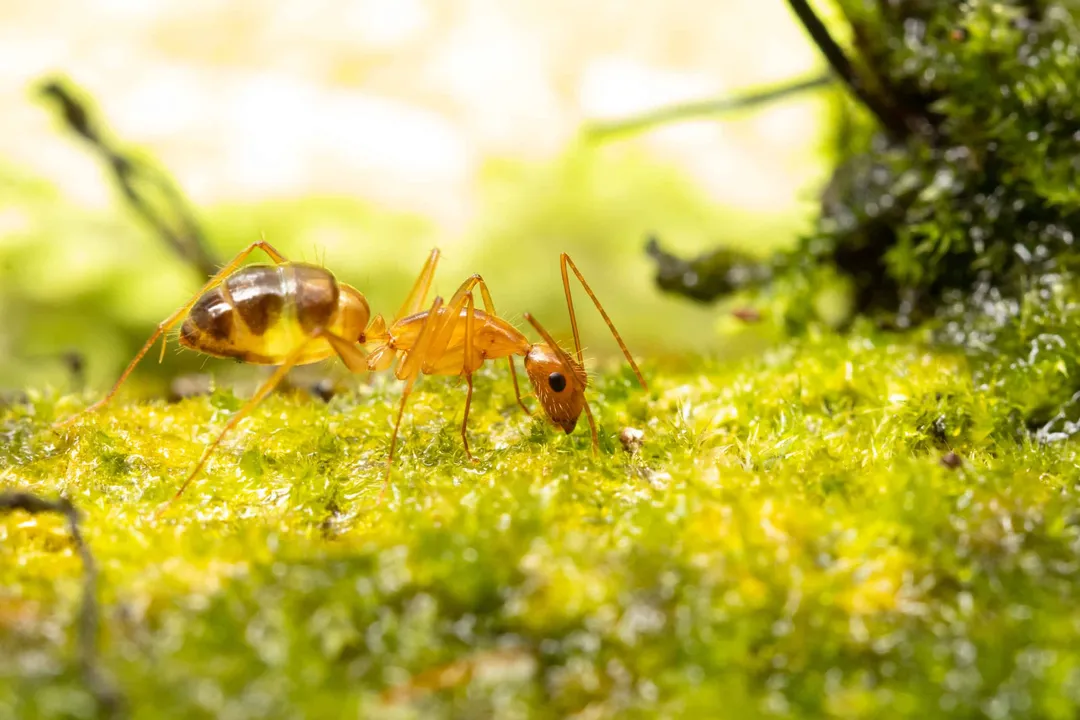
Ants belonging to the Subfamily Formicinae utilize a specific, common chemical defense mechanism: the expulsion or spraying of formic acid. This feature serves as a key biological marker that taxonomically separates them from other ant subfamilies, notably the Myrmicinae subfamily, which often rely on a physical stinger to inject defense mechanisms. While the formic acid used by *A. gracilipes* is noted as being relatively weak compared to some other ant species, the mechanism itself defines its placement within Formicinae.
Related Questions
What is the scientific designation for the insect famously known as the Yellow Crazy Ant?What set of defining characteristics marks the Phylum Arthropoda for *A. gracilipes*?Which major groups are classified alongside ants in the Order Hymenoptera?What taxonomic rank confirms the insect is officially an ant, characterized by social structure and elbowed antennae?What is the distinguishing defensive chemistry associated with the Subfamily Formicinae, where *A. gracilipes* is placed?What physical traits define members of the Genus *Anoplolepis*?What non-Linnaean phenomenon observed in *A. gracilipes* populations enables the coexistence of multiple reproductive queens?Which Tribe does *Anoplolepis gracilipes* belong to within the Subfamily Formicinae?Why does the ecological success of *A. gracilipes* necessitate management focused on eradication over simple suppression?What characteristic defines the Kingdom Animalia membership for organisms like *A. gracilipes*?How does the typical defense mechanism of *A. gracilipes* compare to the secretions of some other invasive ant species?