What happens to the white patterning on the Whinchat's tail when the bird is observed in motion?
Answer
White patches situated at the base of the outer tail feathers become apparent when the bird flicks its tail.
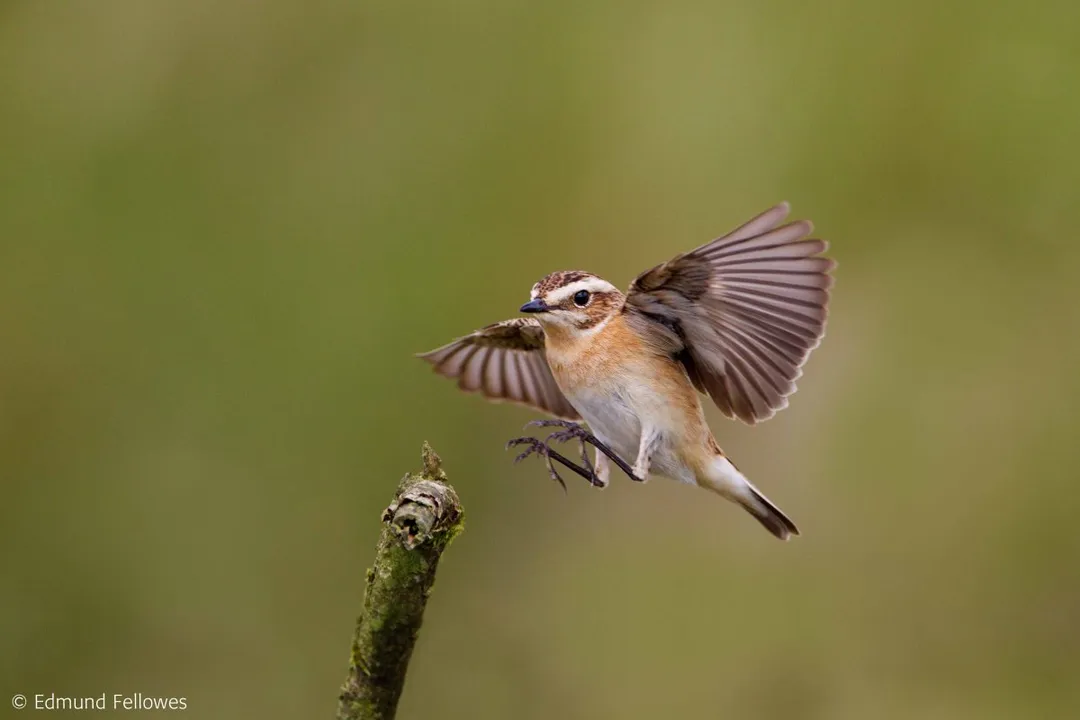
The tail pattern is considered one of the three critical identification markers for the Whinchat. The bird possesses white patches located specifically at the base of its outer tail feathers. These patches are not always visible when the bird is sitting still or has its tail closed. However, when the bird engages in typical tail movements, such as flicking or fanning the tail, these white markings become visible. This flashing effect serves as a helpful confirmatory feature, especially in situations where the bird is seen only fleetingly.
Related Questions
What is the typical body length range for the small and stocky Whinchat passerine?What immediately defines the bold contrast of the breeding male Whinchat's head pattern?How does the female Whinchat's breast coloration compare to the rich tones seen on the breeding male?Which three key physical features are crucial for identifying the Whinchat, often visible even from a distance?When differentiating the male Whinchat from the Stonechat, what specific detail distinguishes their throat/chest plumage?The Whinchat's delicate weight (16-22 grams) highlights its lightness, which is often compared in context to what common item?How does the non-breeding or winter plumage of the male Whinchat differ from its peak breeding attire?How does the initial appearance of juvenile Whinchats compare to the adult female?What specific physical characteristic defines the rump of the breeding male Whinchat as a key field identifier?During the breeding season, where does the Whinchat often choose to perch compared to the Stonechat?What happens to the white patterning on the Whinchat's tail when the bird is observed in motion?