Whinchat Physical Characteristics
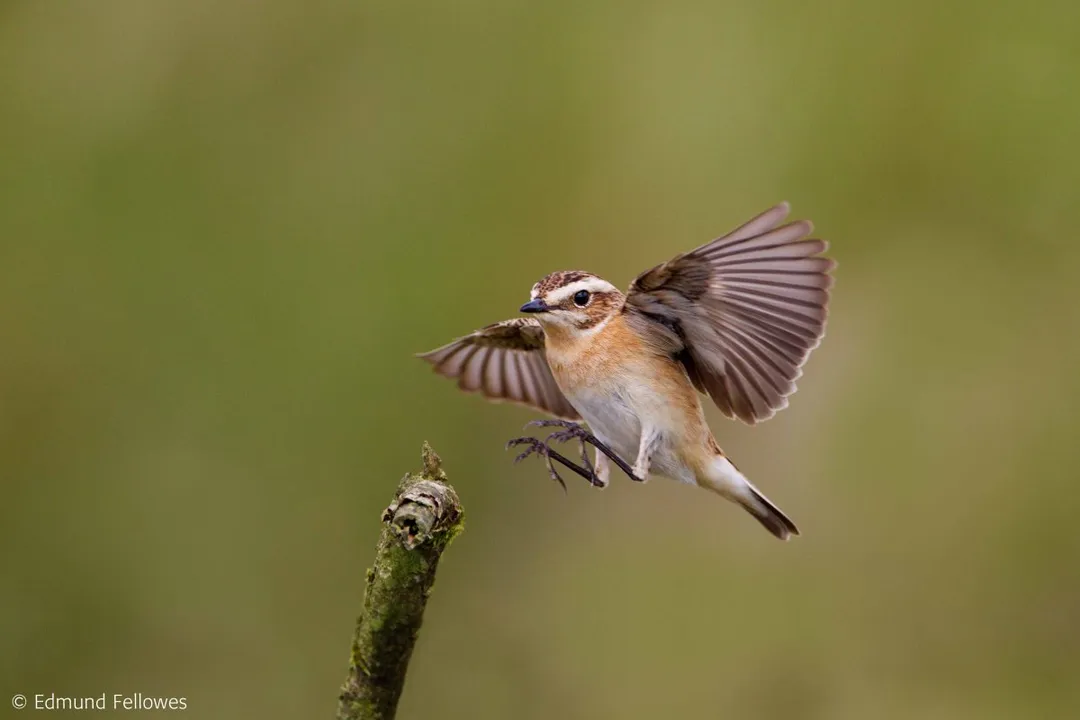
The Whinchat, a small yet striking migratory bird, presents a fascinating study in avian camouflage and display, with distinct physical differences between the sexes and age groups. [3][7] When observed in the field, its silhouette is generally upright, a posture often adopted while perching prominently on low vegetation or fence posts. [2][6] Though sometimes confused with its close relative, the Stonechat, the Whinchat possesses specific features in its plumage and structure that allow for confident identification. [3][6]
# Size Profile
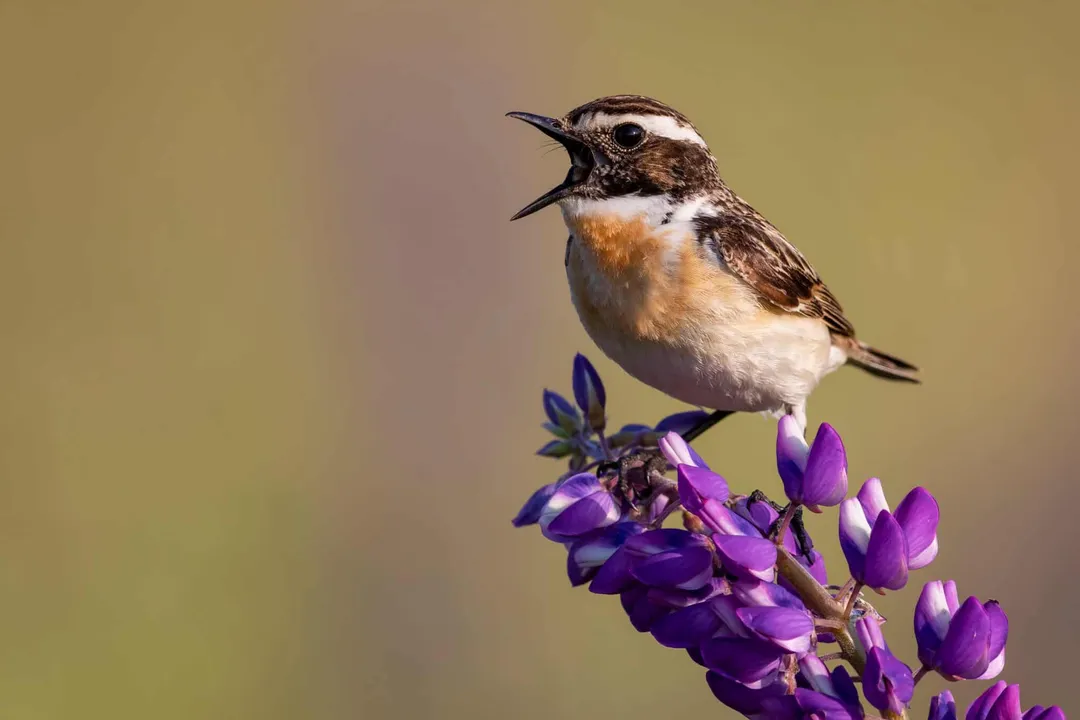
In terms of sheer scale, the Whinchat is a relatively small passerine, fitting comfortably into the hand, categorized as small and somewhat stocky. [5] Its body length typically measures between 13 and 14 centimeters. [3][7] This places it slightly smaller than many common garden birds in some regions. [7] Examining its weight reveals a delicate build, usually ranging between 16 and 22 grams. [1][3] For comparison, this weight is often less than that of a standard AA battery, highlighting the lightness required for its extensive annual migrations. [1] The wingspan, which becomes apparent during flight, generally spans from 20 to 22 centimeters. [1][3] This combination of small size and relatively light mass dictates its foraging style and habitat preferences across its breeding and wintering grounds. [2]
# Male Appearance
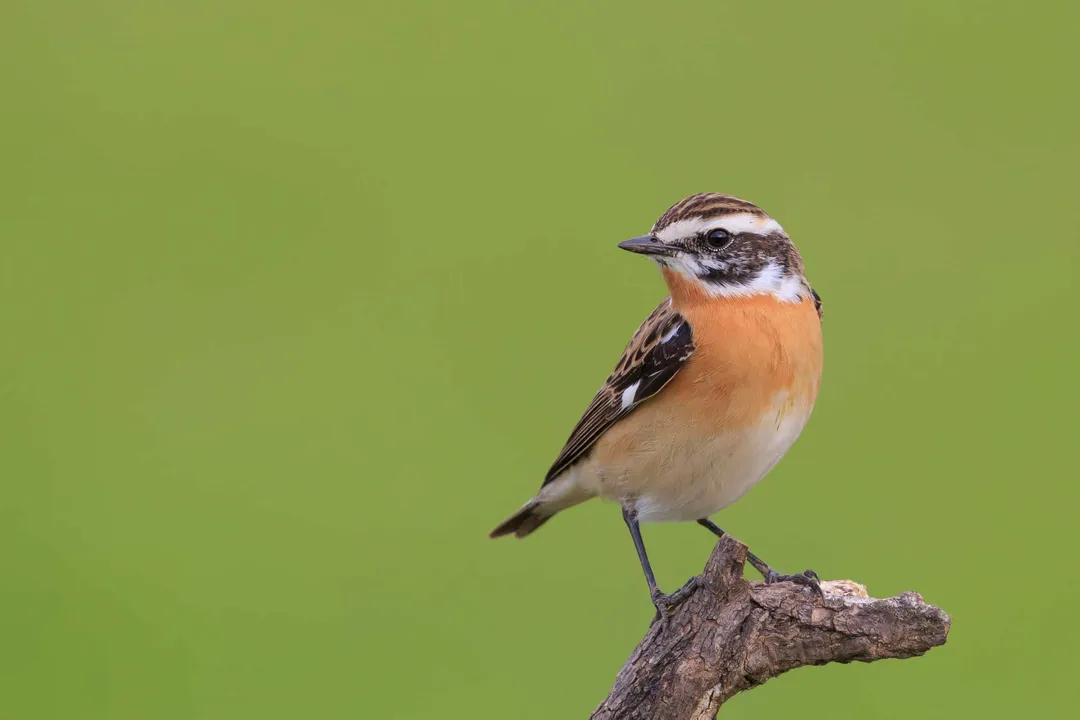
The breeding male Whinchat is, without question, the most visually arresting of the group. [7] What immediately catches the eye is the bold contrast defining its head pattern. [3] The face and throat are predominantly black, creating a sharp, dark mask effect. [3][6] This darkness is dramatically framed by an exceptionally broad, clean white supercilium—the stripe above the eye—which acts as a highly effective field mark. [3][4][6]
Moving down the body, the upperparts exhibit a mottled or streaked pattern, mixing black with warm brown or buff tones. [3][4] The breast area carries a wash of rich color, often described as apricot or rusty orange-buff, providing warmth against the darker head. [3][6][7] The underparts below the breast are generally paler. [3] A critical feature for field identification is the rump, which appears distinctly pale, often described as buff or whitish, contrasting noticeably with the darker back plumage. [3][4][7] The tail is primarily blackish, but closer inspection reveals white patches situated at the base of the outer tail feathers, which become apparent when the bird flicks its tail. [3][4]
# Female Differences
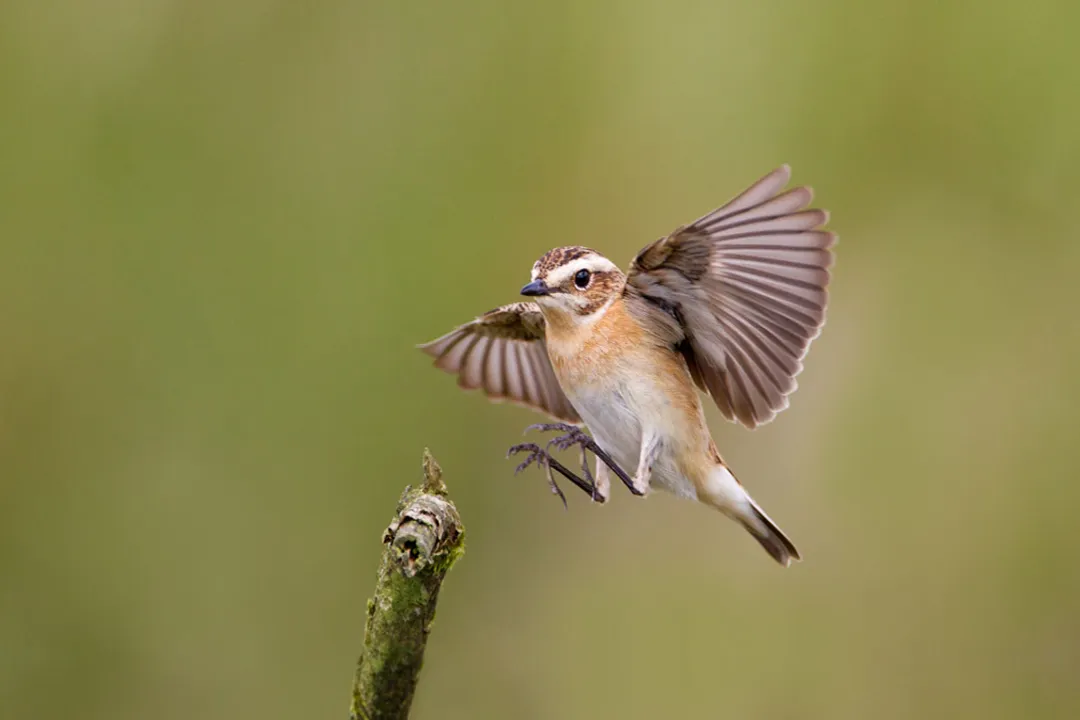
In stark contrast to the male’s vibrant display, the female Whinchat presents a much more subdued appearance. [3][7] Her plumage relies heavily on soft browns and buffs, offering excellent cryptic coloration within grassy or scrub environments. [3] While she retains the general pattern of a paler eyebrow stripe, it is far less defined than the male’s, appearing buffy-white or indistinct rather than stark white. [3] The breast lacks the fiery apricot tones seen in the breeding male, instead showing only a faint wash of buff or pale buffy scaling. [3] Generally, her upperparts are browner, and the overall effect is one of muted, less contrasted tones throughout the body. [3]
# Juvenile Stage
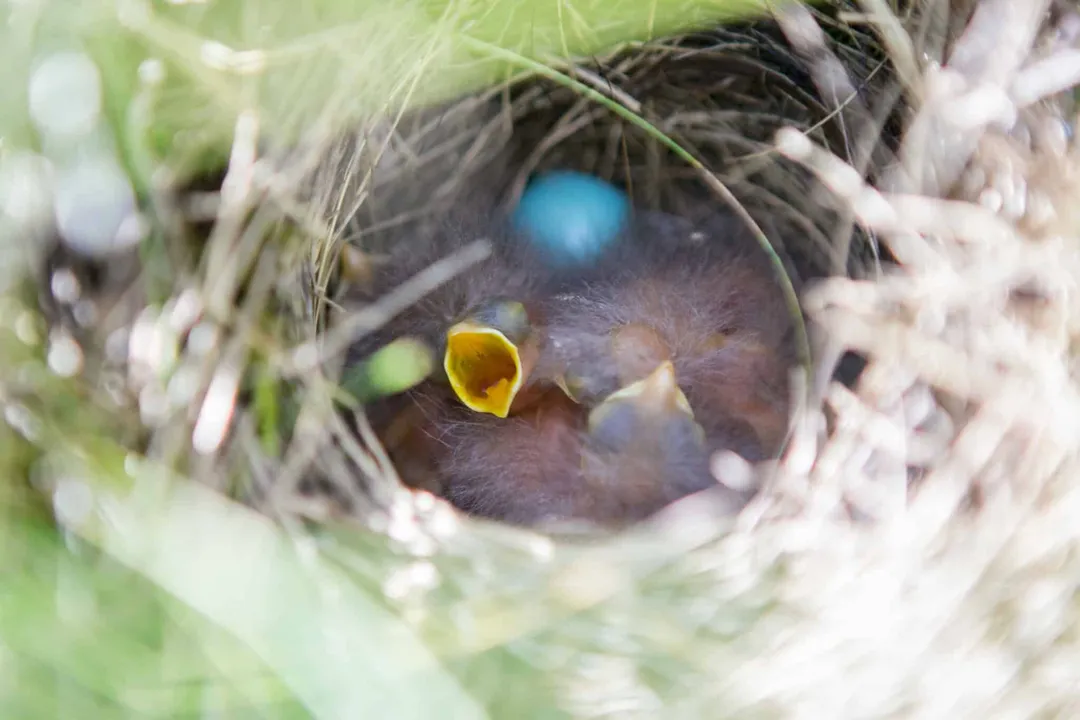
When Whinchats first hatch and begin to fledge, their appearance aligns more closely with that of the adult female, though often even duller. [6] Juveniles display a heavily mottled or scaled appearance across their upperparts and breast, helping them blend into the undergrowth as they gain independence. [6] They lack the crisp black-and-white head pattern and the bright chest coloration of the adult male. [3] As they move through their first autumn migration, they will replace this juvenile plumage with a less colorful first-winter dress, which still retains greater dullness compared to the mature male's breeding attire. [6]
# Key Markings
The identification of the Whinchat often hinges on recognizing a trio of key features that are visible even from a distance: the supercilium, the rump, and the tail pattern. [3][4] The distinct, wide, white supercilium on the male is perhaps the most telling sign when viewed head-on. [4] Secondly, the pale, buffy rump serves as an excellent identifier against the darker mantle, differentiating it from similar species that may have a darker or differently colored lower back. [3][7] Finally, the white patches visible on the outer tail feathers upon movement confirm the identification, particularly helpful if the bird is seen fleetingly. [3][4]
# Comparison Points
When differentiating the Whinchat from the very similar Stonechat (Saxicola rubicola), one must look past the general structure and focus on these specific plumage details. [3][6] While both species exhibit dark bibs and pale rumps, the Stonechat male’s throat is black down to the chest, whereas the Whinchat male has the warm apricot wash extending up towards the throat, interrupted by the black. [3] Furthermore, the Stonechat’s white supercilium is usually narrower than the very broad one found on the breeding Whinchat male. [6]
A useful way to integrate these physical characteristics in the field is to note the bird’s behavior alongside its markings. While both species perch actively, the Whinchat often seems to choose slightly taller or more exposed song posts in scrubbier or more open habitats during the breeding season compared to the Stonechat, which might favor denser, lower cover. [2] If you observe a bird with a bright white eyebrow and a very noticeable pale lower back sitting atop a solitary thistle or low bush on an open moorland, you are almost certainly looking at a male Whinchat displaying its characteristic finery. [6]

# Plumage Variation
It is important to remember that plumage descriptions are often based on the peak breeding condition, yet the bird presents different looks across the year. [3][6] The non-breeding or winter male loses much of the sharp black and white contrast; the black areas become dusky or brownish, and the apricot wash on the chest becomes much paler, making him resemble a larger, duller female. [3] This seasonal shift demonstrates the importance of observing field marks like the pale rump and tail flashes, which persist even when the head pattern is obscured by wear or winter feathering. [3] For field observers, recognizing that a bird showing partial, worn plumage might still be a Whinchat, despite not matching the bright textbook description, is key to accurate identification across seasons. [3][6]
Related Questions
#Citations
Whinchat - Facts, Diet, Habitat & Pictures on Animalia.bio
Whinchat (Saxicola rubetra) identification - Birda
Whinchat - BTO
Whinchat - Wikipedia
WHINCHAT (Saxicola rubetra) Tarier des prés - wildechoes
Whinchat, Saxicola rubetra - Birds - NatureGate - LuontoPortti
Whinchat Bird Facts - Saxicola rebetra - A-Z Animals
Whinchat - NatureSpot
Whinchat (Saxicola rubetra) - Bird Database