What feature of the yak's leg structure aids in maintaining balance on treacherous mountain paths?
Answer
Short, sturdy legs relative to the torso create a low center of gravity
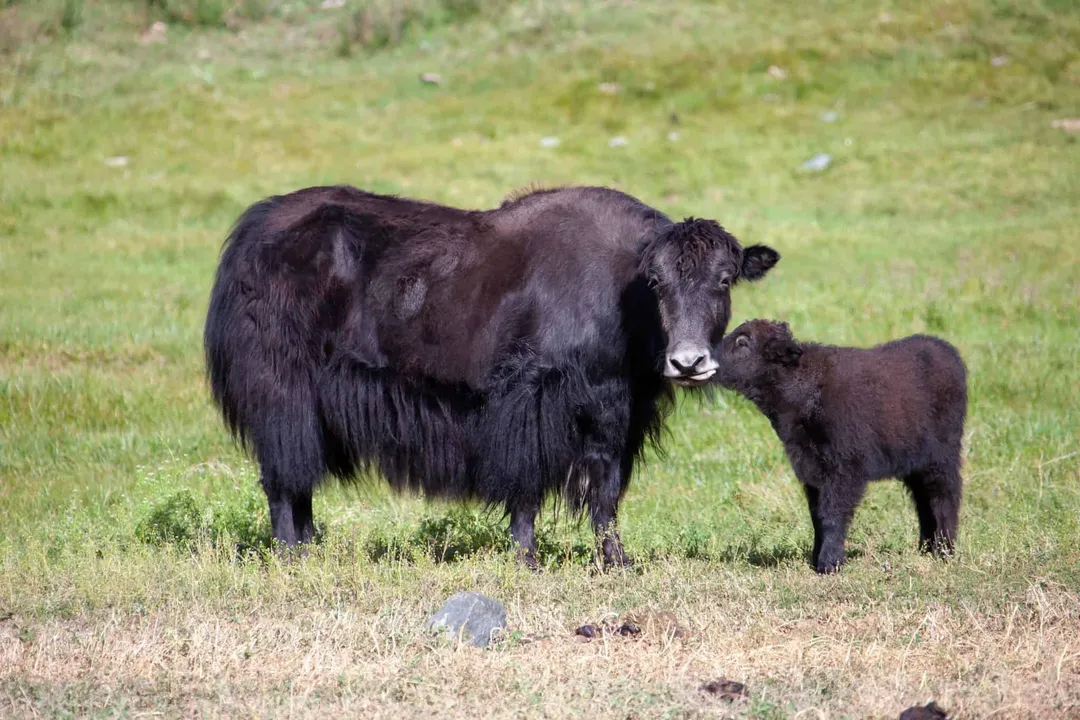
The yak's overall body conformation is meticulously adapted for navigating steep, rocky, and uneven terrain rather than achieving high speeds on flat plains. A key element of this adaptation is the structure of its limbs: the legs are characteristically short and sturdy when compared to the animal's massive torso and deep chest. This disproportionate structure results in a significantly low center of gravity. This low stance is a distinct physical advantage, helping the yak maintain excellent balance and stability when traversing treacherous mountain paths and narrow ledges.
Related Questions
What is the typical weight range for a female yak cow?What two layers comprise the yak's thick, shaggy insulating coat?How do the horns of a mature yak bull compare to those of a cow?What feature of the yak's leg structure aids in maintaining balance on treacherous mountain paths?How does the yak's thoracic cavity assist in high-altitude survival?What property do the yak's broad, tough hooves provide on mountain surfaces?For domestic yaks, what is the primary value of the insulating fiber?What is the approximate shoulder height range for a mature male yak bull?Besides the most frequent deep black or dark brown, what other colorations might yaks exhibit?Where is the yak's powerful musculature concentrated, aiding in hauling loads?